



World
PM Modi Holds Talks With Kyrgyzstan, Armenia Leaders in Bishkek
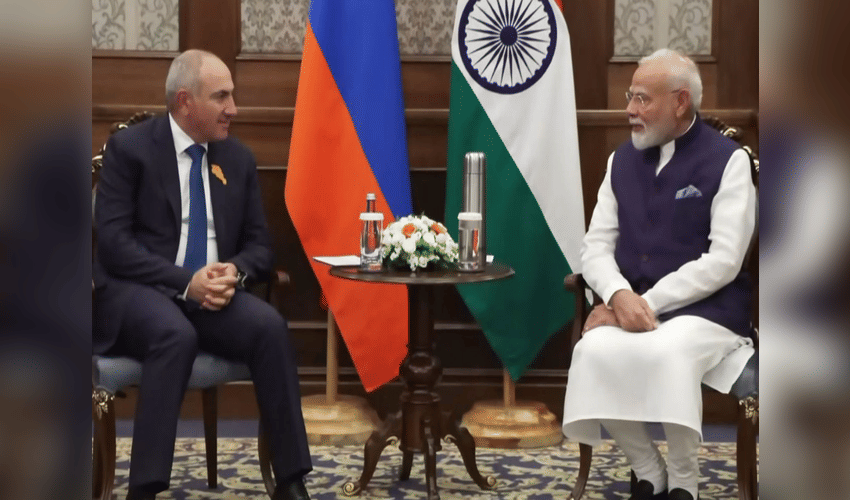

Prime Minister Narendra Modi held separate meetings with Kyrgyz President Sadyr Zhaparov and Armenian Prime Minister Nikol Pashinyan in Bishkek on the sidelines of the Shanghai Cooperation Organisation (SCO) Summit. The discussions focused on strengthening India's bilateral relations with both countries and expanding cooperation across several areas. The meetings come as India continues to deepen its engagement with Central Asia and the wider Eurasian region.
During his meeting with Armenian Prime Minister Nikol Pashinyan, Modi discussed ways to further expand bilateral cooperation in areas including defence, trade, pharmaceuticals, science and technology, education and culture. The two leaders also exchanged views on regional and international developments, including the situation in West Asia.
India and Armenia have steadily expanded their strategic relationship in recent years, with defence cooperation becoming an important component of bilateral ties. At the same time, both countries have been looking to broaden their engagement into economic and civilian sectors. Cooperation in pharmaceuticals, technology and education could provide additional avenues for strengthening the relationship.
Modi also held talks with Kyrgyz President Sadyr Zhaparov and reviewed the progress of India-Kyrgyzstan relations. The two leaders reaffirmed their commitment to further strengthening the strategic partnership between the two countries and discussed opportunities to expand economic and commercial cooperation.
The meeting also highlighted the importance of people-to-people ties between India and Kyrgyzstan. Education, cultural exchanges and greater interaction between citizens of the two countries have remained important elements of the bilateral relationship. Kyrgyzstan's geographical position gives it added importance in India's broader engagement with Central Asia. New Delhi has been seeking stronger economic, connectivity and security partnerships with countries in the region as it expands its presence across the wider Eurasian neighbourhood.
The meetings with the Kyrgyz and Armenian leaders took place as heads of government gathered in Bishkek for the SCO Summit. For India, such summits provide an opportunity to participate in multilateral discussions while also holding separate bilateral talks with important regional partners. India's engagement with Armenia has gained momentum in recent years, particularly in defence and strategic cooperation, while its relationship with Kyrgyzstan covers areas ranging from security and education to trade and cultural exchanges. The latest discussions indicate that New Delhi is keen to broaden both partnerships further.
Modi's meetings in Bishkek also reflect India's wider diplomatic approach towards Eurasia. With changing geopolitical and economic dynamics creating new opportunities and challenges across the region, India is seeking to strengthen ties with countries that can contribute to its strategic, economic and connectivity objectives. The bilateral engagements with Zhaparov and Pashinyan therefore added an important dimension to India's participation in the SCO Summit, reinforcing New Delhi's focus on expanding partnerships across Central Asia and the South Caucasus.



