



News
Pakistan's missile arsenal highlights an apparent contradiction in its historical identity narrative
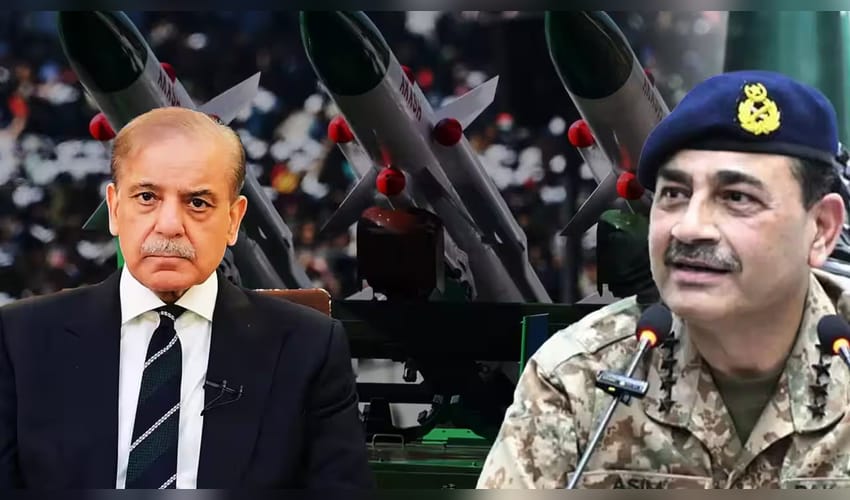

Pakistan's efforts to highlight the ancient civilisations that flourished within its present-day borders have sparked renewed discussion about the country's historical identity. In recent months, senior political leaders have increasingly referred to the Indus Valley Civilisation, Gandhara and Taxila as important parts of Pakistan's cultural heritage, presenting them as evidence that the country's history extends well beyond the Islamic era. However, this narrative has also drawn attention to another aspect of Pakistan's national symbolism its military hardware, much of which is named after Islamic rulers, conquerors and historical figures associated with later periods of the subcontinent's history.
The debate is less about military technology itself and more about the messages conveyed through names and symbols. Countries around the world often choose names for missiles, aircraft and warships that reflect their history, mythology or national values. India, for example, has named several defence systems after elements from Sanskrit, mythology and ancient epics, while Pakistan has largely drawn from Islamic history and Persian or Arabic traditions. These naming conventions are often intended to reinforce national identity and historical continuity rather than simply label military equipment.
Several of Pakistan's best-known missile systems carry names such as Ghauri, Ghaznavi, Abdali and Babur. These names are linked to historical rulers who played significant roles in the medieval history of the Indian subcontinent. Other weapons use names rooted in Arabic or Persian terminology, including Shaheen, Nasr and Ra'ad, reflecting Islamic cultural and linguistic influences. Analysts have long argued that these choices are part of a broader tradition in Pakistan's military symbolism.
The renewed focus on Pakistan's pre-Islamic heritage has therefore prompted fresh debate among historians and political commentators. Some argue that embracing the Indus Valley Civilisation, Gandhara and other ancient traditions represents a broader and more inclusive understanding of the region's history. Others point out that the country's defence symbolism continues to emphasize later Islamic historical figures, suggesting that different narratives of national identity continue to coexist. These differing interpretations have become part of a wider conversation about how modern nations define themselves through history.
History in South Asia is particularly complex because the region has witnessed the rise and fall of numerous civilizations, kingdoms and empires over thousands of years. The territory that forms present-day Pakistan has been home to the Indus Valley Civilisation, the Gandhara Buddhist tradition, Achaemenid influence, Alexander the Great's campaigns, the Kushan Empire, various Hindu and Buddhist kingdoms, Islamic sultanates and later the Mughal Empire. As a result, questions about which historical periods receive greater official recognition often become subjects of public and political discussion.
Military naming practices are not unique to Pakistan. Across the world, countries frequently select names that project strength, heritage or ideological values. The United States has named tanks after prominent military leaders, while other nations often choose historical heroes, mythological figures or culturally significant symbols. These choices usually reflect national priorities and identity rather than providing a complete representation of a country's historical legacy.
Experts note that discussions about heritage are likely to continue as Pakistan seeks to promote archaeological sites such as Mohenjo-daro, Harappa, Taxila and Takht-i-Bahi as important cultural destinations. These sites represent civilizations that predate the country's modern political identity by thousands of years and remain globally significant for understanding early human history.
Ultimately, the debate highlights the broader challenge of balancing multiple historical narratives within a modern nation-state. While governments may seek to celebrate ancient civilizations as part of their cultural identity, long-standing military traditions, official symbolism and public memory often evolve differently. Whether Pakistan's future national messaging places greater emphasis on its ancient civilizational heritage, its Islamic legacy or a combination of both remains a subject of ongoing discussion among historians, policymakers and political observers.



