



Politics
Mohan Bhagwat Rejects Priyank Kharge's Demand for RSS Registration, Says 'Hindu Dharma Itself Is Not Registered'
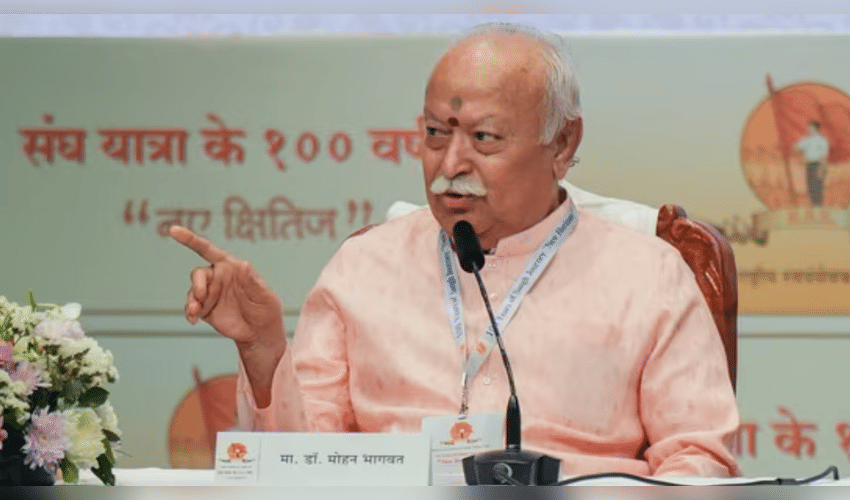

RSS chief Mohan Bhagwat has dismissed Karnataka minister Priyank Kharge’s demand that the Rashtriya Swayamsevak Sangh (RSS) formally register itself and disclose its financial and organisational details, calling the move politically motivated. The controversy began after Kharge wrote an open letter to Bhagwat seeking clarity on the RSS’s legal status, funding sources, expenditure, tax compliance and administrative structure. The Karnataka minister argued that any organisation with a large public presence must operate with transparency and accountability.
Responding during an event in Kerala, Bhagwat said the RSS has been functioning openly for nearly a century and does not need to justify its existence. He added that several organisations in India work without formal registration. “Hindu Dharma itself is not registered,” Bhagwat said while responding to the issue, asserting that registration is mainly required for organisations seeking government funding. Bhagwat also claimed the RSS had submitted its constitution to the government decades ago and that authorities never insisted on formal registration. According to him, attempts are being made to create confusion around the organisation ahead of its centenary year.
Kharge, however, maintained that his questions were rooted in constitutional accountability rather than politics. In his letter, he reportedly asked the RSS to explain under what legal framework it operates on such a large scale without formal registration. He also sought details about donations, assets, office-bearers and permissions obtained for public activities. The Karnataka minister said no organisation in a democracy should remain outside public scrutiny, regardless of its ideological background or historical significance. He pointed to the RSS’s large network of shakhas and public outreach programmes in Karnataka while raising concerns over transparency and compliance with existing laws.
The exchange has triggered a wider political debate, with the Congress and BJP once again clashing over the role and functioning of the RSS in public life. Supporters of the Sangh argue that its activities are visible and community-driven, while critics believe an organisation of such scale should be subject to the same disclosure norms followed by other institutions.
The RSS, founded in 1925, remains one of India’s most influential socio-cultural organisations and is widely regarded as the ideological parent of several groups associated with the Sangh Parivar. Political observers believe the issue could intensify in the coming days as both sides continue to trade arguments over transparency, legality and accountability.



