



Technology
India's Space Docking Technology Paves the Way for Lunar Sample Return and Space Station
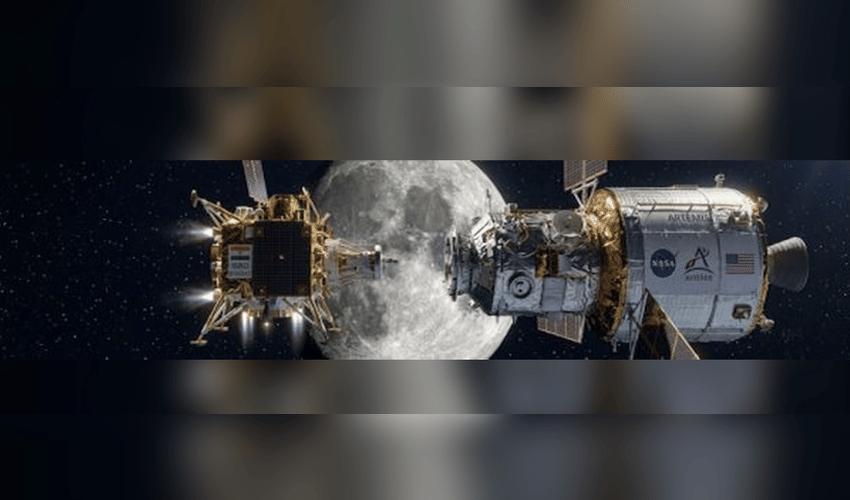

Docking technology is emerging as one of the most important capabilities for India’s next generation of space missions, with the Indian Space Research Organisation (ISRO) identifying it as essential for both lunar sample-return missions and the planned Bharatiya Antariksh Station. M R Raghavendra, Director of ISRO’s Telemetry, Tracking and Command Network in Bengaluru, explained the growing importance of orbital docking while speaking at a National Space Day programme organised by ISTRAC in collaboration with City Montessori School in Lucknow.
According to Raghavendra, India’s successful demonstration of spacecraft docking has provided ISRO with valuable experience that can be applied to much more complex missions in the future. One of the major applications could be a mission designed to bring lunar material back to Earth. India has already demonstrated its ability to land safely on the Moon through Chandrayaan-3, and the next major challenge is to retrieve samples from the lunar surface. Such a mission could involve an orbiter travelling around the Moon while a separate lander collects samples. After completing its work, the lander would have to rendezvous with and dock with the orbiter before the samples could begin their journey back to Earth.
This process would require extremely precise navigation and control, making docking technology a crucial part of the mission architecture. The experience gained from ISRO’s recent docking demonstration could therefore become an important stepping stone towards a future lunar sample-return mission. The same technology will be central to India’s plans for a space station. The proposed Bharatiya Antariksh Station is expected to be assembled using multiple modules rather than being launched as one complete structure. Each module would need to be delivered into orbit and connected to the existing station through docking operations.
Raghavendra said the planned five-module configuration would make docking an indispensable capability for the station. Reliable docking systems would not only help assemble the station but could also support the arrival of crew, spacecraft, supplies and other equipment during its operational life. The development of docking technology also fits into India’s wider human-spaceflight ambitions. The upcoming Gaganyaan programme is expected to mark a major step in India's human spaceflight journey, while the space station programme represents a longer-term ambition to establish a sustained human presence in low Earth orbit.
Raghavendra also reflected on how far India’s space programme has progressed. ISRO initially concentrated on using space technology to address practical national requirements, but its capabilities have expanded significantly over the decades. The organisation is now working on increasingly sophisticated technologies for lunar exploration, human spaceflight and orbital operations.
He also highlighted the expanding role of private companies in India’s space sector. With the industry becoming more accessible to private participation, opportunities are growing for engineers, researchers, entrepreneurs and students from a wide range of backgrounds. He encouraged young people to think beyond traditional boundaries and contribute to India’s long-term scientific and technological ambitions.
The discussion also revisited the significance of Chandrayaan-3. On 23 August 2023, the Vikram lander successfully touched down on the lunar surface, making India the fourth country to achieve a soft landing on the Moon and the first to land in the region near the lunar south pole. The Pragyan rover was subsequently deployed to carry out experiments on the surface, while the landing site was named Shiv Shakti Point. The achievement was later commemorated through National Space Day, observed every year on 23 August. India will mark its third National Space Day in 2026 under the theme “Towards Viksit Bharat: Innovating, Collaborating, and Aspiring to Global Space Leadership.”
For the 2026 celebrations, ISTRAC conducted a programme at City Montessori School’s Gomtinagar-1 campus in Lucknow. The event also highlighted the contribution of young Indians to the country’s growing space ambitions, including CMS alumnus Shubhanshu Shukla, whose journey to the International Space Station marked another notable milestone for India.
As India moves from successful lunar landings toward sample-return missions and human activity in orbit, docking technology is likely to become increasingly important. What began as a demonstration of precise spacecraft coordination could eventually form the backbone of some of the country’s most ambitious space projects.



