



World
India Raises Sudan's Education Crisis at UN, Urges Accountability for Attacks on Schools
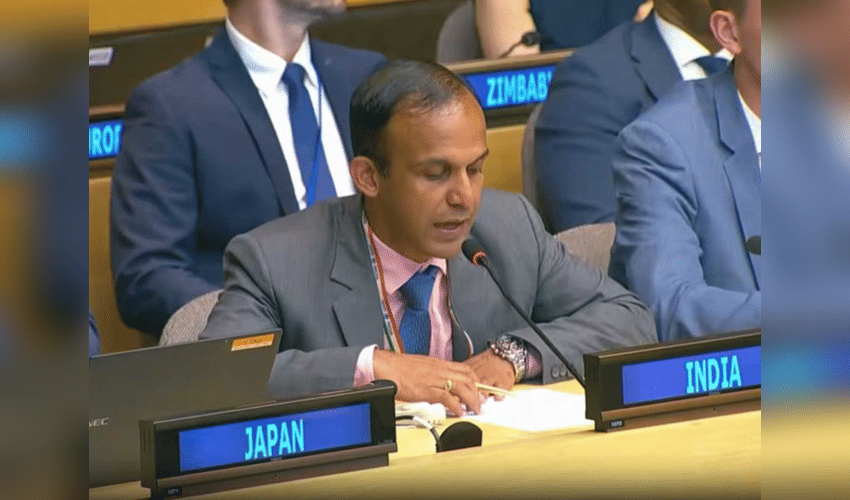

India has called for stronger international action to protect educational institutions in conflict-hit Sudan and ensure accountability for those responsible for attacks on schools. New Delhi raised the issue at a United Nations Arria-Formula meeting focused on protecting education and supporting Sudan’s long-term recovery and stability.
Addressing the meeting, Indian UN Counsellor Eldos Mathew Punnoose highlighted the severe impact that nearly three years of conflict has had on Sudanese children. More than 17 million children have been pushed out of school, while attacks on educational facilities have reportedly increased by 57 per cent, according to UN data cited during the discussion.
Punnoose said children have suffered some of the most serious consequences of the prolonged violence and condemned attacks on civilians, particularly children, as well as educational infrastructure. He stressed that simply protecting schools would not be enough unless those responsible for deliberately attacking them are also held accountable.
“Protection without accountability is ineffective,” Punnoose said, underlining India's position that parties attacking schools cannot be allowed to operate with impunity. The meeting, titled “Safeguarding Education in Sudan: Investing in Peace, Recovery and Stability,” was convened by the Permanent Missions of Somalia, the Democratic Republic of Congo and Liberia. The discussions focused on the challenges facing Sudan's education system and the need for international support to protect learning opportunities for children caught in the conflict.
India said rebuilding education in Sudan requires more than repairing damaged schools. Punnoose pointed to the interconnected challenges of hunger, displacement and poor health, which make it difficult for children to return to classrooms even when educational facilities become available again. He also stressed the importance of rehabilitating and reintegrating children affected by the conflict.
India welcomed the efforts of UNICEF and other humanitarian organisations working to assist children and communities affected by the fighting. New Delhi also highlighted its own humanitarian assistance to Sudan, including a prosthetic limb camp organised earlier this year that provided support to around 600 beneficiaries, including children. Recalling the initiative, Punnoose said it was encouraging to see children regain their ability to walk and run and expressed hope that they would soon be able to return to school as well. The assistance, he said, reflected India's continued support for the people of Sudan during the conflict.
Technology was another area highlighted by India as a possible tool for supporting Sudan's education system. Punnoose suggested that Digital Public Infrastructure could help provide students with access to learning resources in areas where conventional schooling has been disrupted. He referred to India's experience with the DIKSHA platform, which provides digital educational resources, as an example of how technology could support remote learning.
According to India, such digital initiatives, combined with sustained investment in education, could help Sudan rebuild its institutions and make the education system more resilient. However, New Delhi maintained that lasting peace and security remain essential for ensuring that children can safely access schools and that damaged educational infrastructure can be restored.
The UN discussion comes at a time when India and Sudan are also working to maintain their broader bilateral relationship. In May, the two countries held the ninth round of Foreign Office Consultations in Port Sudan, reviewing cooperation across several areas. The talks were co-chaired by India's Joint Secretary for West Asia and North Africa, M Suresh Kumar, and Sudan's Undersecretary in the Ministry of Foreign Affairs, Maowia Osman Khalid Mohammed. Discussions covered political engagement, trade and investment, healthcare, education, energy, mining, agriculture, capacity building, small and medium enterprises and digital public infrastructure.
The two sides also exchanged views on regional and international developments and reaffirmed their commitment to strengthening South-South cooperation. Counter-terrorism and other areas of mutual interest were also part of the broader bilateral engagement. India's latest intervention at the United Nations has therefore placed Sudan's education crisis firmly within the wider discussion on humanitarian recovery. With millions of children still unable to attend school, New Delhi has argued that rebuilding classrooms must go alongside efforts to address hunger, displacement, healthcare and security, while ensuring that attacks on educational institutions are met with meaningful accountability.



