



Military
India could reassess its missile strategy in response to evolving global conflicts, according to the Defence Secretary.
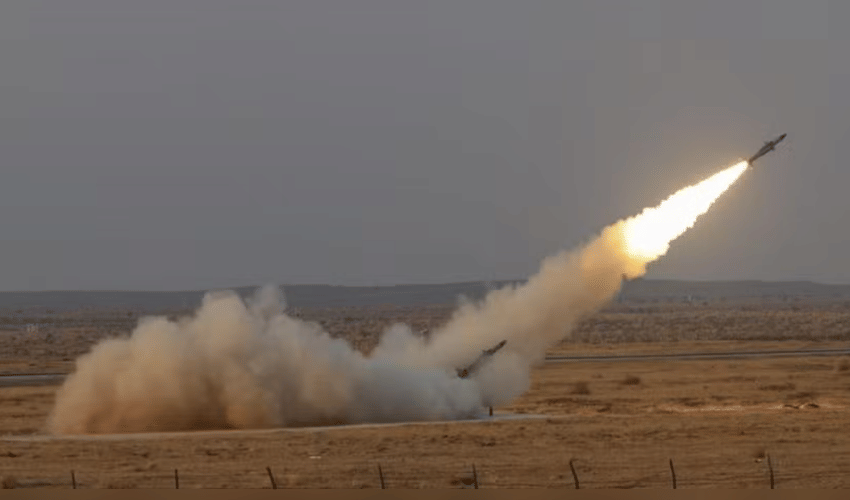

Defence Secretary Rajesh Kumar Singh on Thursday suggested that India may need to review its conventional missile capabilities in response to evolving global conflicts, especially developments in West Asia and Pakistan’s changing military stance. National Security Summit 2.0 in New Delhi, held to mark one year of Operation Sindoor, Singh stressed the rising importance of advanced weapon systems, robust air defence, and faster procurement processes.
Addressing whether recent conflicts—particularly in West Asia—and concerns about civilian targeting require changes in India’s defence strategy, he acknowledged that the strategic landscape is shifting. He noted that the earlier view of missiles being primarily for strategic use is changing, as countries like Pakistan are increasingly developing conventional missile forces. As a result, India will need to adapt its approach.
Singh also emphasized that institutional processes for strengthening military capabilities will continue alongside efforts to boost missile production. He pointed out that India has largely depended on a single public-sector manufacturer and DRDO’s in-house capabilities so far, and that production must now expand across a broader industrial base.
He added that lessons from conflicts in West Asia and the Russia-Ukraine War are shaping India’s defence planning. Key takeaways include the importance of long-range strike weapons, layered air defence systems, adequate stockpiles of ammunition, and mobile radar and artillery units. These insights have already influenced procurement decisions, with significant investments—around Rs 30,000 crore—directed toward drones, counter-drone systems, loitering munitions, radars, and electronic warfare equipment following Operation Sindoor.
The session titled “Future of Warfare and National Security” also featured Samir V. Kamat and Ashutosh Dixit, and was inaugurated by Defence Minister Rajnath Singh. Highlighting future initiatives, Singh referred to the “Sudarshan Chakra Mission,” a multi-layered air defence and offensive system announced by the Prime Minister. A preliminary feasibility report has already been submitted, and further work is underway.
He also underlined the need to speed up procurement, stating that even within existing procedures, efficiency can be improved. Over the past two and a half years, India has signed defence contracts worth nearly Rs 4.5 lakh crore, reflecting progress in strengthening capabilities and addressing critical gaps.