



Military
India and New Zealand to Expand Defence Cooperation, Military Exchanges Over Next 12-18 Months
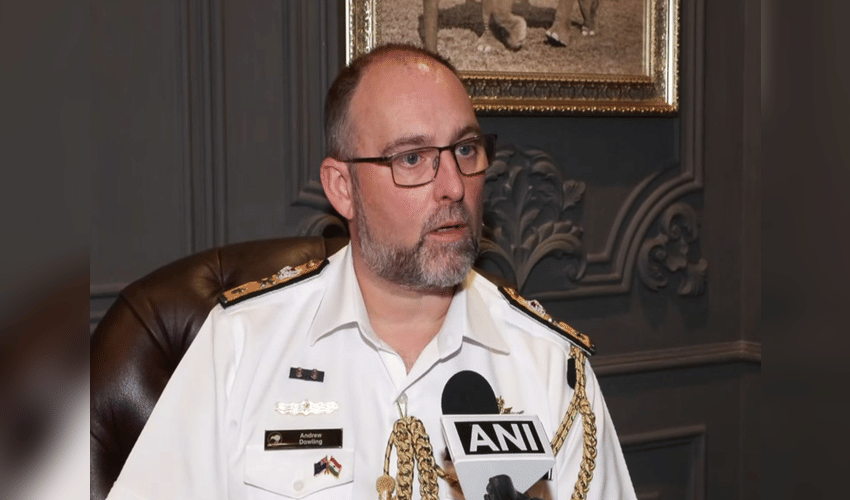

India and New Zealand are preparing to strengthen their defence partnership over the next 12 to 18 months, with a greater focus on military exchanges, training programmes and maritime security cooperation. New Zealand Defence Adviser Commodore Andrew Dowling has indicated that both countries are keen to build closer military ties as part of their wider Indo-Pacific security engagement. Dowling said the two countries were exploring opportunities to increase interaction between their armed forces, including short-term personnel exchanges and training initiatives. He expressed confidence that defence engagement would gain momentum over the coming year, helping military personnel from both sides develop stronger professional relationships and a better understanding of each other's operational practices.
According to Dowling, geographical distance sometimes creates difficulties in bringing military assets together, particularly when it comes to deploying naval vessels and aircraft. However, he believes greater interaction between military personnel could help overcome some of these challenges by building familiarity and trust between the two forces.
He emphasised that regular exchanges and training opportunities would be important in making bilateral defence cooperation more effective and sustainable. Highlighting India's strategic importance to New Zealand, Dowling said both countries shared significant maritime interests and were closely connected through the Indo-Pacific region. He pointed out that their economies depended heavily on maritime trade and secure sea routes, making cooperation essential for protecting vital lines of communication.
While India plays an important role in monitoring security developments across the Indian Ocean, New Zealand remains actively engaged in the Southwest Pacific and the wider Pacific region. Dowling said the two countries' geographical positions and maritime responsibilities made them important partners in maintaining regional stability.
He also noted that New Zealand's decision to establish a dedicated defence adviser position in India reflected Wellington's growing interest in strengthening its security relationship with New Delhi. Referring to recent military engagements, Dowling highlighted India's participation in the AustraHind Army exercise and New Zealand's involvement in the Tarang Shakti multinational air exercise. He said both countries were also planning several maritime activities for the coming year, which could provide further opportunities to exchange operational experience and improve cooperation.
According to him, India and New Zealand face several common maritime security challenges despite operating in different geographical environments. Sharing knowledge and learning from each other's approaches could help both countries develop more effective responses to emerging security concerns.
Dowling also underlined the significance of the inaugural India-New Zealand Defence and Security Track 1.5 Dialogue, describing it as another important step in expanding bilateral defence and strategic engagement. The platform is expected to bring together government representatives, think tanks and other influential participants to discuss issues of mutual interest. He said the Track 1.5 format would allow more flexible discussions on defence and security matters that may not always be possible through formal government-to-government channels. Dowling expressed hope that the inaugural dialogue would generate interest in organising another edition next year.
The defence adviser further pointed to similarities in the military equipment operated by both countries as an area that could support closer cooperation. These include C-130J transport aircraft, MH-60R Romeo helicopters and P-8 maritime patrol aircraft. Operating similar platforms could create opportunities for technical exchanges, operational learning and greater coordination between military personnel. Dowling stressed that the growing defence relationship should be maintained through regular and meaningful engagement rather than allowing the recent progress to lose momentum. He also acknowledged that both armed forces have their own operational commitments, making it important to ensure that future cooperation remains practical and sustainable.
The proposed expansion of military exchanges and maritime engagement reflects the growing strategic importance of India-New Zealand relations in the Indo-Pacific. With both countries seeking stronger cooperation in training, defence dialogue and maritime security, the next 12 to 18 months could mark an important phase in taking their bilateral defence partnership forward.
Disclaimer: This image is taken from ANI.