



Military
IAF's Rafale MRFA Challenge: What Happens If India's Mega Fighter Deal Hits a Roadblock?
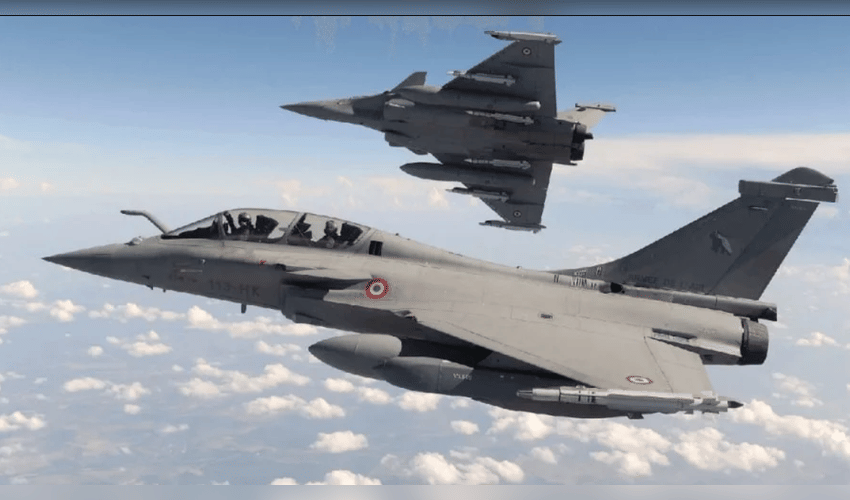

The Indian Air Force’s ambitious plan to acquire 114 Rafale fighter jets under the Multi-Role Fighter Aircraft (MRFA) programme is one of the country’s most significant defence modernisation projects. Estimated to cost around ₹3.25 lakh crore, the proposed acquisition is aimed at strengthening the IAF’s fighter fleet and reducing the growing gap between the number of aircraft required and those currently available. While negotiations between India and France are progressing, the deal is not without challenges. Discussions over technology transfer, access to critical software source codes, integration of Indian weapons, and compatibility with India’s secure military networks remain some of the most important issues that need to be resolved before the agreement moves forward.
For New Delhi, buying advanced fighter aircraft is no longer just about adding numbers to the fleet. The focus has shifted towards ensuring operational independence, allowing Indian systems to be integrated freely, and reducing long-term dependence on foreign suppliers. The Integrated Air Command and Control System (IACCS) plays a central role in India’s modern air warfare strategy. The network connects fighter aircraft, radar stations, command centres, and missile systems to provide real-time information sharing and faster decision-making during military operations. Any new aircraft inducted into the IAF must be fully compatible with this ecosystem to ensure maximum battlefield effectiveness.
India is also increasingly focused on integrating its own weapons and technologies with foreign-origin platforms. The ability to deploy systems such as the Astra Mk2 air-to-air missile, Rudram anti-radiation missile, and future BrahMos-NG cruise missile without external restrictions has become a key requirement for future fighter acquisitions. The Rafale remains a strong contender because it has already established itself within the Indian Air Force. India operates 36 Rafale fighters acquired from France in 2016, and the aircraft has delivered advanced capabilities, including precision strike, electronic warfare, and long-range combat operations.
Expanding the Rafale fleet would offer several advantages. The IAF would not need to create an entirely new support system, as pilots, engineers, maintenance facilities, and logistics networks are already familiar with the aircraft. This would reduce costs, simplify training, and allow faster operational deployment. The proposed 114-aircraft acquisition is also expected to include significant manufacturing in India, supporting the country’s push for domestic defence production. However, if negotiations fail to provide India with the level of technological access and operational flexibility it seeks, the government may have to consider alternative options.
One of the most important alternatives is India’s indigenous Tejas Mk2 fighter programme. The aircraft is expected to become a major pillar of the IAF’s future fleet, offering improvements over the Tejas Mk1A with a more powerful engine, advanced radar, greater payload capacity, and increased combat range. The Tejas Mk2 represents India’s ambition to build a self-reliant fighter aircraft ecosystem. However, the programme is still under development, and large-scale production is expected to take time. This means it may not immediately solve the IAF’s urgent requirement for additional fighter squadrons.
India could also examine other foreign fighter options if the Rafale deal faces major hurdles. Aircraft such as the Boeing F-15EX, Saab Gripen E, Russian Su-35, and other platforms have advanced capabilities, but each comes with its own challenges. The F-15EX offers exceptional range and weapons capacity but belongs to a heavier fighter category, which could increase operational expenses. The Su-35 provides strong combat performance but raises concerns about future support and spare parts availability due to changing geopolitical conditions.
The Gripen E offers modern avionics and lower operating costs, but its dependence on foreign components could create supply chain concerns during a crisis. Meanwhile, fifth-generation options such as the Russian Su-57 remain uncertain due to questions surrounding production capacity and long-term operational reliability.
Another major challenge with selecting a new fighter type would be the time and cost involved in creating an entirely new ecosystem. The IAF would need new training programmes, maintenance facilities, ground infrastructure, spare parts networks, and weapons integration processes. These factors could delay the arrival of additional combat aircraft. Because of these complications, expanding the existing Rafale fleet remains one of the most practical solutions for India. The aircraft already fits into the IAF’s operational structure, and additional jets would allow the force to maximise existing investments.
At the same time, India is unlikely to depend on foreign fighter acquisitions alone. A long-term strategy could involve a combination of Rafale expansion, faster Tejas Mk1A and Tejas Mk2 production, upgrades to the Su-30MKI fleet, and progress on the Advanced Medium Combat Aircraft (AMCA) programme.
The future of India’s fighter aircraft strategy will depend on balancing immediate security requirements with long-term technological independence. While the Rafale offers proven capability and operational advantages, India’s broader objective is to ensure that its armed forces have the freedom to operate, upgrade, and integrate advanced systems without external limitations. If the Rafale MRFA agreement fails to meet these expectations, India’s focus could shift more aggressively towards indigenous fighter development. The situation highlights a larger defence lesson for a rising power: possessing advanced aircraft is important, but having control over their technology and operations is equally critical.



