



Asia In News
Exclusive: After Air India Tragedy, Same Indian Forensic Team Battles Nepal Flood Toll
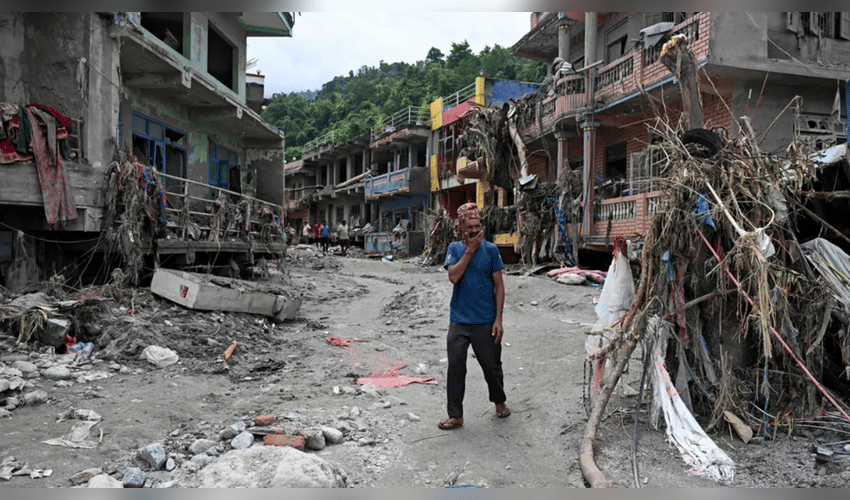

A team of Indian forensic experts that played a key role in identifying victims of the Air India Flight 171 crash has now been deployed in Nepal to assist authorities in identifying victims of the devastating floods that have left hundreds dead and many others missing. The 19-member Indian forensic team is working with Nepalese authorities on the difficult task of establishing the identities of recovered bodies and human remains. The delegation includes specialists from the National Forensic Sciences University in Gandhinagar and the Central Forensic Sciences Laboratory in Delhi. The experts are working alongside Nepal Police forensic officials and specialists at Tribhuvan University Teaching Hospital in Kathmandu.
The assignment comes after the Indian team gained extensive experience during the victim-identification operation following the Air India crash in Ahmedabad. That investigation required forensic specialists to identify victims whose remains were severely damaged, making conventional identification difficult. DNA analysis and other forensic techniques were used to establish identities and assist families.
The situation in Nepal presents a different but equally challenging forensic problem. Floodwaters, landslides and debris have damaged or scattered human remains across affected areas, while some victims have remained unidentified. In several cases, visual identification is not possible, leaving forensic science as the primary means of confirming who the victims are.
The Indian experts are collecting DNA samples from recovered remains and comparing them with reference samples obtained from relatives of people reported missing. Bone and teeth samples can be particularly important when remains have been exposed to water and harsh environmental conditions. Investigators can also use fingerprints, dental records and other available evidence where possible.
The identification process is being conducted in coordination with Nepal's forensic authorities. Officials are also working with diplomatic missions because the disaster has affected foreign nationals, including Indians. Families who are unable to travel to Nepal may also be able to provide DNA samples through medical facilities in their respective countries, which can then be used for comparison.
The operation is expected to take time because each identification requires careful collection, documentation and laboratory analysis. Matching DNA from unidentified remains with relatives must be done through established forensic procedures before authorities can formally confirm an identity. For families waiting for information about missing relatives, the forensic operation has enormous importance. Confirmation of an identity allows authorities to formally notify families and begin the process of handing over the remains for final rites.
India's assistance comes as Nepal continues to deal with the aftermath of the floods, with rescue and recovery teams working across badly affected areas. The disaster has created a major humanitarian and logistical challenge, while authorities continue efforts to locate missing people and account for those who have died. The involvement of Indian forensic specialists who previously worked on the Air India crash investigation highlights the growing importance of specialised disaster victim identification teams in large-scale emergencies. Their experience in handling mass-casualty identification is now being put to use in Nepal as authorities work to provide answers to families amid one of the country's most difficult disaster responses. As recovery operations continue, the forensic teams will remain focused on one of the most sensitive parts of the response — ensuring that unidentified victims are given names and that their families receive reliable confirmation of their fate.