



Military
Defence Minister Rajnath Singh Unveils Rs 3,070 Crore Indigenisation List to Boost Self-Reliance in Defence Manufacturing
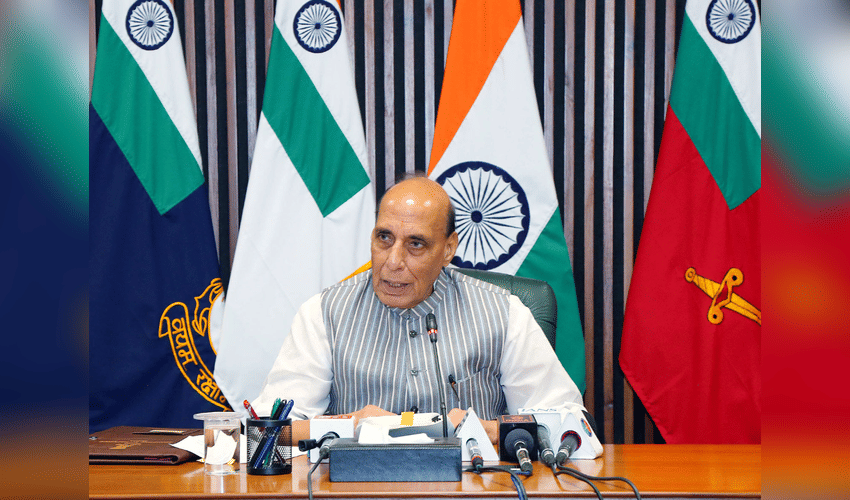

In a significant push towards Aatmanirbharta in defence manufacturing, the Department of Defence Production (DDP) under the Ministry of Defence has notified the sixth Positive Indigenisation List (PIL), covering 405 strategically important defence items with an estimated business potential of ₹3,070 crore. Defence Minister Rajnath Singh said the initiative would create greater opportunities for Indian companies, strengthen the domestic defence manufacturing ecosystem, encourage investment and innovation, and reduce the country’s reliance on imported defence equipment.
Of the 405 items included in the latest list, 16 are meant for the Indian Coast Guard (ICG), while the remaining 389 items are linked to Defence Public Sector Undertakings (DPSUs). According to the Ministry of Defence, the list covers a broad range of equipment and components, including Line Replaceable Units (LRUs), sub-systems, sub-assemblies, spare parts, components and raw materials used across several defence platforms.
The items span multiple categories. In the aviation sector, the list includes equipment associated with platforms such as the Advanced Light Helicopter (ALH), Light Utility Helicopter (LUH), Su-30MKI, Light Combat Aircraft (LCA) and the AL-31FP engine. For armoured warfare, the list covers systems and components related to the T-72, T-90 and BMP-II platforms. It also includes equipment for warships and missile systems, including Konkurs-M, Invar and MRSAM.
The latest PIL further covers critical defence electronics and communication equipment, including radars, sonars, fire-control systems and satellite communication systems. Certain ammunition and other specialised defence equipment, including High Explosive Anti-Tank ammunition, have also been included. Each item on the list has been assigned an indicative timeline for indigenous development. Once domestic manufacturers successfully develop the required products, the government will procure them from Indian industry, creating a direct market for locally developed defence technologies.
The indigenisation process will be carried out by DPSUs and the Indian Coast Guard through multiple channels, including the 'Make' procedure and in-house development. Domestic companies, particularly micro, small and medium enterprises (MSMEs), are expected to play an important role in this process.
Strengthening India's Defence Manufacturing Base: The sixth Positive Indigenisation List forms part of the government's broader Aatmanirbhar Bharat strategy aimed at building a stronger and more self-sufficient Indian defence industry. An important component of this effort is the SRIJAN Defence Portal, launched by the DDP in August 2020. The platform allows DPSUs and Service Headquarters to identify defence products and components that can be developed and manufactured by Indian companies, including MSMEs and start-ups.
By June 2026, more than 33,000 defence items had been offered for indigenisation through the SRIJAN platform by DPSUs and Service Headquarters. This figure includes 5,012 items covered under the first five Positive Indigenisation Lists. The government's indigenisation drive has already produced measurable results. More than 15,700 defence items have been successfully indigenised, generating an estimated import substitution value of around ₹9,000 crore over the past five years.
DPSUs have also increased procurement from Indian vendors. Up to March 2026, procurement orders, including those linked to in-house production, worth approximately ₹10,000 crore had been placed with domestic suppliers. With the addition of another 405 items, the latest list is expected to further expand the role of Indian manufacturers in the defence supply chain while creating opportunities for technology development, private-sector participation and long-term investment in the country's defence industrial base.



