



Politics
'Cockroach Janta Party' Takes Over Social Media: Trend or Temporary Buzz?
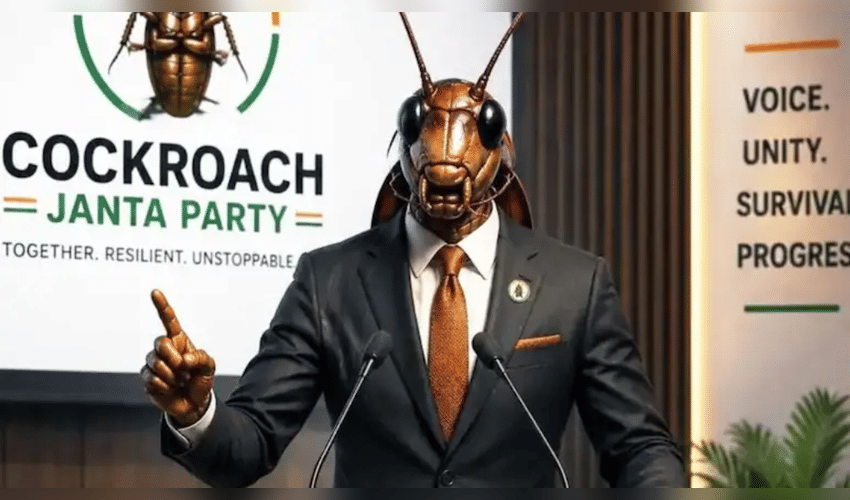

A satirical online movement called the “Cockroach Janta Party” (CJP) has rapidly become one of India’s biggest social media trends, drawing millions of followers within days and triggering nationwide political debate. The movement, which began as an internet joke, is now being discussed by politicians, celebrities, activists, and young voters across digital platforms.
The controversy reportedly started after remarks made during a Supreme Court hearing were interpreted online as comparing unemployed youth and activists to “cockroaches.” The statement sparked backlash on social media, where users responded with memes, satire, and parody content. Soon after, the Cockroach Janta Party emerged online as a symbolic platform representing frustrated youth and unemployed citizens.
Founded by Abhijeet Dipke, the movement describes itself as the “Voice of the Lazy and Unemployed.” Despite its humorous tone, the campaign has touched on serious issues including unemployment, rising living costs, exam paper leaks, freedom of expression, and political accountability. According to reports, the party’s Instagram following crossed several million within less than a week, even surpassing the follower count of some mainstream political parties online. The rapid rise has surprised political observers and raised questions about the growing influence of meme culture in India’s political landscape.
The movement has especially resonated with Gen Z users, many of whom are using satire and humor to express frustration over unemployment and economic uncertainty. Reuters reported that a large portion of the movement’s supporters fall within the 19–25 age group, highlighting a broader sense of political and economic dissatisfaction among young Indians.
Celebrities and public figures have also joined the online buzz. Filmmaker Anurag Kashyap and actor Dia Mirza were among several personalities reported to be following or engaging with the movement online, further boosting its visibility. At the same time, the movement has attracted controversy. Reports emerged that the party’s X account was withheld in India, while the founder claimed there were attempts to hack its Instagram page. These developments fueled further speculation and intensified online conversations surrounding censorship and digital activism.
Political reactions have also started pouring in. Congress MP Shashi Tharoor commented on the growing debate around the movement, while discussions around the phenomenon continue across television debates and social media platforms. Interestingly, the satire appears to be evolving beyond memes. Recent reports suggest that the group has launched campaigns around public issues such as the NEET paper leak controversy and may even explore participation in electoral politics in the future.
While critics dismiss the movement as temporary internet hype, supporters argue it reflects deeper frustration among India’s youth. Analysts believe the rise of the Cockroach Janta Party highlights how political conversations in India are increasingly shifting toward digital platforms, where memes and viral content can quickly shape national discourse. The Cockroach Janta Party remains an unusual blend of satire, protest, and internet culture — but its explosive growth has already made it one of the most talked-about viral movements in the country.



