



Economy
CAG has suggested using data and technology to spot unfair practices in government tenders.
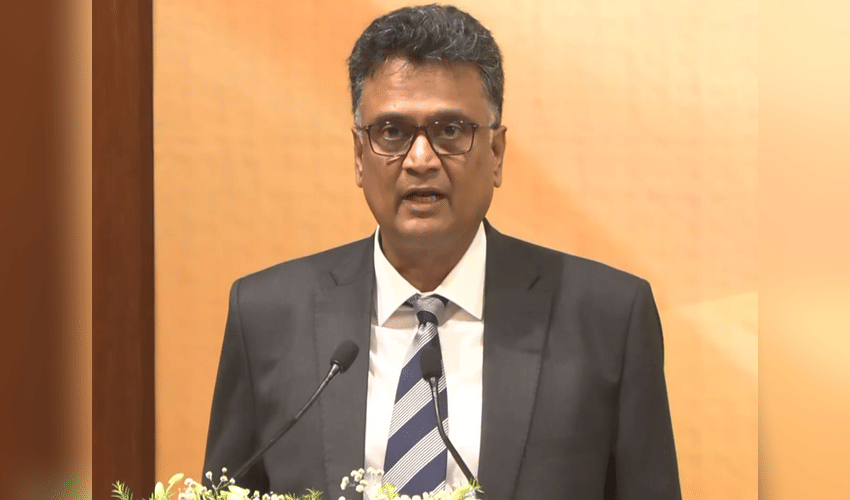

India should leverage data and advanced technology to detect corruption and unfair practices in government tenders, while strengthening coordination between the Comptroller and Auditor General (CAG) and the Competition Commission of India (CCI) to curb collusion and safeguard public funds, CAG K. Sanjay Murthy said on Wednesday.
Speaking at the 17th annual day event of the Competition Commission of India, Murthy emphasized that audit and competition enforcement agencies must collaborate closely to identify anti-competitive activities in procurement, as such practices directly impact public spending and citizen welfare. Murthy stated that the connection between auditing and competition law is fundamental, especially in government procurement where suppliers engaging in price-fixing, bid-rigging, or market-sharing not only violate competition laws but also cause significant losses to the public treasury.
He said the CAG is increasingly adopting artificial intelligence, machine learning, and large-scale data analytics to detect procurement irregularities and generate actionable evidence. According to him, these technologies allow audits to move beyond sample-based checks toward comprehensive analysis of entire datasets.
Murthy added that modern audit systems are evolving toward near real-time monitoring, enabling authorities to identify suspicious bidding patterns such as repeated bid rotations, vendor clustering, concentration of contract awards, and practices that restrict competition across tenders. He noted that greater data-sharing and collaboration between the CAG and CCI could create substantial national value, particularly as India’s public procurement system becomes more digital and complex.
Murthy also highlighted that several CAG findings have previously contributed to CCI investigations into cartelisation and bid-rigging in public tenders, including a recent April 2026 order against 17 entities involved in collusive bidding. He said such institutional cooperation will become increasingly crucial as India works toward becoming a developed economy by 2047, where transparent public spending and competitive markets will play a key role in economic growth.



