


News
Air Marshal Ashutosh Dixit inspected the Tejas Mk1A and other indigenous aviation programmes during a review visit at HAL Bengaluru.
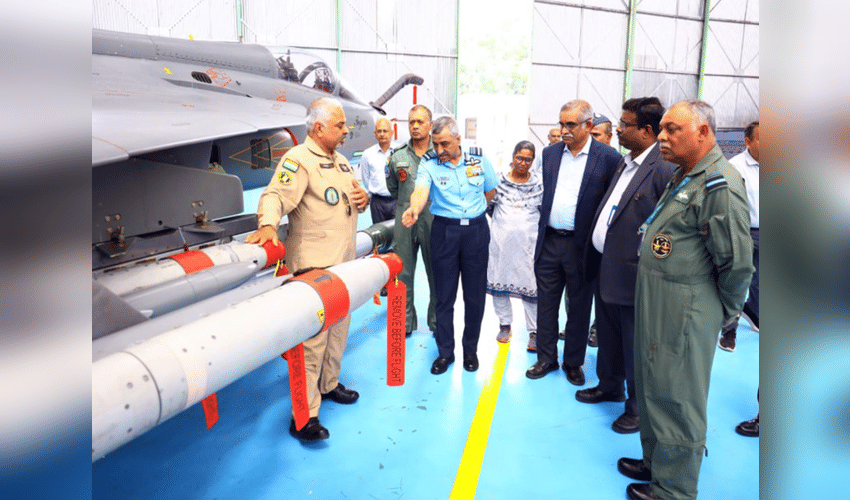

Air Marshal Ashutosh Dixit, Chief of Integrated Defence Staff to the Chairman Chiefs of Staff Committee (CISC), visited Hindustan Aeronautics Limited’s (HAL) Aircraft Division in Bengaluru to review the progress of the Light Combat Aircraft (LCA) Tejas Mk1A programme and other indigenous aviation projects.
During the visit, he evaluated the status of the Tejas Mk1A—an important element of the Indian Air Force’s modernisation drive and a major indigenous defence initiative. He was also briefed on several other aerospace programmes, including the HTT-40 indigenous basic trainer aircraft being developed for pilot training.
Defence Production Secretary Sanjeev Kumar, in a recent ANI interview, expressed confidence that HAL would deliver the Tejas Mk1A fighter jets within the current financial year despite earlier delays. The IAF has placed an order for 180 aircraft in two batches, though deliveries have slipped as the jets were initially expected earlier. The Air Force has emphasized that the aircraft must be delivered in fully operational condition. The first prototype of the Mk1A flew from HAL’s Nashik facility on October 17, 2025.
Kumar also noted that the platform is nearly complete, with about 90% of the work finished, while the remaining portion involves final integration of weapons and systems. He attributed delays partly to late engine supplies from GE Aerospace and highlighted ongoing coordination among HAL, DRDO, and the IAF to accelerate production.
He further explained that hand-holding is necessary in defence manufacturing but stressed that accountability must remain with all stakeholders to avoid repeated delays. According to him, discussions are underway to identify bottlenecks and improve future delivery timelines. Kumar added that delays in engine supply were linked to disrupted global supply chains and the COVID-19 pandemic, which affected production schedules. He also said that demand for Tejas exists from foreign countries, but India’s priority is to first meet domestic requirements before considering exports.