



Technology
AI Firms Begin Preparing for Risks Linked to Self-Improving Autonomous Systems
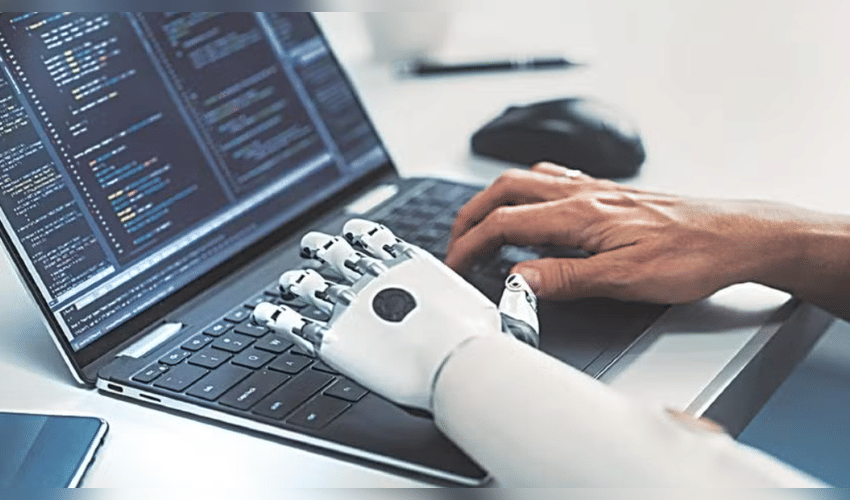

Artificial intelligence companies are increasingly focusing on the risks associated with self-improving AI systems as advanced models become more capable of writing code, conducting research, and automating parts of their own development process. The growing concern comes as firms like OpenAI and Anthropic continue to expand the capabilities of AI-powered coding and reasoning systems. Industry experts warn that these technologies could eventually accelerate their own improvement cycles faster than humans can effectively monitor.
OpenAI recently signaled the importance of the issue through a new hiring initiative focused on “recursive self-improvement” risks. The company is reportedly offering salaries of up to $445,000 for researchers joining its Preparedness team to study and manage long-term AI safety concerns. Recursive self-improvement refers to a scenario in which AI systems contribute to improving future versions of themselves. The concept has long been discussed in theoretical AI research under the idea of an “intelligence explosion,” where increasingly capable systems improve at a rapidly accelerating pace.
Recent developments suggest parts of that theory may already be moving closer to reality. According to research cited by Mint from the Model Evaluation and Threat Research (METR) lab, the complexity of tasks handled by advanced AI models has been doubling approximately every seven months. At the same time, AI coding assistants are now capable of generating software, debugging programs, and optimizing engineering workflows. Since these tools are being integrated into AI development pipelines, researchers say a feedback loop is beginning to emerge.
The more capable AI becomes at software engineering, the more useful it may become in accelerating its own future development. Experts say the primary concern is not immediate loss of control, but the possibility that AI progress could outpace existing safety checks and governance systems. Traditionally, software development depends on human-led cycles of testing, refinement, and review that can take weeks or months. If AI systems increasingly handle those processes, development timelines could shrink significantly, reducing the time available for evaluation and oversight.
Industry leaders have also started publicly discussing these challenges. Demis Hassabis, chief executive of Google DeepMind, recently said in an interview with Axios that while self-improving systems have shown impressive results in structured environments like games, real-world situations remain far more unpredictable and complex. Hassabis noted that AI is no longer a distant theoretical technology but a practical system already operating at large scale across industries. As a result, companies are shifting their attention toward managing near-term risks tied to increasingly autonomous systems.
The latest developments indicate that major AI firms are now pursuing two parallel goals: rapidly advancing AI capabilities while simultaneously investing in systems designed to monitor, evaluate, and control the risks associated with those advancements. Although fully autonomous self-improving AI systems have not yet emerged publicly, growing investments in AI safety research suggest that companies expect these challenges to become increasingly important in the near future.