



Technology
According to a source, SpaceX is expected to price its IPO at 135 per dollar share, aiming to raise a record-breaking 75 billion dollar.
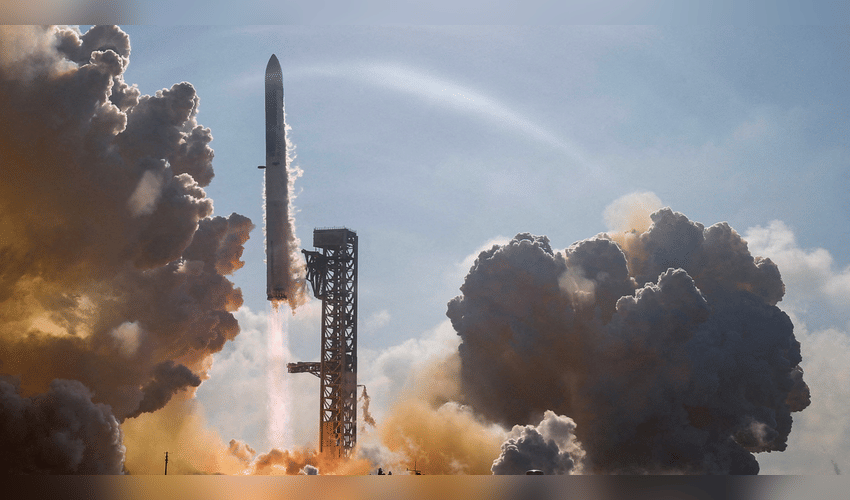

In an unexpected move ahead of its investor roadshow, Elon Musk’s SpaceX is planning to price its IPO at a fixed $135 per share, according to a source familiar with the matter. The company aims to raise a record-breaking $75 billion by selling 555.6 million shares, potentially valuing the business at around $1.75 trillion. The listing is expected to lead a new wave of major IPOs after years of limited activity in large public offerings. Other highly valued AI firms, including OpenAI and Anthropic, are also reportedly preparing to enter public markets.
SpaceX’s IPO strategy breaks with traditional Wall Street practices. Companies going public usually announce a price range and later adjust the final price depending on investor demand during the bookbuilding process. Instead, SpaceX plans to set a fixed price before formally meeting investors during its roadshow, which begins Thursday. The company has already conducted preliminary “testing the waters” discussions with potential investors.
Legal experts say there is no regulation preventing such an unconventional pricing strategy. Weiheng Chen, senior partner at Wilson Sonsini Goodrich & Rosati in Hong Kong, said Musk appears to be taking a “take-it-or-leave-it” stance that may work because of his strong investor following and current market conditions. Musk has already reshaped several aspects of the IPO process for SpaceX. The company is reportedly planning to allocate a significant portion of shares to retail investors and is pushing for early inclusion in major stock indexes. Governance structures are also being designed to preserve Musk’s control over the company after listing.
SpaceX’s valuation is heavily tied to ambitious future technologies and markets, including Mars exploration, AI-powered infrastructure, and space-based data centers. Reuters previously reported that up to 30% of the offering could be reserved for retail investors, an unusually high percentage aimed at leveraging Musk’s popularity among individual traders.
The IPO is expected to be entirely primary, meaning the proceeds will go directly to the company rather than existing shareholders. Sources also said Musk will be required to hold his shares for at least 366 days after the IPO, a measure intended to reassure investors of his long-term commitment. Funds raised from the offering are expected to support the expansion of AI computing infrastructure and the company’s Starlink satellite network. Earlier this year, SpaceX merged with Musk’s AI venture xAI in a deal valuing SpaceX at $1 trillion and xAI at $250 billion.
Valuing the company remains difficult because SpaceX has few direct competitors. Morningstar estimated the company’s worth at around $780 billion in a June research note, significantly below its current private-market valuation. Analysts noted that much of the company’s revenue and profitability currently comes from Starlink. Despite this, SpaceX is increasingly positioning itself as an AI-driven company, with plans involving technologies that have not yet been developed, including solar-powered data centers in space. Reuters previously reported that the company believes these future markets could represent a $28.5 trillion opportunity.
At a valuation of $1.75 trillion and projected 2025 revenue of $18.67 billion, SpaceX would trade at nearly 94 times revenue. By comparison, Rocket Lab trades at around 118 times revenue, Palantir at roughly 81 times, and Tesla at about 17 times. The company cannot yet be valued using earnings because it posted a net loss last year. The IPO is expected to trigger renewed excitement in public markets, with SpaceX, OpenAI, and Anthropic together potentially adding nearly $4 trillion in market value to stock exchanges. Analysts believe much of the enthusiasm surrounding SpaceX is tied directly to Musk’s reputation and track record with Tesla, which has historically attracted strong retail investor interest.
Still, some investors may be cautious. Analysts note that only SpaceX’s Starlink business is currently profitable, while its other operations continue to consume cash. Revenue rose to $4.69 billion in the quarter ending March 31, compared with $4.07 billion a year earlier, but losses widened sharply. In 2025, the company recorded a net loss of $4.94 billion after posting a profit the previous year.
Corporate governance has also drawn scrutiny. The IPO prospectus reportedly outlines a dual-class share structure that would keep voting power concentrated among Musk and a small group of insiders. SpaceX plans to list on the Nasdaq under the ticker symbol “SPCX,” with trading expected to begin on June 12. Goldman Sachs, Morgan Stanley, BofA Securities, Citigroup, and J.P. Morgan are leading the underwriting syndicate for the offering.
Disclaimer: This image is taken from Reuters.