



World
12 Indian Students Deemed Potentially Inadmissible in Canada Amid Calgary Protest
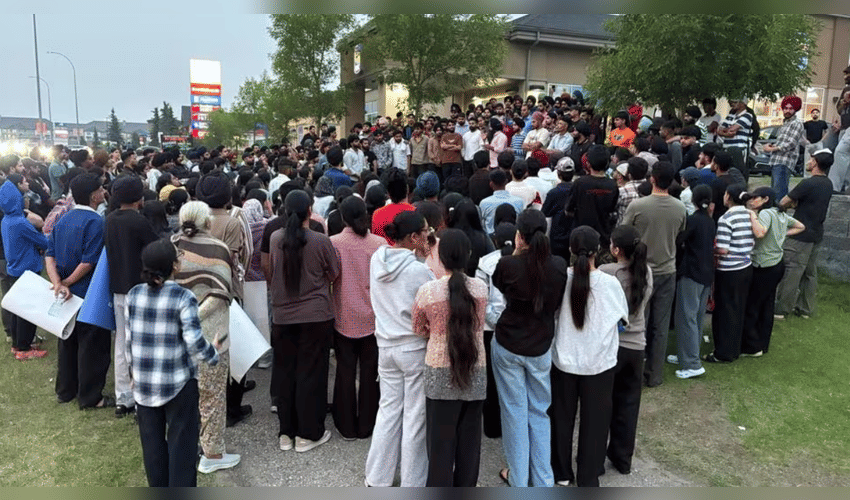

A protest by international students in Calgary over rejected post-graduation work permits has taken a new turn after Canadian authorities identified 12 protesters as potentially inadmissible to the country. The development comes after weeks of demonstrations by international students, including a large number of Indian students, who have been protesting the rejection of their Post-Graduation Work Permit (PGWP) applications. The protests began on July 24 and have focused on students who say they were denied work permits despite completing programmes they believed would make them eligible.
Calgary police became involved after concerns were raised about activities surrounding the protest. Immigration officials were subsequently contacted to verify the status of some of the demonstrators. According to reports, immigration authorities checked the status of 20 people connected to the protest and identified 12 as potentially inadmissible under Canada's Immigration and Refugee Protection Act. Those individuals were reportedly directed to follow up with the Canada Border Services Agency (CBSA).
The identification of the 12 protesters does not automatically mean that they have been ordered to leave Canada or will necessarily be deported. Any further action would depend on their individual immigration status and the outcome of the relevant legal or administrative process. The wider dispute is linked to students who studied programmes associated with Portage College in Alberta. Several students have argued that they enrolled in the programmes after being led to believe they could eventually qualify for post-study work opportunities in Canada. Their PGWP applications were later refused, leaving them facing uncertainty over their ability to remain in the country and work after completing their studies.
The students have maintained that they invested significant amounts of money in tuition, accommodation and other expenses while studying in Canada. They are seeking a review of their cases and greater clarity over the eligibility rules that applied to their programmes when they enrolled. The involvement of the CBSA has added another layer to the dispute. Immigration status is separate from the question of whether a graduate qualifies for a PGWP, and completing a course at a Canadian educational institution does not by itself guarantee eligibility for a work permit. The latest development has also intensified concerns among the protesting students, as some now face potential immigration consequences in addition to the original dispute over work permits.
The controversy highlights the difficulties international students can face when education decisions intersect with changing immigration policies. For prospective students, the case also underscores the importance of checking current Canadian immigration and PGWP requirements before enrolling in a programme, rather than relying solely on information provided by educational agents or institutions. The protest remains centred on the students' demand for clarity and reconsideration of their rejected work-permit applications, while the immigration status of the 12 identified protesters could lead to further proceedings in Canada.