



World
US Intelligence Warns Putin Could Test NATO With Limited Attack
Published On Sat, 08 Aug 2026
Fatima Hasan
6 Views
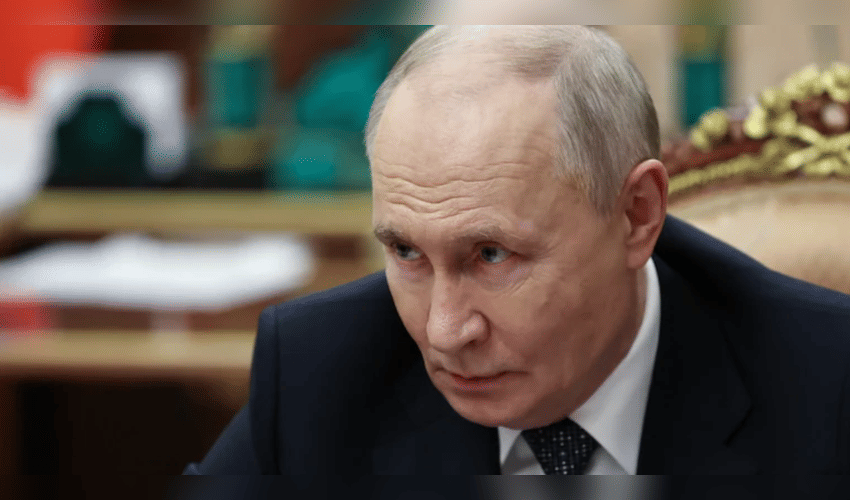

Russian President Vladimir Putin could attempt to test the resolve of NATO by launching a limited attack or other form of aggression against one of the alliance’s members, according to recent US intelligence assessments cited in reports. The assessments reportedly suggest that Russia could consider testing NATO’s response sometime between late 2026 and 2029. The potential scenarios range from cyberattacks and sabotage to the use of covert forces or a limited military incursion into the territory of a NATO member.
The intelligence does not indicate that Moscow has made a decision to attack a NATO country, nor does it suggest that an attack is imminent. Instead, US officials reportedly believe Russia could seek to exploit what it sees as potential divisions within the alliance and determine how willing its members would be to respond collectively to a limited confrontation. According to a report by The Wall Street Journal, US intelligence agencies have reassessed some of their earlier views about the likelihood of Russia directly challenging NATO. Earlier assessments had suggested that Putin would be reluctant to confront the alliance while Russian forces remained heavily engaged in the war in Ukraine. The latest assessments reportedly reflect concerns that Moscows calculations could change depending on developments in the conflict and Russia’s ability to rebuild its military capabilities.
A limited operation could allow Russia to create uncertainty over whether an incident qualifies as an armed attack under NATO’s collective-defence arrangements. Cyber operations, sabotage or the deployment of unidentified armed personnel could present particularly difficult choices for Western governments because determining the scale and nature of the response could take time. At the centre of the issue is NATO’s Article 5, which states that an armed attack against one member is considered an attack against all members. However, the provision does not require every country to respond in exactly the same way. Each NATO member determines what action it considers necessary to assist the ally under attack.
That distinction has become increasingly important as European governments have raised concerns about Russia’s use of hybrid tactics. NATO members have accused Moscow of being involved in cyber operations, sabotage, disinformation campaigns and other activities aimed at weakening Western countries without triggering a conventional military response. The concern has been particularly strong in countries on NATO’s eastern flank, where governments have increased military readiness amid fears that Russia could eventually challenge the alliance more directly. NATO has strengthened its presence in eastern Europe and expanded surveillance and air-defence capabilities in response to the changing security environment.
NATO Secretary General Mark Rutte has previously warned that Russia could have the capability to launch a larger military attack against the alliance later this decade. He has urged member states to increase defence spending and accelerate the production of weapons and ammunition to ensure that NATO remains capable of deterring Moscow. European intelligence and defence officials have issued similar warnings about Russia’s long-term military ambitions. German officials have said NATO must prepare for the possibility that Russia could become capable of mounting a major military operation against an alliance member before the end of the decade. At the same time, other European intelligence assessments have indicated that an immediate Russian attack on NATO is unlikely.
The latest US intelligence assessment also comes amid concerns over American weapons stockpiles. The United States has supplied large quantities of military equipment and ammunition to Ukraine since Russia launched its full-scale invasion in February 2022. Those deliveries, combined with the demands of maintaining US military readiness in other regions, have increased pressure on Washington to expand defence production.
The challenge is not simply preparing for a large-scale Russian invasion. Officials are increasingly focused on the possibility of smaller incidents that could test the alliance’s political unity and its willingness to act quickly. A limited Russian operation could therefore carry consequences far beyond the territory directly involved. If NATO responded with a strong and coordinated reaction, it could reinforce the alliance’s deterrence. If members disagreed over how to respond, however, Moscow could view the incident as evidence that NATO’s collective-defence commitment can be challenged. There is no public evidence that Putin has ordered an attack against a NATO member. The intelligence assessments instead highlight a potential security scenario that the United States and its European allies are preparing for as tensions between Russia and the West remain high.
Disclaimer: This image is taken from NDTV.



