



Politics
Rebels, mergers and defections: Is NDA inching towards a two-thirds Lok Sabha majority?
Published On Thu, 18 Jun 2026
Fatima Hasan
11 Views
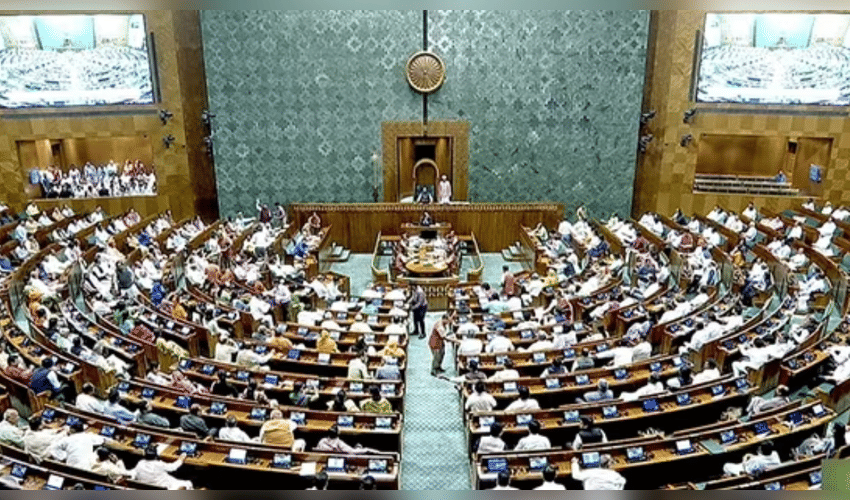

A wave of political churn involving rebel MPs, internal party splits, and shifting alliances has sparked fresh speculation over whether the BJP-led National Democratic Alliance (NDA) is gradually moving closer to a two-thirds majority in the Lok Sabha. The NDA already holds a comfortable majority in the Lower House, but recent developments within several opposition parties have brought renewed attention to the changing parliamentary numbers. Reports of factional breaks and groups of MPs distancing themselves from their parent parties have added to the perception of a shifting political equation in Parliament.
In particular, internal divisions within some regional parties, including the Trinamool Congress (TMC) and Shiv Sena (UBT), have led to speculation that breakaway groups may align themselves with the ruling alliance or support its positions on key issues. In certain cases, these factions have claimed to represent a majority within their original parties, a move that, if formally recognised, could have implications under anti-defection rules. Similar political realignments are also being observed in Maharashtra, where Shiv Sena factions continue to undergo restructuring, further contributing to uncertainty over the exact alignment of MPs in the Lok Sabha.
The idea of a two-thirds majority carries significant constitutional importance in India. Out of 543 Lok Sabha seats, 272 are needed for a simple majority, while around 363 seats are required for a two-thirds majority. This higher threshold is essential for passing major constitutional amendments and structural reforms. At present, despite gains through shifting alignments and support from breakaway groups, political observers note that the NDA remains short of this constitutional benchmark. While its position in the House remains strong, there is no clear indication that it is approaching the supermajority level.
Analysts say that although defections and mergers can influence parliamentary dynamics, translating such shifts into a stable two-thirds majority is highly unlikely without a broad, sustained political realignment across multiple states. The current situation, they add, reflects a broader trend in Indian politics marked by fragmentation within regional parties and increasing importance of post-election alignments. This has made parliamentary arithmetic more fluid, but not necessarily decisive enough to alter constitutional balances. The discussion around the NDA nearing a two-thirds majority remains speculative, driven more by political developments within opposition ranks than by any confirmed shift in numerical strength in the Lok Sabha.
Disclaimer: This image is taken from Hindustan Times.



