



News
Rajnath Singh Warns Pakistan, Says India Won't Allow Indus Waters to Benefit "Terror Patrons"
Published On Sat, 13 Jun 2026
Fatima Hasan
27 Views
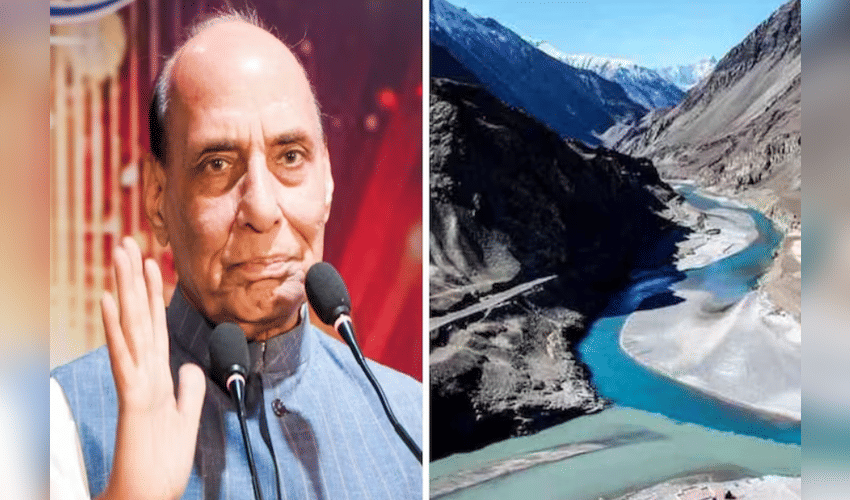

Hyderabad: Defence Minister Rajnath Singh on Friday delivered a strong warning to Pakistan, saying India will not allow the waters of the Sindhu river system to benefit countries that support terrorism. His remarks came during an “Intellectuals Meet” organised by the BJP in Hyderabad, where he spoke about national security, terrorism, and India’s evolving strategic approach toward Pakistan. Without directly naming Pakistan initially, Singh said nations that shelter or promote terrorism should not expect cooperation from India on critical matters such as water sharing. He later made it clear that New Delhi’s position had hardened after the recent Pahalgam terror attack and the government’s decision to suspend the Indus Waters Treaty.
“Those who support terror and stand against humanity cannot expect water from India,” Singh said, adding that the government would ensure the waters of the Sindhu do not reach “patrons of terrorism.” The Defence Minister also referred to “Operation Sindoor,” saying India has shown the world that it knows how to respond firmly to forces that do not understand the language of peace. His statement is being viewed as one of the strongest recent comments from the Indian government on the sensitive Indus water-sharing issue.
The Indus Waters Treaty, signed in 1960 with World Bank mediation, has long governed the sharing of river waters between India and Pakistan. Despite wars, border tensions, and diplomatic standoffs over the decades, the agreement survived and was often described as one of the world’s most durable water-sharing arrangements. The treaty has increasingly come under pressure following repeated terror attacks linked to Pakistan-based groups. Debates over reviewing the treaty are not new. Similar discussions intensified after the Uri terror attack in 2016, when India announced that “blood and water cannot flow together” while reconsidering aspects of bilateral cooperation with Pakistan.
The rhetoric surrounding the Indus river system has grown sharper. Union Jal Shakti Minister C.R. Patil recently stated that India was working on plans to fully utilise its share of Indus waters and ensure that not a single drop allocated to India flows into Pakistan in the coming years. The latest remarks by Rajnath Singh are likely to add further strain to already fragile India-Pakistan relations. Pakistan has historically opposed any attempt to alter the existing water-sharing framework and has repeatedly warned against unilateral changes to the treaty. At the same time, India has maintained that terrorism and normal diplomatic engagement cannot continue together.
Strategic experts believe water security is now becoming deeply connected with regional geopolitics and national security. Climate pressures, growing water demand, and rising political tensions have transformed river-sharing agreements from purely environmental matters into powerful diplomatic tools across South Asia. The message appears increasingly clear — national security concerns will now play a central role in shaping future decisions related to Pakistan, including long-standing agreements such as the Indus Waters Treaty.
Disclaimer: This image is taken from NDTV.



