



Asia In News
China Sends Pakistani Astronaut Into Orbit Using Long March 2F Rocket
Published On Wed, 25 Nov 2026
AHN News Desk
13 Views
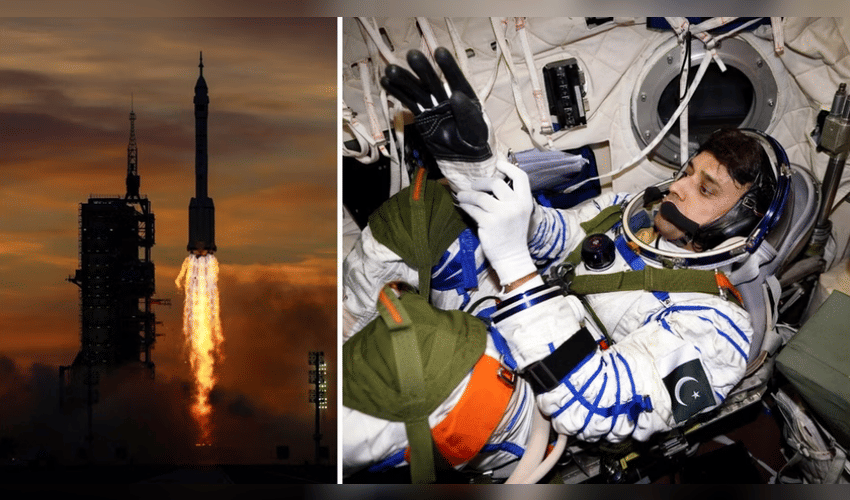

China on Wednesday launched a Pakistani astronaut into space aboard its Long March 2F rocket, marking a historic milestone in Pakistans space programme and strengthening space cooperation between the two countries. The Shenzhou-24 spacecraft lifted off from the Jiuquan Satellite Launch Centre in northwestern China, carrying Pakistani astronaut Muhammad Zeeshan Ali alongside two Chinese astronauts. The mission is part of Chinas ongoing human spaceflight programme and will take the crew to the Tiangong space station.
Alis participation marks a significant achievement for Pakistan, as he becomes the countrys first astronaut to travel into space. His selection also represents an important step in Chinas efforts to expand international participation in its crewed space missions. The Pakistani astronaut underwent several months of intensive training in China before being selected for the mission. His preparation included spacecraft operations, emergency response procedures, physical conditioning and scientific training.
During the mission, Ali is expected to participate in scientific research and experiments alongside the Chinese crew. The activities will cover areas such as space biology, materials science and other research conducted in the microgravity environment. The launch follows an agreement between Pakistans Space and Upper Atmosphere Research Commission (SUPARCO) and the China Manned Space Agency (CMSA) to facilitate Pakistani participation in Chinas human spaceflight programme.
Chinas Long March 2F rocket is specifically designed for crewed space missions and includes safety systems intended to protect astronauts during launch. It has played a central role in Chinas human spaceflight programme since its first flight in 1999. The mission also highlights the expanding scientific and technological partnership between Beijing and Islamabad. Both countries have previously collaborated on satellite development, space research and other technological projects.
Chinas Tiangong space station has become an important platform for scientific experiments and international cooperation. Beijing has increasingly sought to strengthen its position in space exploration through research partnerships and ambitious future missions, including plans for a crewed lunar landing before 2030. The mission offers an opportunity to gain experience in human spaceflight, develop scientific expertise and encourage greater participation in advanced space research. The historic launch is expected to provide fresh momentum to China-Pakistan cooperation in space technology while opening new possibilities for Pakistans future involvement in international space exploration.
Disclaimer: This image is taken from Hindustan Times.