



World
China's Trade Surplus Begins to Narrow as Imports Rebound, Revealing New Challenges for the Economy
Published On Thu, 16 Jul 2026
Fatima Hasan
11 Views

Chinas trade-driven economy is showing signs of a subtle but important shift. While the country remains one of the worlds largest exporting nations, fresh economic data suggests its massive trade surplus is beginning to narrow as imports grow at a faster pace than exports. The trend offers a different perspective on Chinas economic outlook, highlighting both opportunities and underlying weaknesses. According to the latest trade figures, Chinese exports continued to post strong growth in June, supported by global demand for electric vehicles, industrial machinery, electronics, and artificial intelligence-related products. However, imports increased even more rapidly, reducing the countrys overall trade surplus compared to the same period last year.
For years, Chinas large trade surplus has been driven by robust manufacturing exports and relatively weaker domestic consumption. The latest numbers indicate that this imbalance may be easing, although not necessarily because of stronger consumer spending. A significant portion of the increase in imports has been linked to higher purchases of semiconductors and technology components, along with rising costs of imported commodities. China remains heavily dependent on advanced chip imports despite making substantial investments in expanding its domestic semiconductor industry. Higher global chip prices have also contributed to the increase in import values.
Economists note that the narrowing surplus should not automatically be interpreted as a sign of a stronger domestic economy. Chinas broader economic picture continues to face headwinds, including weak household spending, a prolonged downturn in the property market, and slower private-sector investment. These structural challenges have kept consumer confidence subdued despite stable industrial production.
Recent GDP data reinforced those concerns, with Chinas economy expanding by 4.3% in the second quarter of 2026—the slowest pace since the country emerged from its pandemic-era restrictions. Although exports have provided an important cushion for economic growth, analysts believe they cannot indefinitely offset weaker domestic demand.
Another notable development is the governments fiscal approach. Rather than introducing broad-based stimulus to encourage consumption, Beijing has maintained relatively cautious spending while tax collections have increased. Some analysts describe this as a form of de facto fiscal tightening, which could limit the pace of any economic recovery if domestic demand remains weak.
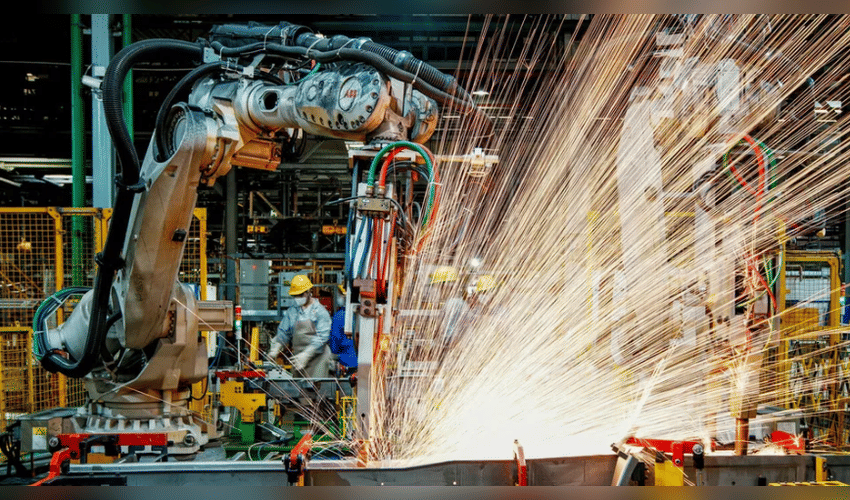
China continues to reshape its export profile. Instead of relying mainly on low-cost consumer goods, the country has become a major supplier of higher-value products such as electric vehicles, batteries, renewable energy equipment, industrial robots, and AI-related hardware. This transformation has strengthened Chinas competitiveness in global manufacturing but has also heightened trade tensions with several major economies, including the European Union and the United States.
The changing trade numbers also reflect evolving global supply chains. While some multinational companies have diversified production into countries such as India, Vietnam, and Thailand, China continues to dominate many advanced manufacturing sectors thanks to its extensive industrial ecosystem and well-developed infrastructure. Economists will closely monitor whether stronger imports signal a sustained recovery in domestic activity or simply reflect higher prices for critical components and raw materials. If consumer demand remains sluggish while exports lose momentum amid global economic uncertainty, Chinas policymakers may face increasing pressure to introduce more targeted measures to support growth. The narrowing trade surplus represents more than a statistical change. It highlights an economy in transition—one that continues to lead global manufacturing while simultaneously confronting slower growth, demographic pressures, and the difficult task of shifting from export-led expansion toward stronger domestic demand.
Disclaimer: This image is taken from The Economist.



