



World
Ambassador Vinay Kwatra Rebuts "Myths" Over FCRA Bill 2026, Emphasises Asset Protection and Religious Neutrality
Published On Mon, 10 Aug 2026
Fatima Hasan
8 Views
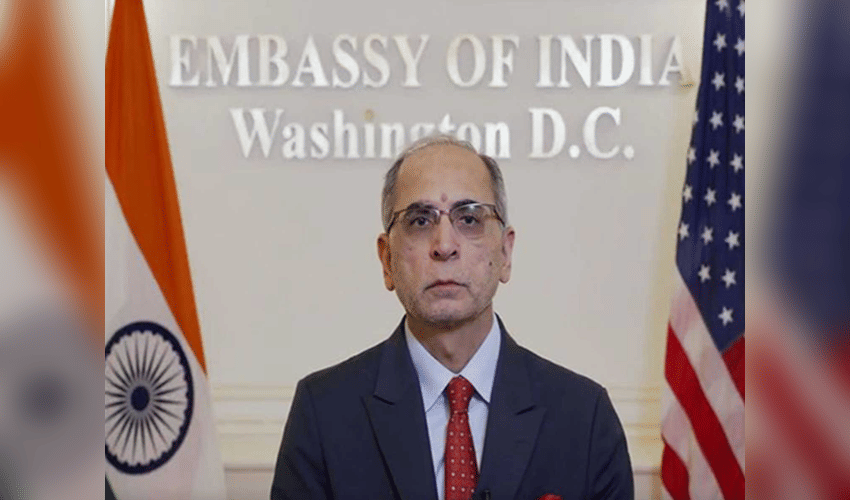

Amid a growing political debate over the proposed Foreign Contribution (Regulation) Amendment Bill, 2026, India’s Ambassador to the United States Vinay Kwatra has sought to address concerns surrounding the legislation, particularly allegations that it could result in the takeover of NGO properties or target organisations belonging to particular religious communities. The FCRA Bill 2026 was reintroduced in the Lok Sabha during the Monsoon Session and seeks to amend the Foreign Contribution (Regulation) Act, 2010. The government has said the proposed changes are aimed at strengthening transparency, accountability and oversight in the management of foreign contributions received by organisations in India.
Responding to concerns over the possible seizure of assets belonging to NGOs, including hospitals, educational institutions and places of worship, Kwatra said the provisions governing such assets are not entirely new. He explained that under the existing framework, when an organisation’s FCRA registration is cancelled or surrendered, foreign contributions and assets created from those funds already come under the control of a state government authority. According to Kwatra, the proposed 2026 legislation introduces a designated authority to protect and manage such assets while also providing a mechanism for their restoration. If an organisation subsequently succeeds in restoring its FCRA registration, its assets and unused funds would be returned, he said.
Kwatra also highlighted safeguards concerning properties associated with places of worship. He said that if an association whose FCRA registration has been cancelled has created property linked to a place of worship, the property can be transferred to another FCRA-registered organisation belonging to the same faith. The provision, he said, is intended to ensure that religious activities and worship continue without disruption. The Ambassador strongly rejected claims that the proposed legislation discriminates against particular religious groups or minority-run charities. He said the FCRA framework applies equally to organisations irrespective of their religion, community or ideology. Organisations involved in religious education, maintenance of places of worship and charitable activities across different faiths remain eligible to receive foreign contributions, provided they comply with the applicable legal requirements.
Kwatra also disputed claims that FCRA regulations have caused a decline in foreign funding flowing into India. Citing figures, he said foreign contributions received by registered organisations rose from around $1.2 billion in 2010-11 to approximately $2.67 billion in 2024-25. He further pointed out that India has more than three million NGOs, while only around 14,450 are registered under the FCRA. This means the vast majority of civil society organisations remain outside the direct scope of the law. For organisations that do receive foreign contributions, the basic requirements are registration, receiving funds through the prescribed channels and submitting reports on how the money is used, he said.
Addressing the wider debate over foreign funding regulations, Kwatra argued that India is not alone in maintaining legal safeguards over overseas financial flows. He referred to the United States’ Foreign Agents Registration Act, or FARA, which dates back to 1938, as well as the Foreign Account Tax Compliance Act introduced in 2010. He also cited regulatory measures adopted by Australia in 2018, Canada in 2024 and the United Kingdom, whose relevant scheme came into effect in July 2025. The European Union is also working on legislation in this area, he noted.
Kwatra said the proposed FCRA changes represent the latest stage in the development of India’s foreign contribution regulatory framework, which originated in 1976 and was subsequently amended in 2010, 2016, 2018 and 2020. He described the 2026 Bill as an attempt to improve transparency, strengthen governance and provide clearer rules governing foreign contributions.
Rejecting suggestions that the legislation is designed to stop foreign aid from reaching India, Kwatra said registered organisations continue to receive overseas funding for healthcare, education, research, disaster relief and humanitarian activities. He also described the regulation of foreign financial flows in public and political spheres as a sovereign measure linked to national security and a feature found in several modern democracies. Under the proposed legislation, an organisation’s FCRA registration would cease if it expires, is not renewed or if the government refuses its renewal. The Bill also proposes a designated authority responsible for the custody, supervision, management and disposal of foreign contributions and assets associated with them. The Union Government is expected to take up the Foreign Contribution (Regulation) Amendment Bill, 2026, for discussion in Parliament on August 12, as the proposed legislation continues to draw political and public attention.
Disclaimer: This image is taken from @IndianEmbassyUS.



