



World
We're number one; should pay lowest: Trump opposes possible US rate increase
Published On Tue, 01 Sep 2026
Asian Horizan Network
4 Views
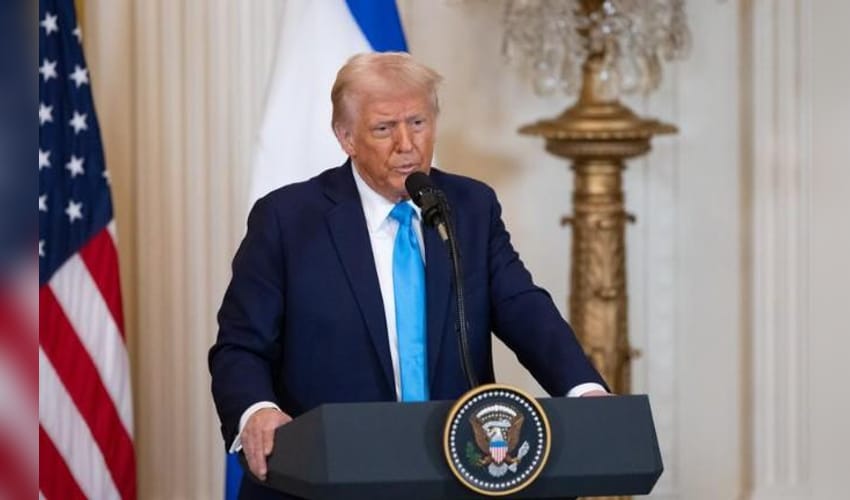

Washington, Sep 1 (AHN) US President Donald Trump has pushed back against the prospect of another interest rate increase, saying strong economic growth should make the United States a better borrower rather than trigger tighter monetary policy.
Trump was responding to a question about Federal Reserve Chairman Kevin Warsh signalling that the central bank could consider raising rates.
The President said he respected Warsh and had not spoken to him about the signal. But he made clear that he believed US interest rates were already too high.
"No. I have a lot of respect for him, and he'll do what he has to do," Trump said at the White House. "I think our interest rates are too high."
Trump argued that the strength of the US economy and its position in the global financial system meant the country should enjoy lower borrowing costs than other nations.
"We're number one; we should have the lowest interest rates in the world," he said.
The President linked that argument to US trade power, saying several countries benefited from access to the American market while paying lower interest rates.
"If we wanted to put tariffs or stop doing -- we have the right to stop doing business with them, they would go from a so-called elite country to a poverty-stricken country," he said.
"So, we should pay, in my opinion, the lowest interest rates anywhere in the world by far," Trump added.
Trump said the Federal Reserve's response to strong economic data had changed over the past quarter-century. He argued that positive economic results once supported lower rates, while central bankers now treated rapid growth as an inflation risk.
"In the old days, meaning you go back 25 years ago, if we announced good numbers, interest rates went down," he said.
"Now, if you announce good numbers, interest rates go up because they're so afraid of inflation," Trump added. "But what they're doing is they're really saying you can never do -- you can never really step on the gas."
Trump said the US economy could achieve much higher growth but was being constrained by the prospect of rate increases whenever data improved.
"Every time you do well, we just announced great numbers. And so, now they're talking about raising interest rates; it's ridiculous."
The President disputed the idea that stronger economic growth necessarily produces inflation.
"Because success in growth does not cause inflation; inflation is caused for other reasons," Trump said.
He argued that a stronger economy improved the creditworthiness of the United States and should therefore support lower borrowing costs.
"When we do well, we become a better credit; when you become a better credit, you're supposed to cut rates, not raise rates," Trump said.
The Federal Reserve sets monetary policy independently of the White House. It typically raises interest rates to restrain inflation and lowers them to stimulate borrowing, investment and employment when economic activity weakens.
Changes in US interest rates affect markets far beyond the country. Higher rates can strengthen the dollar and draw capital toward US assets, putting pressure on emerging economies, currencies, and borrowers, including those in India.



