



Politics
VB G RAM G Act a historic step towards rural socio-economic development: Tripura CM
Published On Fri, 09 Jan 2026
Asian Horizan Network
8 Views
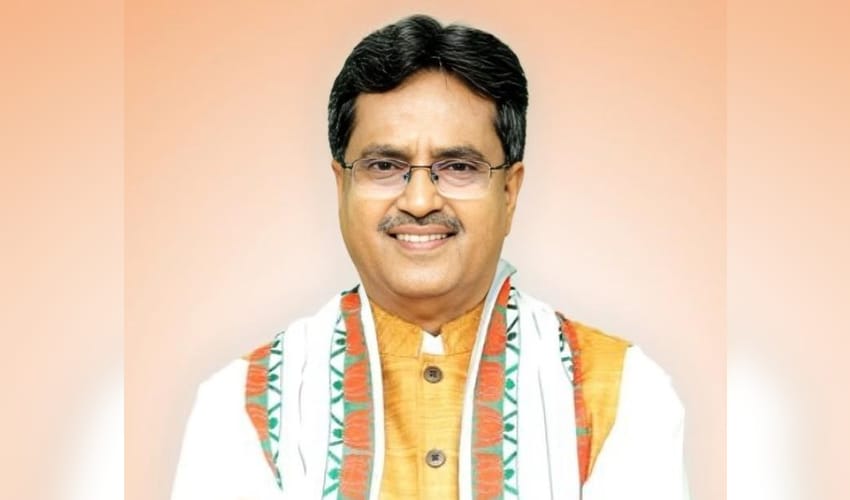

Agartala, Jan 9 (AHN) Tripura Chief Minister Manik Saha on Friday described the VB G RAM G Act as a historic step that would significantly strengthen socio-economic development in rural India.
Addressing a press conference at the state BJP headquarters, the Chief Minister said the Act reflects a new and reformed approach to rural growth, aimed at overcoming shortcomings in earlier employment guarantee schemes. He noted that the VB G RAM G Bill was extensively debated in both the Lok Sabha and the Rajya Sabha.
“It is surprising that after the Bill was passed following detailed discussions in Parliament, the Opposition continues to raise the same issues outside, creating confusion among the people,” Saha said.
Referring to the evolution of rural employment programmes, he said the Maharashtra Employment Guarantee Act of 1977 laid the foundation for the Mahatma Gandhi National Rural Employment Guarantee Act (MNREGA), which provided a nationwide legal framework for rural employment. However, he said MNREGA had several loopholes.
“Under the leadership of Prime Minister Narendra Modi, the Central government has been taking continuous reform-oriented steps to ensure ease of doing, ease of living, and ease of business. The VB G RAM G Act aims to replace MNREGA with a new framework that provides higher work guarantees, dedicated funding for rural development, and a strong focus on durable asset and infrastructure creation. Earlier, employment was generated, but the work often lacked durability,” he said.
The Chief Minister said the new framework ensures greater accountability in rural employment programmes, with a Central commitment of over Rs 95,000 crore for its implementation.
“This Bill marks a significant shift in India’s approach to rural employment and development. I thank Prime Minister Narendra Modi for his vision for rural India. Development cannot be city-centric alone; we must focus on villages for inclusive growth,” Saha said.
He further said the guaranteed number of workdays has been increased from 100 to 125 under the new Act, while delays in wage payments will no longer be tolerated. Decentralisation through Gram Sabhas has also been strengthened.
“The new law places strong emphasis on water conservation and security, asset creation, livelihood generation, rural infrastructure development, and climate change mitigation,” the Chief Minister added.



