



World
US States emerge as new battleground in competition with China
Published On Sat, 27 Jun 2026
Asian Horizan Network
5 Views
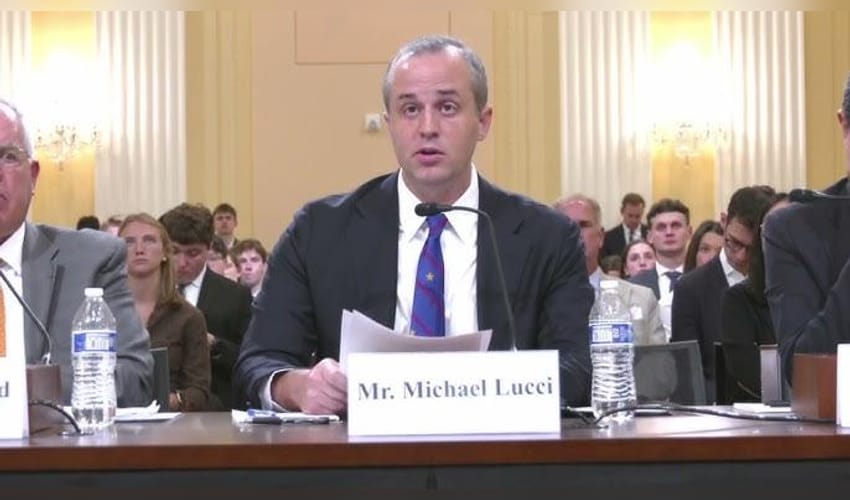

Washington, June 27 (AHN) State governments across the United States have emerged as the new frontline in Washington's strategic competition with China, with lawmakers and security experts warning that Beijing is increasingly targeting local institutions, universities, critical infrastructure and state legislatures.
The issue took centre stage during a hearing of the House Select Committee on the Chinese Communist Party, where witnesses argued that Chinese influence operations had expanded well beyond the federal government to exploit vulnerabilities at the state and local levels.
Michael Lucci, founder and chief executive of State Armor, told lawmakers that "the American homeland is contested" and that state governments were increasingly confronting security threats traditionally handled by federal agencies.
"States are on the front lines of this contest, and the Chinese Communist Party is exploiting vulnerabilities at the state and local level that can go overlooked here in Washington DC," Lucci said.
He cited several examples of what he described as Chinese efforts to position assets near sensitive military facilities, including land purchases close to US Air Force bases and the placement of telecommunications equipment near strategic sites.
Lucci also warned that American universities had become a major target for Chinese influence and technology acquisition.
"From our view, the penetration of universities is a national security crisis," he said, arguing that some federally funded research programmes had developed partnerships with Chinese institutions linked to the country's military and defence industry.
According to Lucci, states including Texas and Nebraska have responded by introducing measures aimed at protecting critical infrastructure, strengthening research security, restricting foreign ownership near military installations and addressing what he described as transnational repression.
He said Texas had established a state cyber command to help counter cyber threats affecting local communities, while both Texas and Nebraska had adopted legislation targeting foreign influence and protecting research institutions.
Lucci also alleged that state lawmakers supporting such measures had faced pressure from organisations and businesses linked to China.
He told the committee that some legislators had received economic threats or online intimidation after proposing foreign agent registration laws and other security measures. He described the campaign as "not normal advocacy" but "a pressure campaign from a non-democratic actor acting within our democratic system."
Committee Chairman John Moolenaar echoed those concerns, saying China increasingly viewed state legislatures, municipal governments, universities and community organisations as "soft targets" for influence operations because they often operated with less oversight than federal institutions.
The United States has increasingly broadened its response to China beyond traditional military and diplomatic competition. In recent years, federal and state authorities have tightened scrutiny of foreign investments, land purchases near military facilities and research partnerships involving sensitive technologies.



