



World
US proposes final review on Lake Powell, Lake Mead reservoirs
Published On Sat, 01 Aug 2026
Asian Horizan Network
3 Views
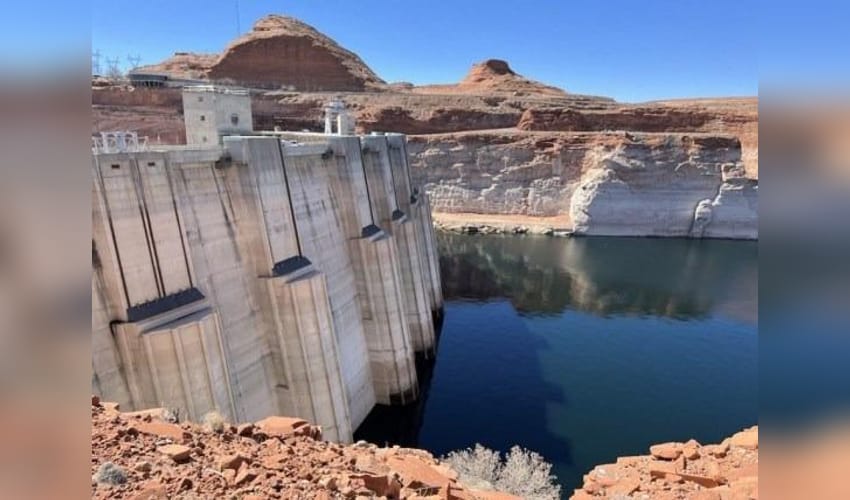

Los Angeles, Aug 1 (AHN) The US government has released a final environmental review outlining a 10-year framework to operate the country's two largest reservoirs, enabling it to impose steep water cuts amid ongoing divisions among the seven basin states on how to share the dwindling water supply.
The Bureau of Reclamation released guidelines for operational rules to be updated every two years through 2036 pertaining to the country's two largest reservoirs, Lake Powell and Lake Mead in the southwestern United States, enabling adjustments to water releases, conservation and cutbacks in response to river conditions, according to the review.
The document states that annual water deliveries to Arizona, California and Nevada could be slashed by up to 3.7 billion cubic meters - 40 per cent of their combined Colorado River allocation and slightly exceeding Arizona's full yearly share.
The remaining four states, namely Colorado, New Mexico, Utah and Wyoming, will participate through voluntary conservation. Federal authorities may also release water from upstream reservoirs to safeguard Lake Powell, according to the review, Xinhua news agency reported.
US Interior Secretary Doug Burgum said the framework aims to maintain a "reliable and resilient" river system while preserving future negotiations.
Assistant Secretary for Water and Science Andrea Travnicek said that the plan balances flexibility and predictability for some 40 million river-dependent residents.
Reclamation highlighted the basin's 26-year drought, warning 2026 may see record-low snowpack.
Combined storage in Lake Powell and Lake Mead stands at its lowest level since Lake Powell began filling in 1963, it said.
The agency cautioned that unprecedented reductions may fail to stabilize storage under extreme drought, noting that the river sustains urban water supplies, agriculture, tribal communities, hydropower and ecosystems across the US West and Mexico.



