



World
US lawmakers warn of rising space, nuclear threats
Published On Fri, 27 Mar 2026
Asian Horizan Network
74 Views
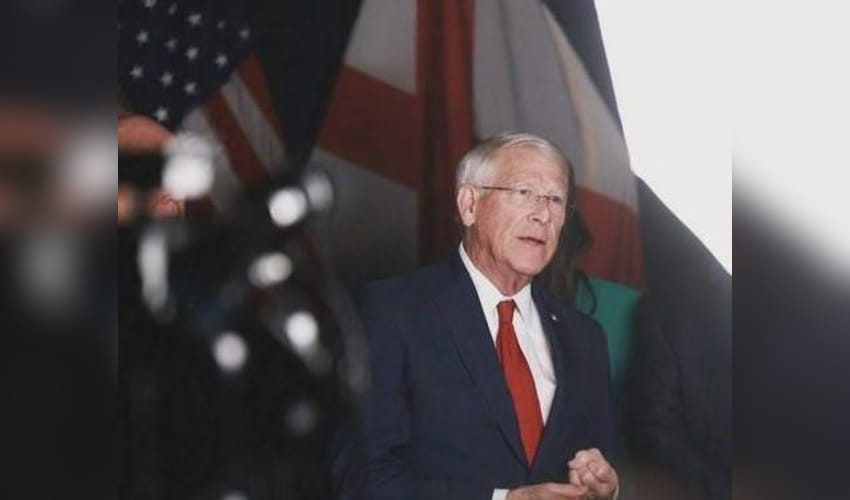

Washington, March 27 (AHN) US lawmakers and military commanders warned that growing threats from China, Russia and other adversaries are rapidly reshaping the strategic landscape, with space emerging as a frontline domain in any future conflict.
Opening a Senate Armed Services Committee hearing, Senator Roger Wicker said the United States must “fundamentally update our strategic capabilities” to counter advances by rivals. He noted that Russia and China have moved “by leaps and bounds” in nuclear and space programmes, while North Korea continues to expand its missile arsenal.
General Stephen Whiting, commander of US Space Command, said adversaries are developing capabilities to “deny us the use of space,” warning that China’s satellite fleet has grown dramatically.
“China’s on orbit presence has grown exponentially, now operating over 1300 active satellites… including more than 510 intelligence, surveillance and reconnaissance satellites,” he told lawmakers.
He added that Beijing is integrating space-enabled capabilities across its forces, making them “more lethal, precise and far ranging,” while also fielding weapons designed to destroy US satellites.
Russia, meanwhile, continues to pursue disruptive space capabilities, including the potential deployment of a nuclear anti-satellite weapon. Whiting warned such a system would be “indiscriminate” and could endanger all satellites in low Earth orbit.
“If detonated on orbit, [it] would immediately place at risk every country’s space capabilities,” he said.
Admiral Richard Carroll, head of US Strategic Command, described the broader challenge as deterring “multiple nuclear competitors simultaneously” amid rapid technological change. He identified cyber threats, counter-space capabilities, and advanced missile systems as key risk areas.
“Our nation’s nuclear forces… are safe, secure, effective and credible,” he said, but stressed the need for sustained modernisation of the nuclear triad, including new bombers, submarines and intercontinental missiles.
Senator Jack Reed warned that, for the first time in decades, the US and Russia lack a formal structure to regulate nuclear forces, increasing the risk of an unconstrained arms race.
Reed said China’s rapid expansion could bring it to “rough parity” with the US and Russia by 2030, complicating deterrence and alliance dynamics.
The hearing underscored how deeply US military operations now depend on space. Whiting said the entire joint force is built on the assumption of uninterrupted access to space-based systems, including navigation, communications and missile warning.
“The Joint Force’s ability to fight… would be immediately and materially impacted” if those capabilities were degraded, he said.
He added that in a future conflict, “the first shots would occur in cyber and in space,” reflecting the vulnerability of critical infrastructure.
Lawmakers also highlighted the growing problem of orbital debris, citing past anti-satellite tests by China and Russia that created thousands of fragments still in orbit. The US currently has no capability to remove such debris and must rely on tracking and avoidance.