



Asia In News
Two nations, two deposed Premiers, two different political fates
Published On Wed, 04 Mar 2026
Jayanta Bhattacharya
1 Views
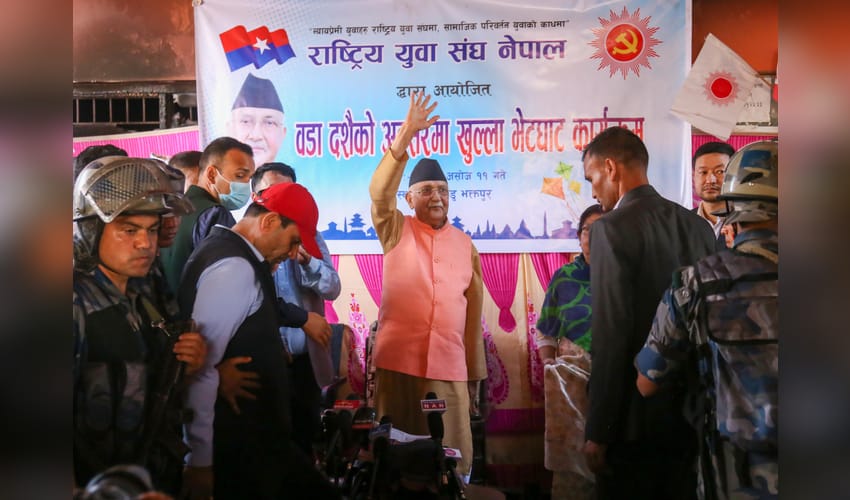

Kathmandu, March 4 (AHN) Two subsequent youth-led protests in South Asia led to regime changes in two nations bordering India - in Bangladesh in the east, with former premier Sheikh Hasina in exile with a death sentence hanging over her head and having her party banned, and in Nepal to the north, where deposed Prime Minister K.P. Sharma Oli is contesting again in Thursday's election.
"I may not like him for what he did; I may want him thrown out of the race, but we all have to abide by the constitution and the law," Amrita Ban, a Gen Z activist in Kathmandu, said.
"There are certain things you have to adhere to even if you don’t like it," she added quietly.
The 23-year-old was at the forefront of protests early September last year when the youth took to the streets protesting a ban on social media by the then government of Oli.
The 'Gen Z Movement' of 2025 in Nepal was a youth-led uprising sparked by the then-Oli government’s ban on major social media platforms. Initially peaceful, it quickly evolved into a nationwide protest against alleged corruption, unemployment, censorship, and political stagnation.
Young people, empowered by digital literacy and global awareness, organised rallies, art campaigns, and symbolic acts of resistance. The movement highlighted generational frustration with systemic inequality and the lack of opportunities.
Despite facing crackdowns, protesters maintained a strong call for transparency, free speech, and democratic reform, marking a pivotal moment in Nepal’s modern political and social history.
The retaliatory firing by security forces on September 8 shook Ban so much that she still lives the day’s events in her mind.
"Among those killed that day was a schoolboy… shot dead," she recollected with a shudder.
How did she save herself? "Fate; but more than that, it was my parents’ love, I think," she muttered.
Meanwhile, over 400 km southeast of Kathmandu, 25-year-old Balram Kharke is busy coordinating Gen Z activists in election work in favour of their icon, Balendra Shah. The 35-year-old engineer-turned-rapper-politician, popularly known as Balen, is a Rastriya Swatantra Party (RSP) candidate taking on Oli in the latter’s citadel of Jhapa-5 constituency.
"Nepal is a democratic country, where the rule of law prevails," Kharke said.
"Some may claim that the former head of cabinet is using influence, but we believe that Oli has the right to contest as a citizen of Nepal and a political leader," he asserted.
"So, till he is proven guilty in a court of law, we can’t force him out of the poll race," Kharke added.
He echoed the statement of many other Millennial protestors, claiming they took to the streets not to spearhead the protests, but to organise and protect the Gen Z demonstrators against indiscipline.
In contrast, former Prime Minister of Bangladesh Sheikh Hasina, who was toppled in August 2024 in a student-led movement, fled to India and has since been sentenced to death in absentia for crimes against humanity.
In November 2025, the International Crimes Tribunal (ICT) in Dhaka sentenced her to death in absentia for crimes against humanity, citing her role in ordering lethal force against student protesters during the uprising.
Her party, the Awami League, was barred from participating in the recent election, being banned by the then-interim government from all political activities.
Two independent states, but the tales of the two deposed Premiers lie starkly different in South Asia.



