



Asia In News
Tushar Mehta reappointed Solicitor General for another three-year term
Published On Sun, 21 Jun 2026
Asian Horizan Network
3 Views
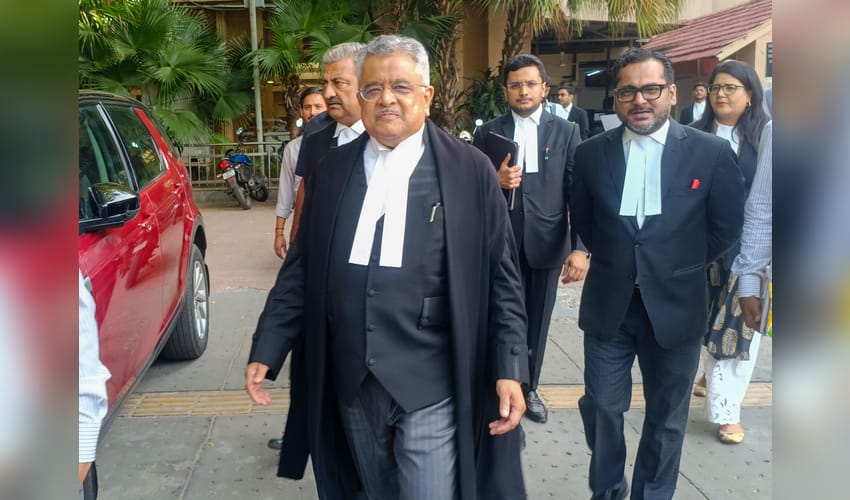

New Delhi, June 21 (AHN) The Centre has approved the re-appointment of Tushar Mehta as Solicitor General of India for a further term of three years with effect from July 1, 2026, or until further orders, whichever is earlier.
According to an order issued by the Department of Personnel and Training (DoPT), the Appointments Committee of the Cabinet (ACC) cleared the proposal for Mehta's continuation as the country's second-highest law officer.
"The Appointments Committee of the Cabinet has approved the re-appointment of Shri Tushar Mehta as Solicitor General of India for a further term of three years with effect from 01.07.2026 or until further orders, whichever is earlier," the order stated.
Mehta was appointed as Solicitor General in October 2018 after serving as an Additional Solicitor General.
The Centre subsequently re-appointed him for a three-year term with effect from July 1, 2020, and again in 2023.
With the latest extension, Mehta completes around eight years as Solicitor General and is set to complete 11 years in the post by the end of the fresh tenure, making him one of the longest-serving law officers in the country's history.
As Solicitor General, Mehta has represented the Union government in several high-profile constitutional, policy and criminal matters before the Supreme Court and various High Courts.
The ACC also approved the re-appointment of five Additional Solicitors General (ASGs) for the Supreme Court for a further term of three years.
Those re-appointed are Vikramjit Banerjee and K.M. Nataraj with effect from July 1, 2026, while S.V. Raju, N. Venkataraman, and Aishwarya Bhati have been re-appointed with effect from June 30, 2026.
In a separate decision, the ACC approved the re-appointment of Chetan Sharma as Additional Solicitor General for the Delhi High Court for a further period of six months with effect from July 1, 2026, or until further orders, whichever is earlier.



