



World
Trump’s Abraham Accords push puts Pakistan and Bangladesh under scrutiny: Report
Published On Fri, 05 Jun 2026
Asian Horizan Network
1 Views
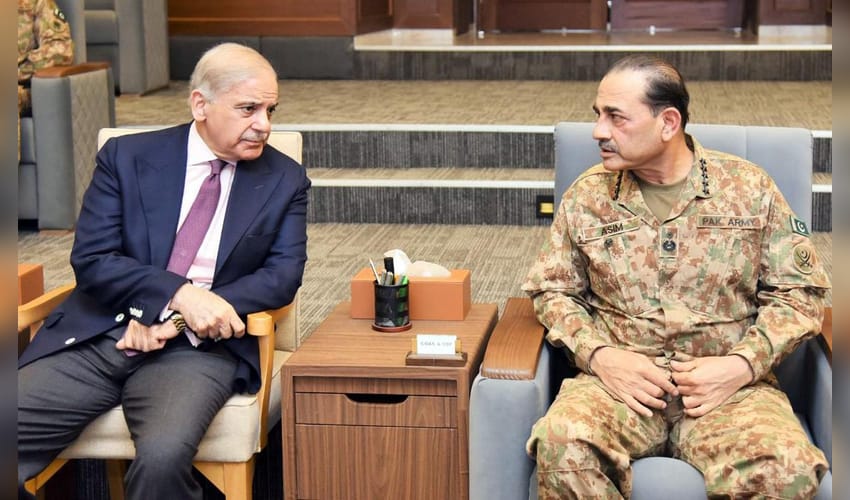

Jerusalem, June 6 (AHN) US President Donald Trump's latest diplomatic effort aimed at normalising ties with Israel under the expanded Abraham Accords framework has brought Pakistan and Bangladesh under heightened international scrutiny, a report has highlighted.
President Trump recently announced that countries including Saudi Arabia, Qatar, Pakistan, Turkey, Egypt, Jordan, Bahrain, and the United Arab Emirates should "simultaneously" sign onto the Abraham Accords "as part of broader regional stabilisation efforts following the Iran conflict."
The Abraham Accords are increasingly becoming a defining geopolitical contest extending beyond the Middle East into South Asia, where nations such as Pakistan and Bangladesh are caught between internal ideological pressures and rising strategic expectations from Washington, Salah Uddin Shoaib Choudhury, Editor of Bangladeshi newspaper 'Blitz', wrote in 'The Jerusalem Post'.
“Trump’s call for several Muslim-majority countries to normalise ties with Israel has already generated visible discomfort in Islamabad, where political leaders are attempting to balance strategic relations with Washington against deeply rooted domestic support for the Palestinian cause. The issue is now emerging as a major geopolitical test for South Asia’s Muslim-majority nations,” Choudhury stated.
Stressing that Trump’s push to expand the Abraham Accords could lead to a “potentially explosive confrontation” with Pakistan and several influential Muslim-majority countries, he further said, “While Trump has enjoyed unusually warm relations with Pakistan’s Army Chief Field Marshal Asim Munir and Prime Minister Shehbaz Sharif, his latest push demanding Islamabad normalise ties with Israel may fundamentally alter this strategic equation."
According to the report, the White House’s renewed pressure regarding the Abraham Accords may leave Pakistan in an extraordinarily difficult position — one where “domestic political realities, ideological sensitivities, and geopolitical calculations” directly clash with American strategic expectations.
It highlighted that Trump’s call for Pakistan to recognise Israel threatens to spark a strong domestic backlash, given widespread support for the Palestinian cause among the Pakistani public and persistent opposition from religious and political groups to normalisation without an independent Palestinian state.
The report cited remarks by Pakistan’s Defence Minister Khawaja Asif, who criticised the idea of joining the Abraham Accords and cast doubt on Israel's credibility, asking, “How will you sit down with those people whose word cannot be trusted even for a single day?”
“These statements indicate that Pakistan is currently unwilling to publicly bow to American pressure, despite its growing strategic closeness with the Trump administration,” it added.
Emphasising Pakistan’s apparent efforts to encourage other Muslim-majority nations to maintain distance from Israel, the report said, “At Islamabad’s quiet persuasion, Iran and Palestinian authorities reportedly requested Bangladesh to reimpose restrictions concerning Israel on Bangladeshi passports.”