



World
Trump seeks record $1.5 trillion defence budget
Published On Sat, 04 Apr 2026
Asian Horizan Network
1 Views
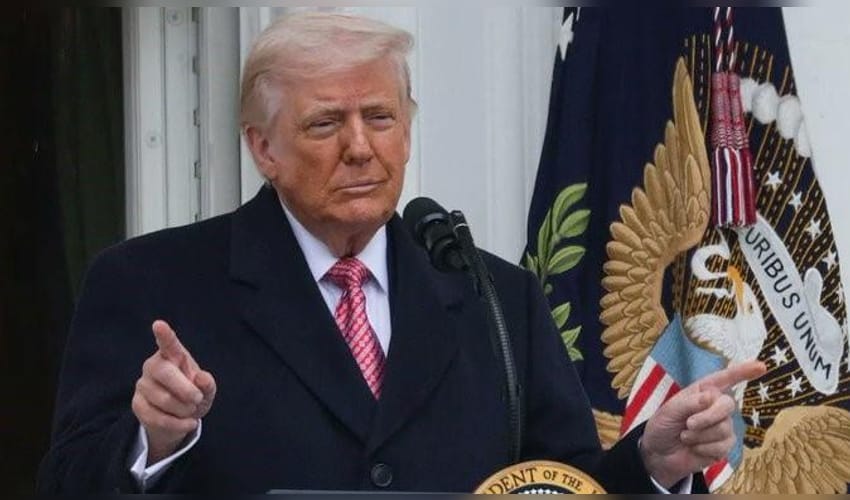

Washington, April 4 (AHN) US President Donald Trump has proposed a record $1.5 trillion defence budget for fiscal 2027, a 44 per cent jump that would sharply expand Pentagon spending while cutting several domestic programmes.
“The Budget builds upon the historic $1 trillion topline provided for the national defense by requesting $1.5 trillion for 2027, a 44-percent increase,” the White House said in its official budget document proposal for the fiscal 2027.
The administration said the request would ensure that the United States maintains military dominance at a time of rising security pressures. “The 2027 Budget upholds this promise and would ensure that the United States continues to maintain the world’s most powerful and capable military,” the document said.
The proposal includes about $1.1 trillion in base discretionary defence spending and another $350 billion tied to priority programmes, including munitions production and expansion of the defence industrial base.
A major centrepiece is the “Golden Dome” missile defence shield. The White House budget says it would be “robustly fund[ed]”, while related reports said the programme is expected to receive strong backing as part of a broader homeland defence push.
The budget also seeks $65.8 billion for shipbuilding, including new battle force ships and support vessels, and proposes pay rises for service members, with a 7 per cent wage increase for personnel ranked E-5 and below, according to media reports and the budget summary.
At the same time, the White House is pairing the defence increase with cuts across non-defence spending. “The Budget proposes a 10-per cent cut compared to 2026 non-defense levels,” the official document said.
The proposal outlines reductions in education, environmental, health and foreign assistance programmes. The Washington Post reported that it would make $73 billion in cuts to environmental, education and health research programmes, while the Journal said the plan would reduce non-defence spending by 10 per cent to about $660 billion.
Congressional reaction split along party lines. Republican leaders broadly welcomed the defence expansion, while Democrats attacked it as excessive and warned that it would come at the expense of domestic priorities, according to media reports.
The White House framed the proposal as part of a larger fiscal reset. “The Budget builds on the President’s vision by continuing to constrain non-defense spending and reform the Federal Government,” the official document said.
The budget request now heads to Congress, where lawmakers will have to decide how much of it survives before the new fiscal year begins on October 1. Big Pentagon requests often face political resistance even when both parties broadly support strong defence spending.
The United States remains the world’s largest military spender. The proposed jump would come as Washington faces pressure from conflicts in the Middle East, long-term competition with China, and fresh demands to replenish weapons stockpiles and modernise its forces.



