



World
South Korea: Lee calls for measures to handle worst-case scenarios over prolonged Mideast crisis
Published On Tue, 17 Mar 2026
Asian Horizan Network
2 Views
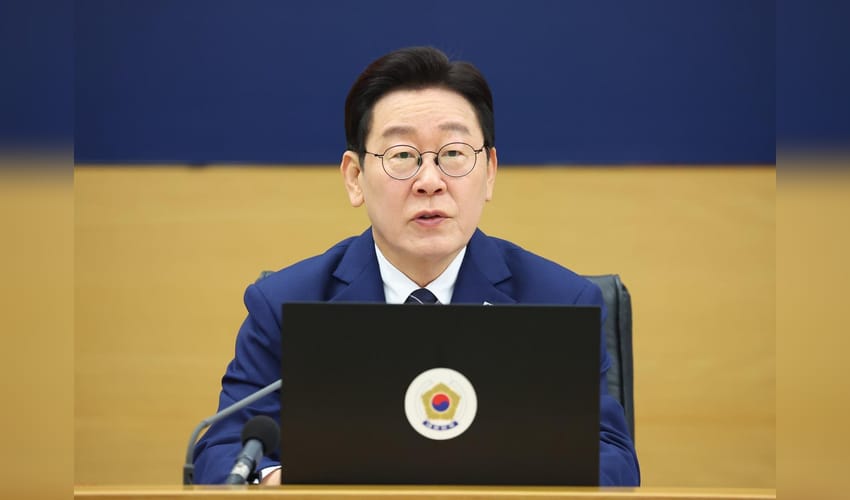

Seoul, March 17 (AHN) South Korean President Lee Jae Myung said on Tuesday the government should prepare measures to mitigate the potential economic fallout under the worst-case scenario where the Middle East crisis becomes prolonged.
Lee made the call as the Strait of Hormuz, a critical global oil shipping route, has effectively been shut as the US-led war in Iran entered its third week, raising concerns for South Korea, which relies heavily on energy imports.
"From now on, we must prepare measures with even the worst-case scenario in mind on the premise that the Middle East situation may be prolonged," Lee said during a Cabinet meeting held in the administrative city of Sejong.
Lee called on the government to step up diplomatic efforts to secure additional crude oil supplies and alternative sources while also preparing energy-saving measures, such as car license plate restrictions every five days or 10 days, if necessary.
"If needed, we should also consider emergency measures, such as export controls or increasing the operation of nuclear power plants," he said.
As part of efforts to stabilise energy supplies, South Korea has implemented an oil price cap system and reached an agreement to secure 6 million barrels of crude oil from the United Arab Emirates (UAE), Yonhap news agency reported.
"Although fuel prices have somewhat stabilised since the introduction of the oil price cap system, the situation in the Middle East is escalating beyond expectations. If the current trend continues, oil prices could become unstable again, and the impact on people's livelihoods is likely to grow," he said.
Lee also urged the government to swiftly prepare a supplementary budget to support vulnerable groups and export companies, and called on the National Assembly to promptly review the proposal once it is submitted.
In particular, Lee said the government should consider allocating additional budget support to non-capital regions and financially vulnerable groups to help them weather external shocks.



