



World
Sharia debate sparks sharp partisan divide in US Congress
Published On Thu, 14 May 2026
Asian Horizan Network
3 Views
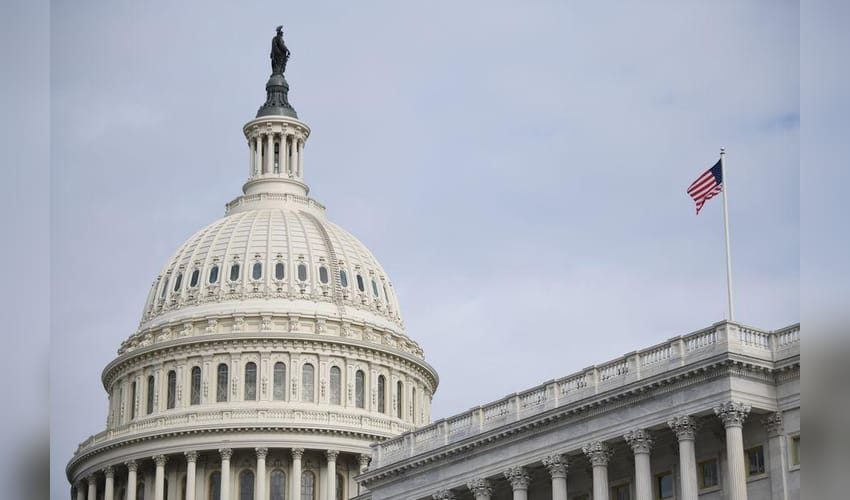

Washington, May 14 (AHN) Republican and Democratic lawmakers clashed sharply during a House Judiciary subcommittee hearing over whether political Islam and Sharia law pose a threat to the US Constitution, with critics condemning the proceedings as anti-Muslim fearmongering.
The hearing, titled “Sharia-Free America: Why Political Islam & Sharia Law Are Incompatible with the US Constitution: Part II,” quickly descended into heated exchanges over religion, immigration, constitutional freedoms and national identity.
Subcommittee chairman Chip Roy argued that Sharia law threatened American values and constitutional protections.
“Sharia is not a religious code or belief system,” Roy said. “It is a repressive legal regime that betrays America’s founding principles and threatens our Constitution.”
Roy and several Republican lawmakers pointed to examples in Texas and Europe, alleging that political Islam was attempting to establish parallel legal and cultural systems inside Western democracies.
Democrats strongly pushed back.
Ranking member Mary Gay Scanlon called the hearing “a conspiracy theory about Muslim neighbours” designed to divide voters during an election season.
“There’s no evidence of any plot to impose Sharia law on nonbelievers of Islam,” Scanlon said. “It’s just not happening.”
Representative Jamie Raskin said the First Amendment already prohibited the establishment of any religion in government and dismissed the hearing as unnecessary.
“We don’t need an anti-Sharia law,” Raskin said. “It’s called the First Amendment.”
One of the most closely watched moments came from Marco Hunter Lopez, a 16-year-old student from Wylie, Texas, who testified about disputes involving a Republican student club and Islamic literature distributed at his school.
Lopez alleged that school administrators applied a “double standard” by allowing outside Islamic groups on campus while scrutinising conservative student organisations. He also said he later received threats after speaking publicly about the issue.
Republican lawmakers repeatedly cited concerns about immigration, terrorism and radicalisation.
Representative Wesley Hunt said, “America is a Christian nation” and argued that no religious system should supersede the Constitution.
Representative Pramila Jayapal accused Republicans of using the hearing to fuel anti-Muslim sentiment instead of addressing economic concerns and healthcare costs.
“This hearing is unfortunately just part of a much larger anti-Muslim strategy,” Jayapal said.
Amanda Tyler, executive director of the Baptist Joint Committee for Religious Liberty, warned lawmakers against broadly targeting Muslims.
“There’s nothing inherently political about Islam,” Tyler said, adding that the Constitution already prevents any religious law from overriding American law.
Conservative activist Amy Mecklenburg argued the opposite, claiming Islamic organisations were building “parallel infrastructures” across the United States and seeking long-term influence inside American institutions.
The hearing reflected growing political tensions in the United States over immigration, religion and national identity ahead of the 2026 midterm elections. Debates over Sharia law have surfaced repeatedly in conservative political circles since the September 11 attacks and have intensified after the Israel-Hamas war and rising political polarisation.
Civil rights and Muslim advocacy organisations have consistently argued that such hearings stigmatise Muslim Americans and distort constitutional protections for religious freedom. American courts already prohibit any religious doctrine from superseding federal or state law under the Constitution.



