



Technology
Seoul stocks trim earlier gains despite easing Mideast tensions
Published On Tue, 24 Mar 2026
Asian Horizan Network
1 Views
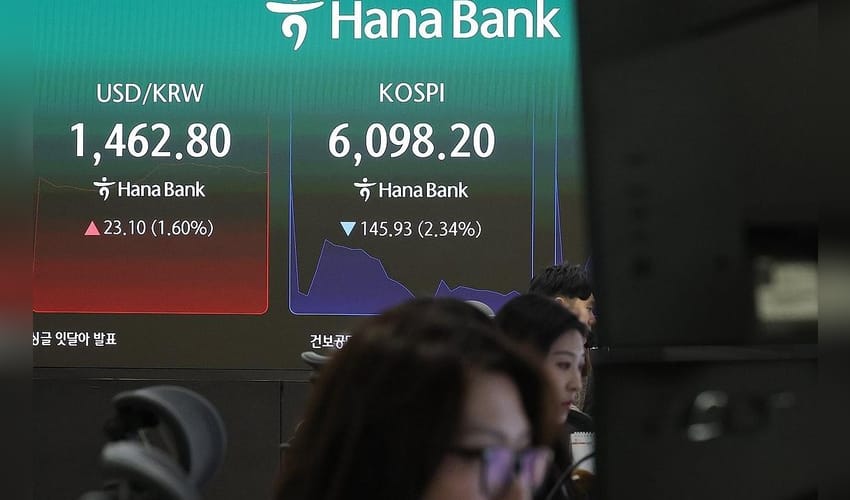

Seoul, March 24 (AHN) Seoul stocks trimmed earlier gains late on Tuesday morning, despite easing military tensions between the United States and Iran.
The benchmark Korea Composite Stock Price Index (KOSPI) inched up 45.02 points, or 0.83 percent, to 5,450.77, as of 11:20 a.m.
The index reduced its gains following a sharp rebound of over 4 percent in the opening bell, as the broader market came under selling pressure from foreign investors, reports Yonhap news agency.
Overnight, major U.S. stock indexes closed up, after U.S. President Donald Trump said he plans to postpone attacks on Iranian energy facilities after talks with Iran.
Trump had earlier threatened to hit Iran's power plants if Tehran does not open the Strait of Hormuz, a key global oil waterway, by Monday evening. Iran, in response, warned it could retaliate.
The latest development fuelled hopes that tensions in the Middle East could ease and soaring oil prices could stabilise.
Meanwhile, South Korea's tariff agency announced that the country's exports as of Friday rose by more than 50 percent on-year, primarily led by semiconductors, which posted a new monthly record.
Large-cap shares were trading mixed.
The country's two chipmakers lost some of its gains, with Samsung Electronics up 1.18 percent and SK hynix adding 2.47 percent.
Top carmaker Hyundai Motor rose 1.24 percent, and defense giant Hanwha Aerospace advanced 1.72 percent, while major financial group KB Financial remained unchanged.
The South Korean won gained sharply against the US dollar, recovering from a 17-year low in the previous session, after U.S. President Donald Trump delayed planned strikes on Iranian energy infrastructure amid talks to end the conflict.
The won opened at 1,490.9 per dollar, up 26.4 won from the previous session's 1,517.3 won. Monday's level marked the weakest since March 9, 2009, when the won fell to 1,549 during the global financial crisis.
The domestic and global foreign exchange and stock markets have experienced heightened volatility as U.S.-Israeli strikes on Iran that began late last month have escalated into a broader regional conflict.
On Monday (U.S. time), Trump said he ordered a five-day postponement of threatened strikes on Iranian energy facilities, citing "constructive" discussions on ending the war in the Middle East.
—AHN
na/



