



Politics
Satraps once embodied regional pride, enjoyed mass appeal, now appearing disconnected
Published On Wed, 17 Jun 2026
Jayanta Bhattacharya
4 Views
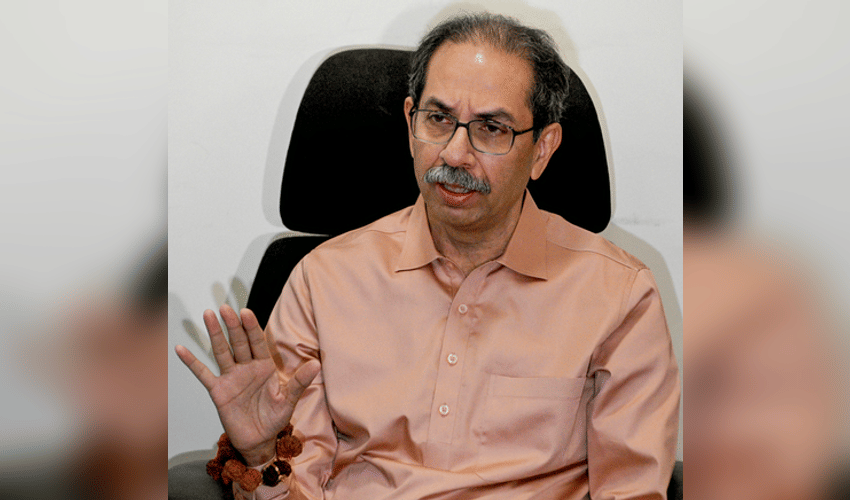

New Delhi, June 17 (AHN) Regional parties in India are facing unprecedented internal rebellions, with political leaders losing the confidence of their cadres; where the erosion of trust is not just about defections, but reflects a larger crisis of credibility.
Days after the much-talked, two separate, Trinamool splits -- one of MLAs, another of MPs -- comes the news of a second division in the Uddhav Thackeray-led Shiv Sena, underlining the same faith deficit.
Dynastic politics has been in play in both political parties.
With Abhishek Banerjee's rise in the Trinamool Congress, senior party leaders reportedly stood alienated, while Aaditya Thackeray's prominence in Shiv Sena allegedly had the same impact in Maharashtra.
Much less than a decade ago, there were reports of a power struggle between Akhilesh Yadav and his now-deceased father, Mulayam Singh Yadav, for the Samajwadi Party (SP) crown.
It was seen as a significant event in the political landscape of Uttar Pradesh where the conflict was marked by accusations of political patronage and control of power over the administration and within SP.
Akhilesh's actions, such as expelling his father from the party and claiming the party symbol, led to a division of power between him and his uncle Shivpal Yadav.
The battle was intense, with both sides vying for control over the party's direction and the symbol's significance.
Finally, it was the son who rose up on SP zenith.
In Maharashtra, the battle within Shiv Sena was between cousins for party control after the death of patriarch Balasaheb Thackeray in 2012.
The rivalry between Balasaheb's son Uddhav Thackeray, and his cousin Raj Thackeray has been a significant political issue in Maharashtra.
It led to the exit of Raj Thackeray to float the Maharashtra Navnirman Sena (MNS).
However, neither cousins could achieve much political success, nowhere close to the founder, leading to a reunion and alliance for local body elections.
Shiv Sena under Uddhav Thackeray wavered on political alliance which affected poll outcomes.
The first split in 2022 saw many leaders defecting to the Eknath Shinde camp, which aligned with the Bharatiya Janata Party (BJP).
This precedent could have emboldened similar moves in other regional parties.
Similar fractures have appeared in the Nationalist Congress Party (NCP) in 2023, and other smaller outfits, further eroding Opposition unity.
Leaders once embodied regional pride and enjoyed mass appeal, now many appear disconnected from their cadres.
This, in turn, is eroding the INDIA bloc's dream of challenging the National Democratic Alliance (NDA) nationally because its foundation -- regional unity -- is collapsing.
Even the Aam Aadmi Party (AAP) has undergone the crisis, with its leaders and Parliamentarians stepping out of the shadows of Arvind Kejriwal.
Such splits in the Trinamool Congress, AAP, Shiv Sena, and others are weakening the Opposition INDIA bloc and indirectly strengthening the NDA's grip on national politics.
The AAP has walked away from seat-sharing arrangements within the INDIA bloc, citing mistrust and disagreements with Congress.
On internal splits, leaders accuse the BJP of "breaking parties apart" using investigative agencies, but the fact remains that the satraps are themselves struggling to maintain cohesion, especially after poll defeats.
Like AAP, the DMK has distanced itself from Congress, even requesting a separate seating arrangement in Parliament.
Rebels within have criticised centralised decision-making in regional parties, where leaders like Mamata Banerjee and Arvind Kejriwal are accused of ignoring grassroots voices.
Losses of these regional satraps in state elections have accelerated disillusionment among cadres.
Meanwhile, intense graft probes by central agencies have created fear and resentment, making defections more likely.
For the NDA, this is a windfall. Without needing to engineer every split, it benefits from the Opposition's inability to manage internal dissent.
The Opposition's crisis of trust is becoming the ruling coalition's greatest strength.
With rebel MPs and MLAs pledging support, the NDA inches closer to a two-thirds majority in the Rajya Sabha and strengthens its position in the Lok Sabha and state Assembles.
Meanwhile, the INDIA grouping, once touted as a united front, is now fragmented, allowing the BJP claim itself as the only stable national force.



