



Lifestyle
Rich-poor gap in Pakistan soars to alarming level
Published On Wed, 14 Jan 2026
Asian Horizan Network
1 Views
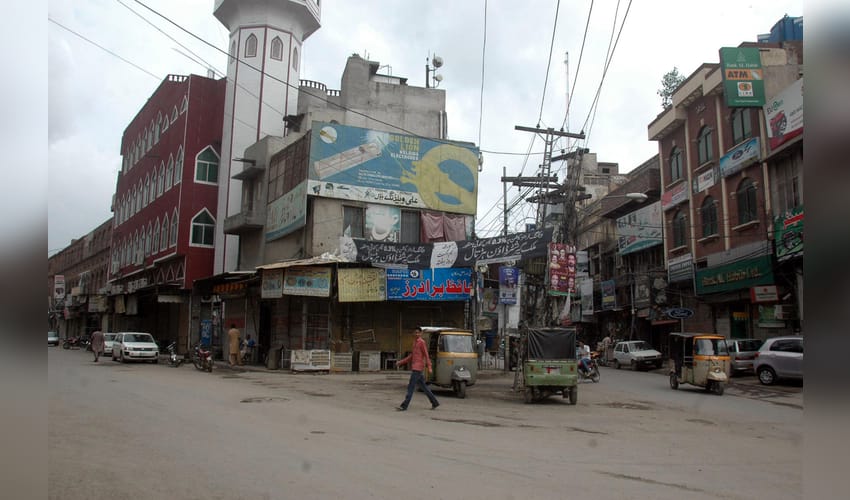

New Delhi, Jan 14 (AHN) The ‘World Inequality Report 2026’ has listed Pakistan as a country in which inequality in income and wealth among its citizens is at alarming levels.
"In Pakistan, inequality remains high and shows limited progress over the past decade. The top 10 per cent of earners capture 42 per cent of total income, whereas the bottom 50 per cent receive only 19 per cent. Wealth inequality is even more concentrated, with the richest 10 per cent holding 59 per cent of total wealth and the top 1 per cent accounting for 24 per cent. Overall, income and wealth are highly concentrated in Pakistan, with persistent gender disparities and only minor shifts in inequality trends," the report observed.
Interestingly, while Pakistan has been surviving on IMF bailouts, the media in the country is also blaming the IMF for the increase in income inequality.
An article in Pakistan Today cites the book "A Thousand Cuts: Social Protection in the Age of Austerity" to criticise the IMF. It highlights that the book has pointed out that IMF programme conditionalities have a positive correlation with income inequality.
However, what it overlooks is the large-scale corruption in Pakistan, the feudal agricultural sector of the economy, and the control of Pakistan’s military over the businesses in the country that are behind this inequality.
As pointed out in the book, this is broadly in line with a similar message that a number of previous studies reached in line with labour income and inequality. "Within this small but fast-growing body of literature on the global determinants of income inequalities, debates surrounding the impact of IMF programmes have persisted over time," the article cites the book as highlighting.
The article observes that Pakistan has been in around two dozen International Monetary Fund (IMF) programmes, and given the income inequality-enhancing impact of IMF programmes, it is important for both the IMF and Pakistan’s authorities – the Ministry of Finance, and the State Bank of Pakistan (SBP) – to move away from neoliberal and austerity-based IMF programme conditionalities. Instead, there is a case for allowing a greater role of the public sector in running the affairs of the economy, and supporting appropriate levels of social spending, like on health, and education, for instance, unlike the current practice of IMF conditionalities to (unjustifiably) favour over-board practice of austerity policies.