



Entertainment
Rani Mukerji on 30 years in cinema: Didn’t come into films with a master plan
Published On Mon, 12 Jan 2026
Asian Horizan Network
2 Views

Mumbai, Jan 12 (AHN) As she completes three decades in Hindi cinema, actress Rani Mukerji said that she never came into films with a master plan and that even today, she still carries the nervousness of that young girl standing in front of the camera for the first time, hoping she belonged.
Looking back, the actress shared a letter on the Instagram handle of Yash Raj Films talking about how she entered films without a master plan or long-term ambitions.
“Thirty years… When I say that out loud, it feels unreal but it also tells me that if you do something that you love from the bottom of your heart, time flies and you are left hungry for more.”
“Thirty years ago, I stepped onto a film set with no grand plan of becoming an actress. It wasn’t a dream I chased – it was something that found me. A young girl, drawn into cinema almost by chance, hesitant at first… and yet, somewhere between instinct and vulnerability, I fell in love with the craft.”
She said that cinema has a strange way of freezing emotions.
“Somewhere inside me, I am still that nervous girl standing in front of the camera for the first time, hoping I wouldn’t forget my lines, hoping I belonged. I didn’t come into films with a master plan. I came with curiosity, fear, and a deep love for stories, for the exploration of the human mind through characters.”
Recalling her debut with Raja Ki Aayegi Baaraat in 1997, Rani said the film taught her an early and lasting lesson that cinema is not about glamour first, but responsibility. Playing a woman fighting for dignity so early in her career shaped the actor she would go on to become.
“When I did Raja Ki Aayegi Baaraat, I was barely aware of what a “career” in cinema would look like. I only knew that acting made me feel alive. That film taught me my first big lesson: cinema is not about glamour first – it is about responsibility. Playing a woman fighting for dignity so early in my journey shaped the actor I would become.”
Describing the late 1990s as a magical phase, the actress said it was the audience that gave her destiny. The films she did during that period not only opened doors but also helped her understand how deeply Hindi cinema lives in people’s hearts.
She wrote: “The late ’90s were magical for me.”
“I often say that audiences give you your destiny. The films that I did during this time gave me mine. They opened doors, but more importantly, they made me realise how deeply Hindi cinema lives in people’s hearts. I had so much fun on sets, had such amazing learning curves and met so many mentors and well-wishers that I wish I could teleport myself back to this time, cherishing everything once more…”
For Rani, the early 2000s were about finding her voice. She said that “Saathiya” was not just a film, it was a turning point.
“I played a flawed, impulsive, emotional woman – and I remember feeling liberated. I didn’t want to be perfect on screen. I wanted to be honest. That desire led me to films like Hum Tum, and showed me that women could be funny, sharp, and vulnerable all at once.”
Then came “Black”, which she said “changed” everything she believed about herself as an actor.
“Working with Sanjay Leela Bhansali and Amitabh Bachchan pushed me to places I didn’t know existed within me. It demanded discipline, surrender, and courage. Even today, Black remains one of the most emotionally intense experiences of my life.”
Talking about what “Black” taught her, Rani said that silence can speak louder than words.
Rani added that she has always been drawn to women who challenge the world around them, from Bunty Aur Babli and No One Killed Jessica to Mardaani.
She said Mardaani holds a special place in her heart, as the character of Shivani Shivaji Roy represents quiet strength and the power of telling uncomfortable but hopeful stories.
“Mardaani in particular holds a special place in my heart. Shivani Shivaji Roy is not loud heroism – she is quiet strength. Through her, I discovered how powerful it is to tell stories that make people uncomfortable, but also hopeful.”
The actress, who is married to YRF head honcho Aditya Chopra with whom she welcomed her daughter Adira in 2015, also spoke about how marriage and motherhood changed her perspective, making her more selective and focused.
“Marriage and motherhood changed me, not by slowing me down, but by sharpening my focus. I became more selective, more protective of my energy, and more aware of the kind of legacy I wanted to build and the films that I want to lend my voice to.”
Movies such as Hichki and Mrs. Chatterjee vs Norway, she said, deepened her understanding of vulnerability and emotional truth.
“Hichki came to me at a time when I understood vulnerability in a deeper way. Playing a teacher with Tourette syndrome reminded me why representation matters – and how empathy can change perspectives.”
“Mrs. Chatterjee vs Norway” earned her her first National Award, which she described as a moment of deep humility and gratitude.
"More recently, Mrs. Chatterjee vs Norway reaffirmed my belief that emotional truth transcends borders. A mother fighting a system larger than herself is a story that needs no language. The response to that film told me something profound: audiences still want sincerity.”
“They still want stories that come from the heart. Playing a mother gave me my first National Award and I’m a believer in signs.”
She feels that maybe she was born to play this role which is why the universe reserved the feeling of me winning this award for when I became a mother and understood what a woman can do for her offspring.”
Rani feels maybe she is a more complete actor, a more grounded human to play such a role today.
“I bowed to the universe and took this award with a lot of humility. If these 30 years have taught me anything, it is that longevity is not about staying relevant – it is about staying honest. I have made choices that surprised people, sometimes even myself. I have taken breaks, returned on my own terms, and trusted my instincts even when they went against trends.”
The actress said that she owes everything to the people who believed in her, directors who challenged her, co-actors who inspired her, technicians who worked tirelessly behind the scenes, and audiences who grew up with her.
“Cinema is a collaboration, and I have never walked this path alone.”
Today, when Rani looks back at her journey, she says she doesn’t “count box-office numbers or awards first. I count moments – standing under rain for a shot, laughing between takes, crying after a difficult scene, and feeling that quiet satisfaction when a performance truly connects.:
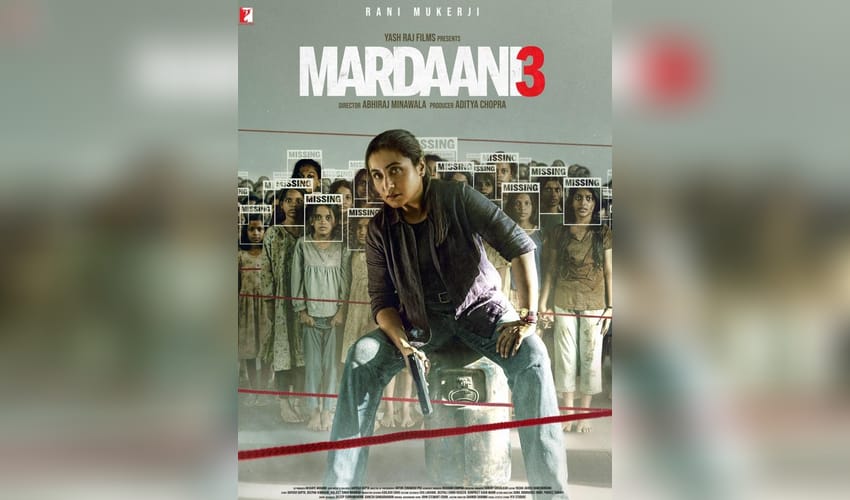
“Thirty years later, my love for cinema is still the same, perhaps deeper, certainly calmer, and infinitely more grateful. It is incredibly special to mark my 30th year in cinema with Mardaani 3 – a franchise that allows me to salute the spirit of today’s women and also the resilience of the Indian police force, especially the women who serve the nation.”
She said that to have a threequel from the franchise that she have built release in her “30th year is again a sign for me. Maybe the universe is telling me to keep moving forward, keep doing good work, and keep celebrating people and unsung heroes on screen through my craft.”
Rani believes actors are a vessel of ideas and creativity and “I’m truly blessed that I could become an actor.”
“As long as there are stories to tell and emotions to explore, I will remain a student of this beautiful, demanding art. Thank you for letting me live so many lives. Today, I’m still feeling like a newcomer, wanting to excel, to work harder, to take on new cinematic challenges and write a totally new chapter of my life starting right now…”
She concluded: To my fans and audiences who have always rooted for me, stood beside me and cheered for this girl who has become a woman, I bow down with respect and love. I would not have been here without you. I would have been no one without you. Rani Mukerji.”



