



Politics
Radical ‘Rule Book’ circulated in Bangladesh brands cooperation with India as betrayal
Published On Wed, 24 Dec 2025
Vicky Nanjappa
0 Views
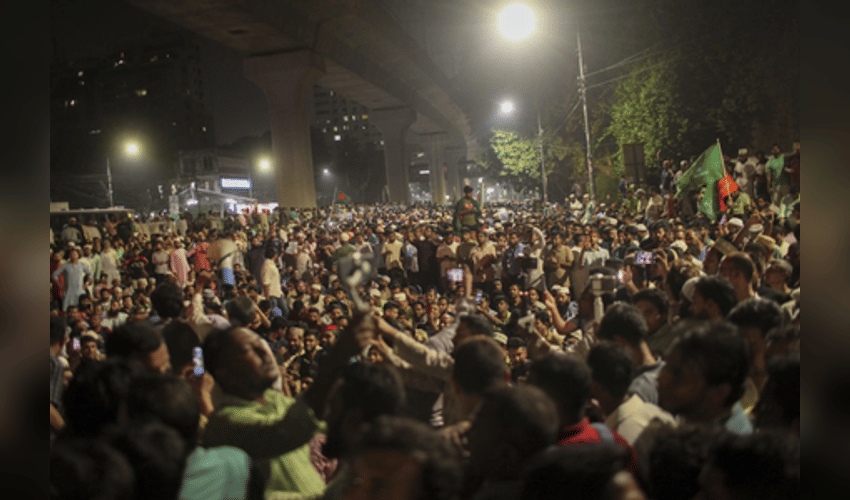

New Delhi, Dec 24 (AHN) Ties with Bangladesh, which have been strained since the ouster of Sheikh Hasina, worsened with radical mobs targeting the minority Hindus in the country. Over the last week, one got to witness gut-wrenching scenes whereby the minority community in the country was brutally targeted.
In addition, violence broke out at Indian missions, following which New Delhi lodged strong protests. The violence has been largely fanned by ISI-backed radical elements who are hell-bent upon ruining ties with India, which happens to be Dhaka’s most consequential neighbour.
Indian Intelligence agencies have learnt that there is a sustained online campaign that is on, which is not letting the violence die down. Violence erupted following the shooting of two student leaders. The ISI-backed channels took advantage of this and successfully managed to turn this into an anti-India campaign.
The online campaign primarily focuses on an anti-India stance. Right from the shooting of the students to the floods in Bangladesh, a sustained narrative has been set whereby India is being blamed. The same is the case when it comes to politics in the country, and India is blamed for the instability in Bangladesh on online platforms.
An official said that ISI has tasked the radical elements attached or affiliated with the Jamaat-e-Islami to run this campaign. When the floods hit Bangladesh, radical channels pushed a narrative in which it was claimed that India released the water to destroy Bangladesh. The agenda was pushed so hard that many in Bangladesh bought this narrative and developed hate against India.
Investigators in Bangladesh say there is an Awami League hand behind the killing of student leader Sharif Osman Hadi. Following the murder, the online propaganda focused entirely on how the leader of the alleged killers, Sheikh Hasina, was being shielded by New Delhi.
Indian agencies have also found material where a conspiracy theory was doing the rounds, where India was being blamed for the killing. Many claimed that the Indian agencies had helped the Awami League to carry out the murder to avenge the ouster of Sheikh Hasina. This led to the violence and the targeting of Indian interests in Bangladesh, as well as the minority community, officials say.
ISI-backed elements have also come up with a rule book for the people of Bangladesh to follow. The radical mob specifically targets those who do not follow this rule book, officials have learnt. The people are being told to believe that cooperating with India amounts to betrayal of Bangladesh.
Further, every crisis in the country should be blamed on India. If one has to be called a patriot, then he or she must oppose India, the rule book being circulated online also states.
Social media platforms such as Facebook, X, Instagram and Threads are flooded with anti-India material and this rule book, which is the primary cause for the violence that has erupted and refuses to die down. Indian agencies say that there are plenty of posts regarding the election and how India is trying to interfere in it.
These posts also speak about India’s so-called interference in Bangladesh’s affairs. Further, there is plenty of content around the Northeast. It says that the Seven Sisters must separate, as this would solve the flood problem in Bangladesh. Indian officials have rubbished this claim and say that this is a plot by Pakistan to ensure that every Bangladeshi is completely anti-India.
If the ISI manages to achieve this, then it can further its agenda in the country with much ease and no public opposition. An Intelligence Bureau official says that these handles are not necessarily being run from Bangladesh alone. Most of these handles are traced to Pakistan and Gulf nations.
The ISI’s online propaganda wing, which is based in Karachi, controls these handles. The ISI has deployed the same wing that spreads fake messages to incite tensions in India. This is the same unit which has also been found to be behind the large number of honey-trap cases reported in India.
Bangladesh watchers say these are clear attempts to provoke India. New Delhi has to tread carefully in the run-up to the elections in Bangladesh scheduled to be held in February. There is a need to keep engaging even before the elections are held.
However, New Delhi’s worry is that even if things improve on the diplomatic front, the mindset of the people is fast changing due to this sustained fake narrative that the radical elements have pushed.
Officials say that the ISI is trying to create a Pakistan-like situation in Bangladesh, whereby the sentiment of the people is to hate India. Another official says better sense should prevail, and the people should understand the importance of ties with India rather than being held hostage by a fake social media narrative that is only anti-India.



