


Asia In News
PoK protests shift from governance dispute to legitimacy crisis: Report
Published On Fri, 26 Jun 2026
Asian Horizan Network
4 Views
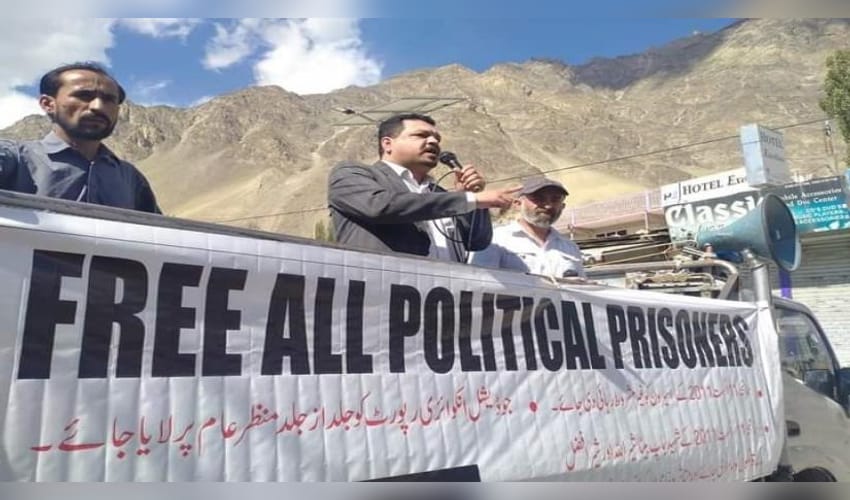

Islamabad, June 26 (AHN) The protests in Pakistan-occupied Kashmir (PoK) have evolved beyond a governance crisis into what increasingly appears to be a crisis of legitimacy, with a key indicator being the broadening of participation, as schoolchildren aged 10 to 12, women, and entire families joined sustained sit-ins at Rawalakot's Eidgah Ground, signalling that the movement had transformed from organised civil society into a broader public movement.
According to an India Narrative report, organisers claimed over 70,000 people joined the demonstrations in Rawalakot alone, while protests unfolded across multiple towns and villages. The movement also marked a shift in its demands, with appeals to the United Nations and chants of "Pakistani forces out" signalling opposition to the administrative legitimacy, not just dissatisfaction with the governance of Pakistani authorities.
"On June 23, 2026, a deadline issued by Pakistan-Occupied Kashmir’s Joint Awami Action Committee (JAAC) expired without resolution, pressing a question Islamabad has long preferred to defer: when does persistent governance failure cross into a crisis of legitimacy? What began in 2023 as organised grievances over electricity tariffs and wheat prices has evolved, within three years, into the most sustained civil resistance the region has witnessed in decades," the report said.
"The trajectory — from subsidy demands to constitutional challenges, from localised sit-ins to a twenty-day lockdown paralysing the administrative capital — reflects a deeper structural fracture," it added.
The report noted that the decision to ban the JAAC under anti-terrorism laws on June 5, file sedition charges against its leaders, enforce an internet blackout and reportedly restrict food supply convoys since June 14 in PoK reflected measures that go far beyond responding to a consumer grievance.
Instead, it argued, these were instruments typically employed when a state has exhausted its persuasive and administrative options, resorting to coercion as a primary response rather than a last resort.
"Legitimacy crisis arrives analytically when coercive pressure generates solidarity rather than submission. The killing of JAAC member Shahzaib Habib on June 5, 2026, became a catalyst for wider mobilisation rather than a deterrent — a precise inversion of the intended coercive calculus,” it stated.
The report said that what began as protests against rising electricity bills in PoK has evolved into a much broader movement against Pakistani authorities.
"What people in Rawalakot and Muzaffarabad articulate in June 2026 is a contest over whether administrative authority can be considered legitimate — not merely effective, not merely coercive, but genuinely consensual. Pakistan’s responses, alternating between subsidy packages and anti-terrorism designations, have not addressed this contest; they have accelerated it," i noted.