



Technology
Pax Silica and WAICO may herald new era of bloc politics centered on technology
Published On Fri, 07 Aug 2026
Asian Horizan Network
3 Views
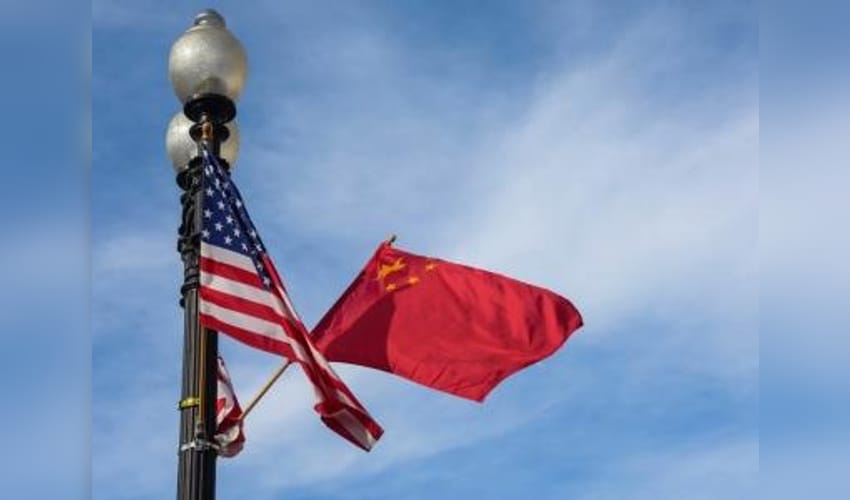

New Delhi, Aug 7 (AHN) The emergence of Pax Silica and World AI Cooperation Organisation (WAICO) may yet signal a new era of bloc politics centered on technology where, as the two global powers driving their respective initiatives claim to be "positive-sum", their rivalry risks creating parallel digital worlds -- one anchored in Washington, the other in Beijing.
If nations are compelled to align exclusively with one camp, the result could indeed resemble a Cold War-style bifurcation, with semiconductors and AI replacing nuclear arsenals as the decisive tools of power.
However, as Kazakhstan is a member in both initiatives, some other countries may also follow suit, opined some reports.
During the Cold War, the divide was ideological, today, it is technological sovereignty vs. dependency.
As it stands now, Pax Silica and WAICO are not merely trade clubs; they are strategic ecosystems, shaping standards, investments, and even values around AI and digital governance.
According to China, WAICO will be an intergovernmental organisation, proposed to uphold the purposes of the UN Charter, the principles of consultation, joint contribution, shared benefits, and will focus on a people-centered approach.
President Xi Jinping of China has referred to WAICO as China's answer on behalf of the Global South. He has promised 5,000 AI training slots for developing countries, new application centres with ASEAN, the African Union, the Arab League, BRICS, and a 30-country weather AI system. His words imply including nations apparently locked out of AI economy by "someone else", stopping short of naming the United States, it would seem.
Launched in December 2025 by the United States Department of State, Pax Silica is framed as an economic-security initiative designed reportedly to reduce reliance on China in critical technologies.
Its focus spans semiconductors, AI, rare earths, advanced manufacturing, and energy inputs.
The name itself evokes "Pax Americana", as if signaling Washington's ambition to shape a stable, US-centered technological order.
The US Department of State defines Pax Silica as the flagship effort on AI and supply chain security, advancing new economic security consensus among allies and trusted partners, where "Pax" is a "historical term denoting peace, stability, and prosperity" and "Applies to the foundations of modern AI and computing".
It quotes the words of US Under Secretary for Economic Affairs Jacob Helberg, "If the 20th century ran on oil and steel, the 21st century runs on compute and the minerals that feed it. This historic declaration (of Pax Silica) hails a new economic security consensus ensuring aligned partners build the AI ecosystem of tomorrow -- from energy and critical minerals to high-end manufacturing and models."
By mid-2026, Pax Silica had 24 signatories, including major economies such as the United States, United Kingdom, Japan, India, Australia, Germany, South Korea, Singapore, and the European Union.
Observers like Canada, Estonia, and Taiwan are also said to have endorsed its principles.
In response, Beijing has advanced WAICO, where, on July 16, some 29 nations signed the charter in Shanghai.
Being considered less transparent than Pax Silica, WAICO emphasises digital sovereignty, infrastructure financing, and AI ethics aligned with Chinese standards.
Its membership reportedly includes Russia, Pakistan, Iran, several Central Asian states, and parts of Africa and Latin America -- countries mostly seen as often excluded or wary of US-led frameworks.
Independent analyses see the US Pax Silica and China's WAICO represent two competing visions for global technology governance, each rallying several nations into rival blocs.
While the former emphasises secure supply chains and AI innovation among "trusted partners", WAICO seeks to consolidate China's leadership in digital infrastructure and standards, surmise some such reports.
What do AI itself prophesise? When prompted, an AI platform answered thus, "Pax Silica and WAICO increasingly resemble rival blocs, but unlike the Cold War's rigid ideological divide, they represent competing visions of AI governance and technological order. The future may be less about direct confrontation and more about fragmented spheres of influence, with countries pressured to align with one or the other."
However, it may lie with "middle powers like India" who may "forge a balancing role, preventing a binary split," the website added.



