



Military
Pakistan security forces face risk of mass desertions amid surging PoK protests
Published On Tue, 16 Jun 2026
Vicky Nanjappa
3 Views
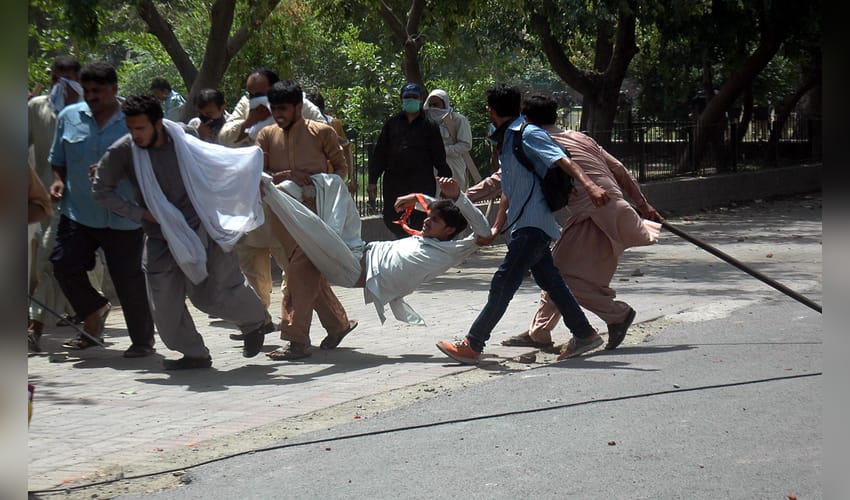

New Delhi, June 16 (AHN) The Pakistani military, regional police forces, and government departments face a looming threat of large-scale desertions as civil unrest intensifies across Pakistan-occupied Kashmir (PoK), Intelligence Bureau (IB) officials revealed on Tuesday.
The Intelligence Bureau official said that a section of personnel from PoK serving in the armed forces, police, and civil administration is becoming increasingly disillusioned with the authorities' handling of the unrest.
“Calls have reportedly emerged within the region urging local residents employed in state institutions to resign in protest against alleged excesses by security forces,” the official said.
Officials also point to growing dissatisfaction within the ranks over the continued use of force against demonstrators.
An official said that no efforts are being made to resolve the issue. According to the official, Pakistani army chief Field Marshal Asim Munir has directed authorities to deal with the protests with an iron fist.
“He is in no mood to listen to the protesters' demands and believes that if they refuse to back down, the use of force will be the only option,” the official added.
Another official said that the discontent within key institutions such as the army and police is not confined to personnel from PoK. Similar sentiments are being witnessed in Balochistan and Khyber Pakhtunkhwa (KP) as well. Information gathered by Indian agencies suggests that both the military and police are witnessing a steady loss of personnel. According to the official, there are several factors behind this trend.
In Balochistan and KP, security forces have largely struggled to contain groups such as the Balochistan Liberation Army (BLA) and Tehreek-e-Taliban Pakistan (TTP). Many personnel are reluctant to take on these outfits because of their own experiences on the ground.
“Both groups (BLA and TTP) possess superior local intelligence networks and a far better understanding of the terrain than Pakistani security forces. A significant number of personnel serving in the Pakistan Army, police, and government departments also hail from these regions,” the officials claimed.
The officials quoting reports say that many personnel are weary of being pitted against their own people, leading to growing discontent within the ranks. Even those who remain in service often lack the willingness to fight against communities they identify with. Allegations of excesses have increased significantly, a development that many find difficult to accept, the officials said.
While desertions are said to be occurring regularly, the issue remains largely under wraps, as few are willing to speak openly against the Pakistan Army out of fear of repercussions. However, officials warn that if the Pakistani army continues with its current approach and fails to address the growing discontent, it could soon face a significant exodus of personnel. Indian agencies assess that any such wave of desertions could involve a substantial number of troops.
Meanwhile, the situation in PoK remains tense. The Jammu Kashmir Joint Awami Committee (JAAC) has intensified its agitation, with an increasing number of people joining the protests.
While the protesters show no signs of backing down, Pakistani security forces continue to respond with force, drawing allegations of further human rights violations. What has particularly concerned the establishment is that support for the agitation is growing across the region, with more people joining the protests. Although PoK has witnessed several protest movements in the past, this one shows little sign of losing momentum.
Making matters more challenging for the administration is the growing participation of women in the protests. Women have been seen marching alongside community leaders and activists while demanding their rights. At the same time, protesters have openly directed their criticism at Asim Munir, whom they hold responsible for the worsening situation in the region. For years, the demonstrators have been demanding greater regional rights, better representation and increased development for the area.