



World
Pakistan's lack of credibility as neutral interlocutor exposed: Report
Published On Thu, 14 May 2026
Asian Horizan Network
3 Views
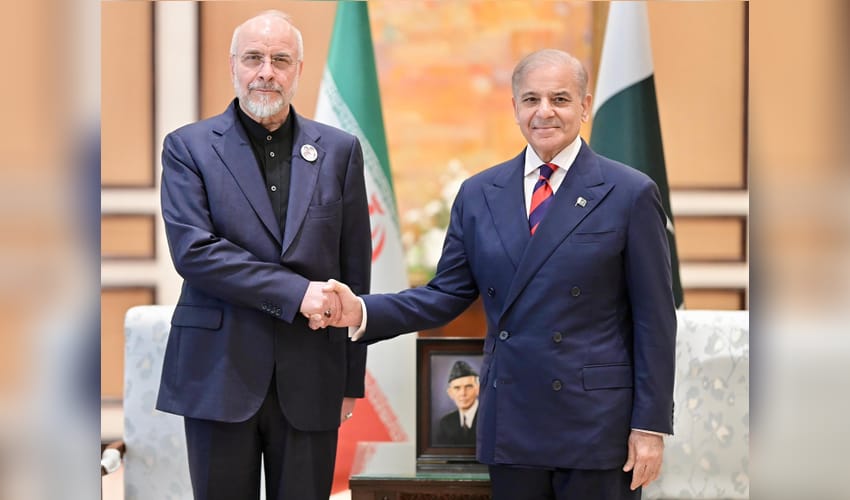

Male, May 14 (AHN) Pakistan’s failure to host the second round of talks between the US and Iran in Islamabad reflects more than a logistical setback. The Iranian Foreign Minister’s early exit, followed by Washington’s decision to suspend the visit of its envoys, signals a breakdown shaped more by mistrust rather than procedural delays, a report has detailed.
According to a report in Maldivian media outlet Etruth MV, effective diplomatic mediation depends on consistency, discretion, and neutrality, adding that Pakistan’s conduct has raised doubts on all three counts.
“Pakistan’s attempt to position itself as a mediator in the ongoing United States-Iran engagement has highlighted a persistent and structural weakness in its diplomatic profile, namely a lack of credibility as a neutral interlocutor. The visit of Pakistan’s army chief, General Asim Munir, to Muscat to seek Omani support for reviving stalled talks shows that Islamabad has been unable to sustain confidence among the principal stakeholders,” the report mentioned.
It further said Iran’s concerns have grown more explicit amid increasing scepticism over Pakistan's reliability as a neutral intermediary.
“There are indications that Iran suspects Islamabad of conveying inconsistent or inaccurate messages between the two sides. Moreover, there is apprehension that sensitive details from confidential exchanges may have been shared with the United States. Such actions, if perceived to be true, directly undermine the fundamental requirement of confidentiality in mediation processes," the report mentioned.
The recent developments, it said, had immediate consequences, with Iran indicating a clear preference for Oman as the venue for further engagement.
“Oman’s diplomatic approach has historically been defined by quiet facilitation, strategic neutrality, and balanced relations with both Washington and Tehran. This stands in contrast to Pakistan’s position, which is shaped by visible strategic dependencies and fluctuating alignments,” the report stated.
Beyond confidentiality concerns, broader strategic suspicions are influencing Iran’s assessment, with sections of its establishment viewing the Pakistan track as a cover for the United States to recalibrate its military posture in the region.
“In this interpretation, prolonged and inconclusive talks provide Washington with operational space while Iran remains engaged in a controlled diplomatic process. Pakistan, by enabling such a framework, is viewed as contributing to a managed distraction rather than a genuine resolution effort,” the report noted.
Emphasising the centrality of trust in mediation, it said, "A mediator must be trusted by all sides, not merely accepted. Oman’s ability to provide a stable and neutral platform has therefore become more relevant than Pakistan’s attempts to assert a role.”



