



Asia In News
Pakistan's actions in Afghanistan hamper economic integration in wider region: Report
Published On Sun, 15 Mar 2026
Asian Horizan Network
3 Views
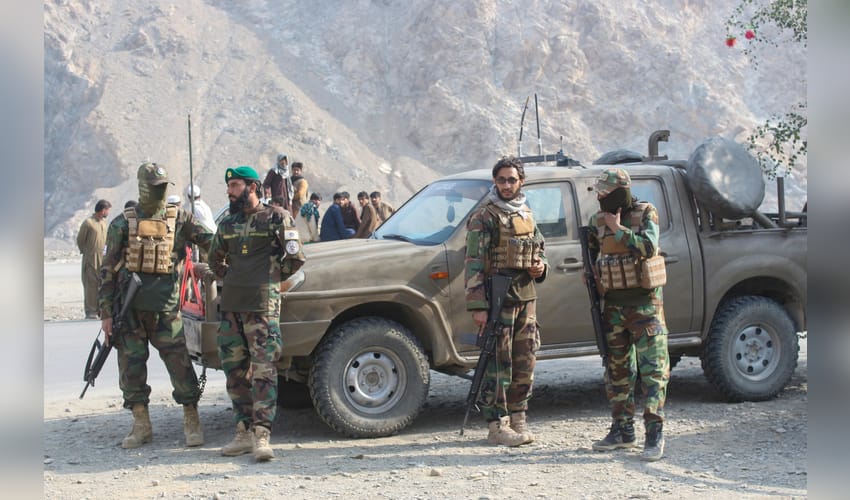

Washington, March 15 (AHN) Pakistan's Afghanistan policy for decades has revolved around installing a "friendly" government in Kabul -- often through proxy actors such as the Taliban -- in an effort to secure "strategic depth" against India.
However, in practice, the strategy has repeatedly contributed to instability in both Afghanistan and Pakistan while hampering the prospects for broader economic integration across South, Central, and West Asia, a report said on Sunday.
"The deterioration of relations between Islamabad and Kabul raises an important question: What is Pakistan's long-term strategy toward Taliban-ruled Afghanistan? Afghanistan has endured overlapping political, economic, and humanitarian crises since the Taliban seized power in August 2021, and Pakistan's choices will heavily influence whether the country remains trapped in instability or moves toward a more sustainable political settlement," a report in the US-based magazine The National Interest said.
According to the report, the tensions between Pakistan and Afghanistan became evident on October 9, 2025, when Pakistani forces launched an unprecedented airstrike in Kabul targeting Noor Wali Mehsud, the leader of the Tehreek-e-Taliban Pakistan (TTP).
"Although Mehsud survived, the strike marked a dramatic escalation in Pakistan's willingness to project military force inside Afghanistan. Islamabad had previously targeted TTP positions within provinces of Afghanistan, but striking the capital signalled a new phase in the conflict," it noted.
The report said that the timing of the attack was politically significant as the Taliban's Foreign Minister Amir Khan Muttaqi was visiting India during the period.
Also, mediation attempts between Pakistan and Afghanistan by several countries, including Qatar, Turkey, and Saudi Arabia, failed amid deepening mistrust.
The conflict intensified on February 27, when Pakistan announced an "open war" against the Taliban regime.
"Unlike earlier operations that focused primarily on the TTP, Pakistan began targeting both TTP and Taliban positions across multiple provinces of Afghanistan, including Kabul and Kandahar, where the movement's supreme leader, Hibatullah Akhundzada, resides. This shift suggested that Pakistan may no longer view the Taliban merely as an unreliable partner but increasingly as a potential strategic threat," the report added.
The key question, it said, is what Pakistan intends to achieve in Afghanistan -- whether Islamabad is trying "to force behavioural change within the Taliban regime, or has it begun to consider supporting a broader political alternative to Taliban rule".
The report noted that since October 2025, Pakistan's "rhetoric has visibly hardened", with senior Pakistani officials, including military spokesman General Ahmed Sharif Chaudhry and Defence Minister Khawaja Asif, adopting a more confrontational tone in public statements, while the country's ultimate strategic objective "remains ambiguous".



