


World
Pakistan: Locals worried as Balochistan becomes new hub for poppy cultivation
Published On Fri, 06 Mar 2026
Asian Horizan Network
2 Views
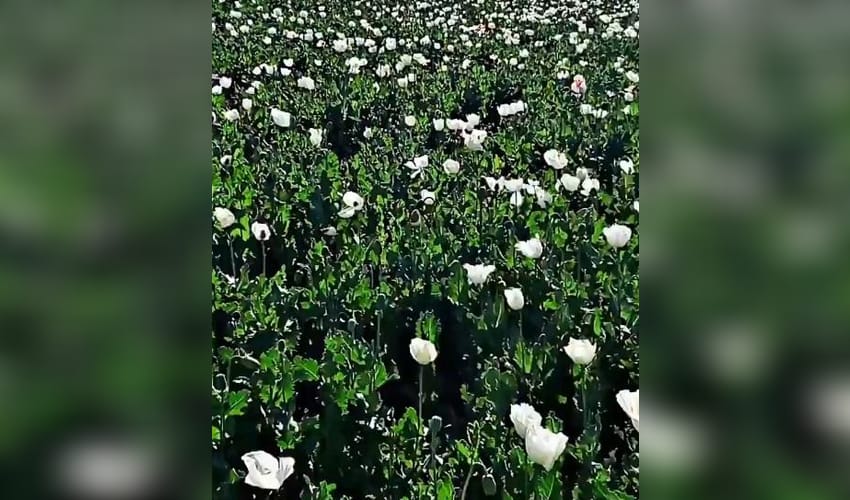

Islamabad, March 6 (AHN) With Balochistan emerging as a new hotspot for poppy cultivation in Pakistan, locals fear that the illicit trade is evolving rather than disappearing despite sporadic crop destruction.
According to a recent report in leading international magazine ‘The Diplomat’, following the Taliban’s nationwide ban on poppy cultivation in Afghanistan in April 2022, much of the activity appears to have shifted to Pakistan, particularly Balochistan.
Despite growing concerns among communities in the province, the issue is yet to become a policy priority for the Pakistan government.
The report highlighted that Pakistan’s Anti-Narcotics Force (ANF) seized more than 1,350 kilogrammes of narcotics worth 77.85 million rupees (about $280,000) during a series of operations across the country in early February. The operation led to the arrest of nine people, prompting further investigations.
Citing ANF, the report stated that the drug network was attempting to smuggle narcotics from Balochistan’s Panjgur district through Turbat city, to Gwadar and Pasni along the coast. From there, it said, the drugs are planned to be transported by sea routes using high-speed boats to Gulf nations, Yemen and Tanzania.
“On the surface, the recent ANF seizure appears to be a routine investigation against organised drug trafficking networks. However, this was not an isolated incident. Reports and data from Pakistan’s National Initiative against Organised Crime (NIOC), United Nations Office on Drugs and Crime (UNODC), and the Global Organised Crime Index show that complex changes may be underway,” the report detailed.
“Poppy cultivation in both Afghanistan and northwest Pakistan goes back many decades. The absence of sufficient infrastructure, legal employment opportunities, and political instability in these areas combined to push rural populations toward illicit poppy farming,” it added.
The report noted that production and export of processed opium such as heroin and methamphetamine had already been widespread in Pakistan, even before the Taliban imposed the ban, posing serious consequences, particularly for the younger population.
“More than half of Pakistan’s population is under the age of 20, and 20 per cent is between 15 and 29. These youngsters are vulnerable to drug addiction. According to a 2023 report, there were 700 deaths daily due to drug overdose in Pakistan. Around 11 per cent of Khyber Pakhtunkhwa’s population is said to be involved in substance abuse, the highest in Pakistan, followed by Balochistan and the cities of Lahore and Karachi,” it mentioned.
The report cited a former head of the ANF in Balochistan as saying that curbing the supply chain is “near impossible”, noting that traffickers are highly mobile, and at times facilitate the relocation of farmers.