


World
Pakistan emerges as key reservoir of poliovirus: Report
Published On Fri, 24 Apr 2026
Asian Horizan Network
2 Views
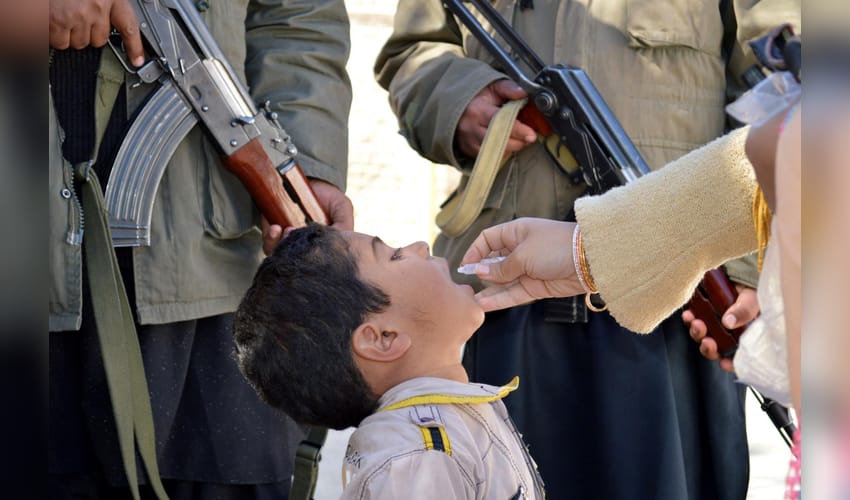

Athens, April 24 (AHN) Pakistan is evolving into a significant reservoir of poliovirus, raising concerns within the international community that it may become a hub for broader cross-border transmission. This resurgence is driven by systemic challenges, including corruption, administrative failures, government inaction, barriers to access in vulnerable communities, and widespread vaccine hesitancy, a report stated.
According to Athens-based Geopolitico, this trend is especially troubling given that Pakistan has received over $100 million in international funding for polio eradication since 2023.
Currently, only two countries worldwide – Pakistan and Afghanistan – remain endemic for Wild PolioVirus type 1 (WPV1). While Afghanistan, under Taliban rule, has recorded a significant reduction in cases, Pakistan has reported more than 100 active cases of the WPV1 strain over the past two years.
“The World Health Organisation (WHO) has highlighted that WPV1 has now been detected across all major provinces of Pakistan, from the relatively developed Punjab to the less developed Khyber Pakhtunkhwa. According to the WHO's Polio IHR Emergency Committee, active transmission continues into 2025, including in Lahore and multiple districts within the central epidemiological corridor of the country," the report detailed.
“The committee noted that the upward trend in cases became evident as early as mid-2023, particularly in Khyber Pakhtunkhwa, Sindh, and Balochistan. Of additional concern is the reappearance of the virus in Gilgit-Baltistan, which reported its first WPV1 case in over eight years — a development underscoring the persistent threat posed by entrenched transmission zones", it added.
The reports stressed that experts attribute the failure to eradicate the disease to the deep structural weaknesses within Pakistan's healthcare system.
Among the key challenges, it said, are “inadequate transportation for medical teams in remote areas, insufficient training, vaccine shortages, poor coordination and accountability, political interference, and the unequal distribution of quality healthcare, which remains largely accessible only to elites.”
Pakistani development consultant Nawab Ali Khattak echoes these concerns, noting that the resurgence of polio continues due to logistical constraints, security threats, misinformation, and corruption.
Another Pakistan-based educator, Assadullah Channa, stated that much of the crisis stems from the government’s failure to effectively counter extremist narratives. He argues that authorities have refrained from confronting fundamentalist elements, enabling years of misinformation to influence public perception and drive vaccine rejection.
“According to Channa, the persistence of polio is also a reflection of political neglect, with successive governments failing to counter extremist propaganda, while the current leadership remains preoccupied with political and judicial manoeuvring at the expense of urgent public health priorities," the report noted.