



Technology
Nvidia CEO highlights closer ties as Samsung unveils HBM4E chip
Published On Tue, 17 Mar 2026
Asian Horizan Network
2 Views
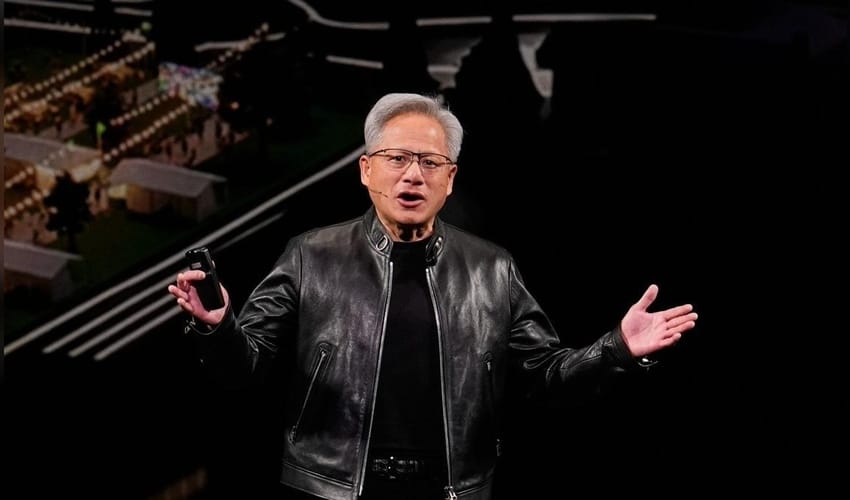

Seoul, March 17 (AHN) Samsung Electronics unveiled its seventh-generation high bandwidth memory (HBM), namely HBM4E, during an annual technology conference hosted by Nvidia, where the U.S. tech giant highlighted its expanding partnership with the Korean chipmaker beyond memory chips.
Samsung Electronics provided updates on the development of its HBM4E products as it showcased its capabilities as a total memory solution provider for Nvidia's Vera Rubin AI platform during Nvidia GTC 2026, which kicked off on Monday (U.S. time) for a four-day run in California, reports Yonhap news agency.
It marked the first time Samsung Electronics unveiled the physical HBM4E chip, which is expected to support speeds of 16 gigabits per second per pin and bandwidth of 4.0 terabytes per second.
The performance is an improvement over the HBM4, which has speeds of 13 gigabits per second per pin and bandwidth of 3.3 terabytes per second.
During his keynote speech, Nvidia CEO Jensen Huang expressed gratitude to Samsung Electronics for its production of the Groq 3 language processing unit (LPU), which will be used for Nvidia's AI platform to enhance its performance.
"I want to thank Samsung, who manufactures the Groq 3 LPU chip for us, and they are cranking as hard as they can. I really appreciate you guys," the CEO said, confirming that Samsung Electronics' foundry division manufactures the chip.
Huang's remark suggests Samsung Electronics and Nvidia have broadened their cooperation in the AI sector to include the foundry, or chip contract manufacturing, business.
Last month, Samsung Electronics began its first commercial shipments of sixth-generation HBM, or HBM4, designed for Nvidia's Vera Rubin platform, which the chipmaker says offers the "ultimate performance" for AI computing.
Samsung Electronics also introduced hybrid copper bonding (HCB) technology, which enables stacking of more than 16 layers while reducing thermal resistance by 20 percent compared to thermal compression bonding (TCB), highlighting its packaging capabilities for the next-generation HBM.
"In order for innovation in the AI industry, a strong AI system, such as the Vera Rubin platform, is essential," the South Korean tech giant said.
"Samsung Electronics plans to continue supplying high-performance memory solutions supporting the Vera Rubin platform," it added.
The chipmaker added the two companies intend to lead a transition in the global AI infrastructure paradigm on the back of such ties.
During the event, Samsung Electronics set up an exhibition booth comprising three zones -- AI Factories, Local AI and Physical AI -- introducing the firm's next-generation chips meeting demand from the AI industry.
—AHN
na/



