



Asia In News
NITI Aayog report on globalisation of higher education lauds Gujarat's early push through GBU
Published On Mon, 29 Dec 2025
Asian Horizan Network
0 Views
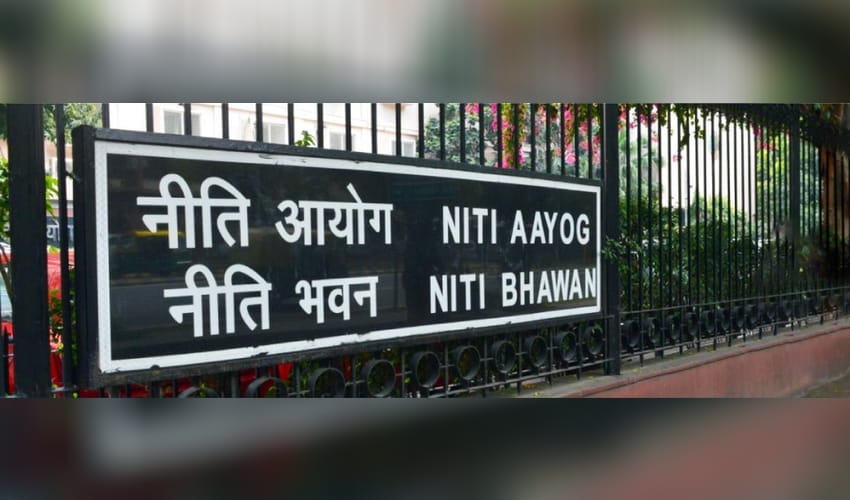

Gandhinagar, Dec 29 (AHN) A recent NITI Aayog report on the globalisation of higher education has praised the Gujarat government's pioneering initiative of establishing the Gujarat Biotechnology University (GBU) at GIFT City nearly five years ago, calling it a model that closely aligns with the national vision for internationalising higher education in India.
According to the report, Gujarat took a decisive step as early as 2020 by setting up GBU in Gandhinagar, positioning itself ahead of many states in attracting global academic collaboration and retaining Indian talent within the country.
The initiative, the report notes, effectively translates NITI Aayog's vision of developing GIFT City into a hub for international universities and foreign branch campuses.
Established in partnership with the University of Edinburgh (UoE) at Scotland, GBU has been positioned as the world's first dedicated biotechnology university.
Spread over nearly 23 acres at GIFT City, the university houses advanced research infrastructure worth more than Rs 80 crore, while an international campus being developed at an estimated cost of Rs 200 crore is steadily taking shape.
This integrated ecosystem, combining global academic legacy with world-class Indian infrastructure, has been highlighted by NITI Aayog as a benchmark for higher education reform.
The NITI Aayog report, rooted in the National Education Policy (NEP), 2020, and the 'Viksit Bharat@2047' vision, flags a critical concern: for every foreign student who comes to India for higher education, as many as 28 Indian students go abroad.
This outward migration results in an estimated outflow of nearly two per cent of India's GDP.
Gujarat's decision to establish GBU was aimed precisely at addressing this challenge by offering international-standard education within the country.
GBU currently offers Master's programmes in plant biotechnology, animal biotechnology, medical biotechnology, industrial biotechnology and environmental biotechnology, designed and delivered in collaboration with the University of Edinburgh.
The academic structure includes synoptic examinations, challenge-based practical training, a nine-month research dissertation, and an innovative provision for the top 25 students each year to undertake 12–14 weeks of research internship in Edinburgh.
Admissions to the university are conducted through the highly competitive Graduate Aptitude Test–Biotechnology (GAT-B), ensuring merit-based selection at the national level.
In 2025, students from 17 Indian states secured admission across 100 seats, reinforcing NITI Aayog's emphasis on attracting top talent through quality and accessibility.
Senior faculty members from the University of Edinburgh dedicate more than 90 days annually to GBU, providing leadership, quality assurance and strategic guidance.
Each semester, around 12 visiting faculty teach advanced electives such as synthetic biology, vaccine design, protein engineering and microbial eco-physiology.
This academic and research ecosystem has translated into tangible outcomes.
As many as 37 student teams from GBU have secured more than Rs 2 crore in start-up and entrepreneurship grants under the Student Startup and Innovation Policy (SSIP).
Under the guidance of the Chief Minister Bhupendra Patel and the leadership of the Science and Technology Department, and with sustained mentoring from the University of Edinburgh, GBU has secured more than 70 extramural research grants worth more than Rs 40 crore, creating employment opportunities for more than 50 researchers.
The university has also admitted more than 40 PhD scholars through Central and state fellowships.
Of these, 20 scholars receive a monthly fellowship of Rs 20,000 from the Gujarat government, further strengthening the state's research ecosystem.
Highlighting the university's recent milestones, GBU Deputy Registrar and Head of Academics, Vimal Shah, said 2025 has marked a defining phase in the institution's global standing.
Professor Nisha Singh co-led a flagship Central government project on nanoparticle therapy for Alzheimer's disease, achieving an increase in neuronal cell survival from 40–50 per cent to nearly 90 per cent in preclinical models.
The findings were published in Wiley's Small journal.
Meanwhile, a research team led by Rohini Nair secured Rs 1.3 crore in funding from a leading NGO for menstrual health diagnostics in remote regions.
At the university's second convocation held last November, degrees were conferred on 94 M.Sc. graduates from the second batch, with five students receiving gold medals.
Recently, Director General Professor Subir S. Majumdar was honoured with a Lifetime Achievement Award at LASAICON-2025, underscoring the institution's leadership credentials.
GBU has also achieved rare national recognition by winning five grants in the first call of the Anusandhan National Research Foundation (ANRF).
In addition, the university secured three ARG and two Direct Benefit Transfer (DBT) grants, demonstrating a strong capacity to attract competitive science funding.
Over the past two to three months alone, GBU has received Rs 8–10 crore in fresh research funding -- an achievement being seen as a moment of pride for Gujarat's higher education sector.
By integrating the 440-year academic legacy of the University of Edinburgh with the cutting-edge infrastructure of GIFT City, Gujarat has created a replicable model for retaining intellectual capital within India.
The NITI Aayog report cites this approach as evidence of Gujarat's leadership in the internationalisation of higher education, positioning the state as a frontrunner in building India's global academic footprint.



