



World
Nepal: Former King Gyanendra lambasts political leadership for 'imbalanced' foreign policy
Published On Sat, 10 Jan 2026
Asian Horizan Network
2 Views
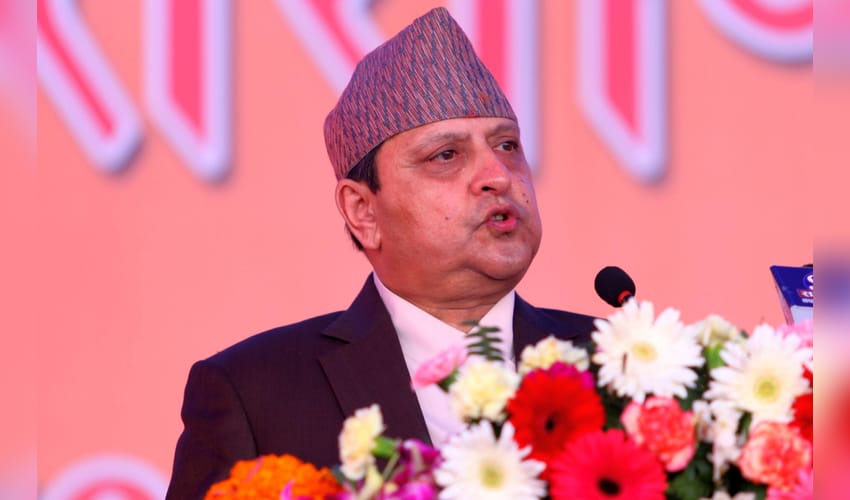

Kathmandu, Jan 10 (AHN) Nepal's former King Gyanendra Shah on Saturday blamed the country's political leadership for adopting an increasingly imbalanced foreign policy and conduct which is seriously affecting the country's national interests.
In an address to the nation ahead of the 304th birth anniversary of modern Nepal's founder, Prithvi Narayan Shah — who is also his forefather — and National Unity Day on Sunday, the former monarch said the leadership’s failure to comprehend the country’s sensitive condition and the changing geopolitical landscape has brought Nepal to a point where it risks losing the trust and confidence of friendly nations.
“At a time when an increasingly imbalanced foreign policy and conduct are seriously affecting national interests, the importance of the divine counsel (of late Prithvi Narayan Shah) and his intellectual perspectives has grown even greater,” he said in a video address. However, the former King did not elaborate on how the country adopted such an imbalanced foreign policy.
He stressed that Nepal should take the shield of peace to protect itself, even though many countries seek protection through one form or another of a security shield. He, however, did not explain what constitutes the “shield of peace.”
In his message, the former monarch also expressed concern over growing frustration among young people and their increasing outmigration, which he said has fueled discontent among the youth.
“The continuous outmigration of Nepal’s human resources had already been signalling despair about the country’s future. Now, Nepal is witnessing the flight of capital, capitalists, and valiant entrepreneurs,” he said. “We are deeply distressed by the possibility that, if this trend is not immediately discouraged, the nation could stand at the brink of failure.”
Although he did not explicitly mention the recent Gen-Z movement, the former King highlighted rising rebellious sentiment among the younger population. The Gen-Z movement, which took place in early September last year, brought down the coalition government led by former Prime Minister K P Sharma Oli, paving the way for the current government headed by Sushila Karki.
“Whenever the sentiments, aspirations, and needs of the younger generation are not addressed, discontent inevitably arises, and it can even take the form of rebellion—a truth that leadership must internalise,” he said. “The repeated practice of merely using the youth without understanding and addressing their needs has bred frustration among them and resulted in the loss of life and property in the country.”
During the Gen-Z protests, as many as 77 people lost their lives, and government and private property worth over NPR 84 billion was destroyed, according to the Nepali government estimates.
He also recalled stepping away from the palace nearly two decades ago. The former monarch said he had handed over the “royal crown and sceptre”—the people’s trust—back to the people themselves for safe stewardship, keeping himself away from state affairs in accordance with the wishes of political parties that came to power promising peace, economic progress, and stability.
“Even after nearly two decades since we left the Narayanhiti Royal Palace, the persistent crises confronting the nation have deeply concerned us,” he said. “In the past, there was anxiety that the nation was not being built; now, despair has emerged that the nation itself may not survive.”



