



Politics
Maha polls: Voting underway for BMC, 28 local bodies as 3.48 crore decide fate of 15,931
Published On Thu, 15 Jan 2026
Asian Horizan Network
2 Views
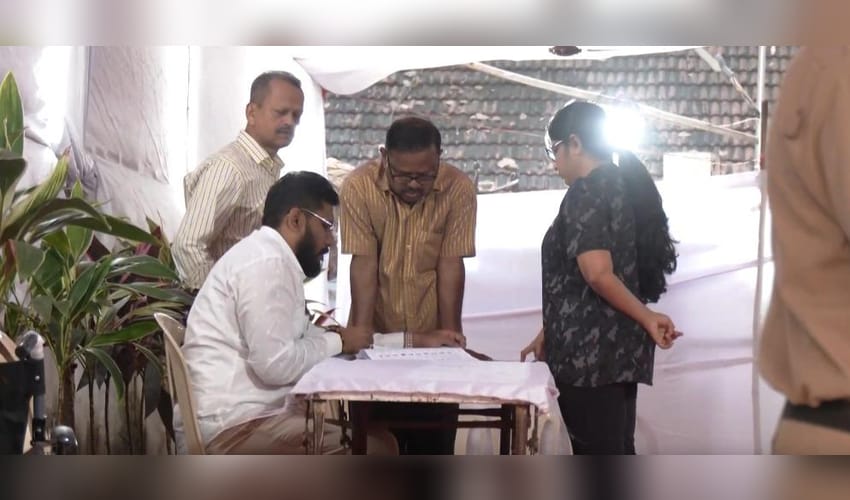

Mumbai, Jan 15 (AHN) Polling in 29 municipal corporations, including the Brihanmumbai Municipal Corporation (BMC), commenced at 7:30 a.m. and will conclude at 5:30 p.m. While elections were originally scheduled for 2,869 seats, including 227 in the BMC, they will now be held for 2,801 seats as 68 candidates were elected unopposed.
No polling will occur for these 68 seats. A total of 3.48 crore voters will decide the fate of 15,931 candidates, including 1,729 in Mumbai. The counting will take place on January 16.
According to the State Election Commission, there are a total of 39,147 polling stations with 43,958 Control Units and 87,916 Ballot Units. In Mumbai, there are 10,111 polling stations equipped with 11,349 Control Units and 22,698 Ballot Units.
The battlegrounds include Chhatrapati Sambhajinagar, Navi Mumbai, Vasai-Virar, Kalyan-Dombivli, Kolhapur, Nagpur, Mumbai, Solapur, Amravati, Akola, Nashik, Pimpri-Chinchwad, Pune, Ulhasnagar, Thane, Chandrapur, Parbhani, Mira-Bhayandar, Nanded-Waghala, Panvel, Bhiwandi-Nizampur, Latur, Malegaon, Sangli-Miraj-Kupwad, Jalgaon, Ahilyanagar, Dhule, Jalna and Ichalkaranji. Elections to the 29 municipal corporations are being held after a gap of more than six years, since their tenure ended between 2020 and 2023. Of these, nine are in the Mumbai Metropolitan Region (MMR), India's most urbanised belt.
Except for Mumbai, elections in the other 28 municipal corporations are being conducted under the multi-member ward system. In Mumbai, voters will cast only one vote as each ward elects a single representative. In the remaining 28 corporations, most wards will have four seats, while some may have three or five.
The campaign saw the state's major coalitions -- Mahayuti (BJP, Shiv Sena-Eknath Shinde, NCP-Ajit Pawar) and the Maha Vikas Aghadi (MVA) (Shiv Sena-UBT, INC, NCP-Sharad Pawar) -- clash over infrastructure, welfare schemes, and urban redevelopment. Mahayuti highlighted the 'Ladki Bahin' scheme and promised further bus concessions for women, metro expansion, and the Redevelopment Project. On the other hand, the Thackeray brothers in particular and the Congress-led Maha Vikas Aghadi in general focused their campaign on "protecting Mumbai's identity," criticising the government over the delay in polls (which were due since 2022), and promising free medicines for seniors and crime-free city initiatives.
Chief Minister Devendra Fadnavis spearheaded the campaign for the ruling alliance, crisscrossing the state to canvas for Mahayuti candidates. Deputy CM Eknath Shinde also travelled extensively to campaign for the party nominees. Deputy Chief Minister Ajit Pawar-led NCP, the third partner in the Mahayuti combine, was strategically excluded to attract "non-Hindu" voters, observers said.
The run-up to the elections saw the coming together of estranged cousins Uddhav and Raj Thackeray after 20 years, steadfast in their attempts to consolidate Marathi votes, while rival factions of the NCP joined hands for Pune, Pimpri-Chinchwad and Parbhani polls. Notably, this would be the first BMC election for the Shiv Sena since the 2022 split, which saw party leader Eknath Shinde leaving with a majority of the legislators, the party name and symbol. The undivided Shiv Sena ruled the country's richest civic body for 25 years.
The Congress party has also projected a strong image in this election by stepping out of the shadow of its Maha Vikas Aghadi allies Shiv Sena(UBT) and NCP(SP) in Mumbai. The grand old party has aligned with Prakash Ambedkar's Vanchit Bahujan Aghadi (VBA) and the Rashtriya Samaj Paksh in the capital, while opting to go solo in Nagpur. The NCP and Sharad Pawar- led NCP(SP), joining hands in Pune and PCMC, has reignited the talks of merger between the two parties. While the leaders from both parties have maintained silence, sources hint that the process of the two parties coming together has begun. The traditional battle lines of Maharashtra politics have dissolved into chaos during these polls.
The ruling Mahayuti and Opposition Maha Vikas Aghadi (MVA) have not only failed to maintain a uniform political equation across different regions, but neighbouring cities are also witnessing a political shift, with an ally in one city emerging as the main opponent in the next. For example, the Bharatiya Janata Party (BJP) and the Eknath Shinde-led Shiv Sena have formed an alliance in Mumbai, Thane and Kalyan-Dombivli, but will be fighting against each other in Mira-Bhayander and Navi Mumbai. The BJP and the Ajit Pawar-led Nationalist Congress Party (NCP) will take on each other in Pune and Pimpri-Chinchwad, but have an alliance in Ahilyanagar and Kolhapur. The violence between the Shinde-led Sena and the BJP marked the election in Thane, Navi Mumbai and Kalyan-Dombivli.
In Pune, Deputy CM Ajit Pawar took on the BJP aggressively, so much so that state BJP chief Ravindra Chavan had to "repent" the decision of allying with Pawar in the state government. Similarly, an opposition party will attack the government in one city, but seek votes along with the ruling party in another. For example, the Sharad Pawar-led NCP(SP) has allied with the NCP in Pune, Pimpri-Chinchwad (PCMC) and Parbhani and will take on opposition partners Congress and the Uddhav Thackeray-led Shiv Sena (UBT). Congress has walked out of MVA in Mumbai, Thane, Nagpur, and Chandrapur, among others.
Top leaders of all the parties joined the campaign, with Chief Minister Devendra Fadnavis leading for the BJP across the state. Shinde too ensured his presence by visiting over 51 places. Ajit Pawar, on the other hand, chose to concentrate his power to safeguard his bastion of Pune and Pimpri Chinchwad Municipal Corporation (PCMC). From the opposition, Maharashtra Congress chief Harshvardhan Sapkal held rallies in all municipal corporations where the elections are held. Ambedkar and his son Sujat too travelled extensively, but focusing on Akola, Amaravati, Solapur and Mumbai.
The SEC has used the Assembly voter lists (as of July 1, 2025) for these polls. To prevent electoral fraud, potential duplicate names in the ward-wise lists are marked with double asterisks (**). Such voters have been pre-verified through door-to-door visits. If a voter with a marked name appears at a booth without prior verification, they must provide a formal undertaking (indemnity bond) and strict ID proof before being allowed to vote.
The SEC has launched a mobile app (available on Google Play Store) to help citizens find their names, polling booths, and candidate details using their name or EPIC (Voter ID) number. Senior citizens, persons with disabilities (PwD), pregnant women, and mothers with infants will receive priority. Ramps and wheelchairs have been mandated at all stations. In areas with high female voter density, special 'Pink Booths' have been set up, staffed entirely by women officers and police personnel. To prevent disputes and maintain secrecy, the SEC has strictly prohibited mobile phones inside polling booths.



