



Asia In News
Karnataka infighting to affect Congress bargaining power and credibility in Southern coalitions
Published On Thu, 15 Jan 2026
Asian Horizan Network
2 Views
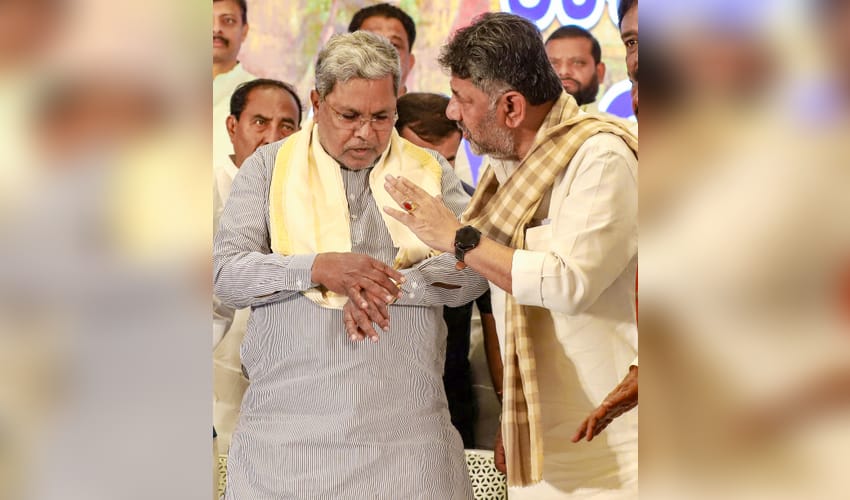

New Delhi, January 15 (AHN) Even as it is grappling with a leadership tussle in Karnataka between Chief Minister Siddaramaiah and Deputy CM D. K. Shivakumar, the Congress is reportedly exploring a power-sharing arrangement with the Dravida Munnetra Kazhagam (DMK) in Tamil Nadu.
While the Karnataka dispute underscores the party’s internal bickering, such a prolonged infighting could weaken Congress’s bargaining power and credibility in southern coalitions.
India’s grand old party has also been riddled with factionalism in states like Rajasthan and Madhya Pradesh, among others, with a cascading effect in subsequent election results.
In Tamil Nadu, where elections are expected to be announced in a few weeks, the DMK is the dominant force and the largest constituent in the ruling Secular Progressive Alliance (SPA).
In the 2021 Assembly election, the M. K. Stalin-led party cornered 133 of the state’s 234 Assembly seats, with Congress winning 18. Other partners contributed the rest of the 159 seats the bloc won altogether.
Thus, the Congress is a junior partner in the DMK-led alliance, where the principal constituent holds overwhelming strength in the Assembly.
Despite realising that it is dependent on the goodwill of the bloc, the Congress is reportedly pushing for greater representation in government, including ministerial positions.
In Karnataka, the Congress rules alone, but in Tamil Nadu, the DMK sets the terms, where the baggage of internal disputes weakens the grand old party’s negotiating position.
The Congress high command faces a huge challenge in solving the Bengaluru imbroglio, where the Siddaramaiah vs. Shivakumar evolves from an apparent "formula" that reportedly suggested a 2.5-year rotational arrangement for the Chief Minister.
In 2023, the Congress swept to power in Karnataka under Siddaramaiah’s leadership, simultaneously relying heavily on Shivakumar’s organisational skills. The Chief Minister reportedly draws his strength from the support of minorities, backward classes, and Dalits. Shivakumar, meanwhile, is a Vokkaliga strongman, representing one of Karnataka’s most influential agrarian castes. His wealth, business networks, and ability to mobilise resources make him the party’s organisational engineer. The Congress leadership thus intends to keep the two leaders happy, but ends up upsetting both.
The two political giants are said to have sought clarity from Rahul Gandhi, where the latter does not appear to be in a hurry to sort the issue, a repeat of the earlier episodes elsewhere.
Congress President Mallikarjun Kharge, himself a Karnataka veteran with his son Priyank a state cabinet minister, is said to have been tasked to face the challenge.
Meanwhile, as the Congress central leadership is seen as procrastinating, the Bengaluru tussle risks destabilising governance, with cabinet reshuffle speculation adding fuel. The issue depicts the party as unable to manage its own leaders, undermining any possible leverage in Tamil Nadu.
The DMK’s dominance ensures alliance continuity, where even a hint of breaking out will destabilise the Congress in Tamil Nadu. The DMK is likely to use the infighting to justify limiting Congress’s role rather than letting its partner dictate terms.
For future alliances, especially in states expecting polls, stability hinges on Congress projecting discipline. Any perception of chaos could weaken its southern strategy ahead of national elections. However, though the Karnataka power-tussle highlights Congress’s factional challenges, Tamil Nadu’s DMK-led alliance still remains structurally secure. Yet, Congress’s credibility in negotiations could suffer if Karnataka remains unsettled – potentially reducing its influence in Tamil Nadu’s power-sharing talks.



